
Last updated November 22, 2026
 Sweep & inspection
 Caps & crowns
 Flue relining
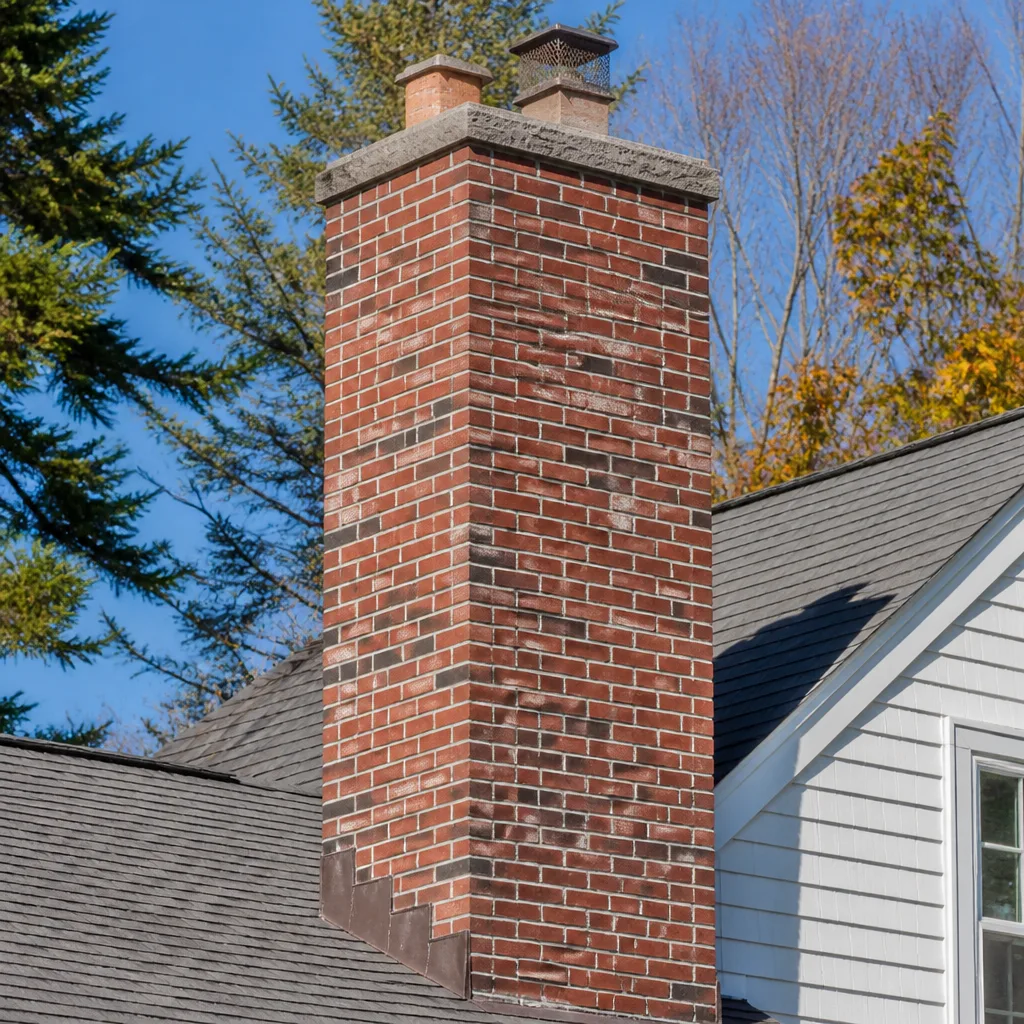 Masonry repair
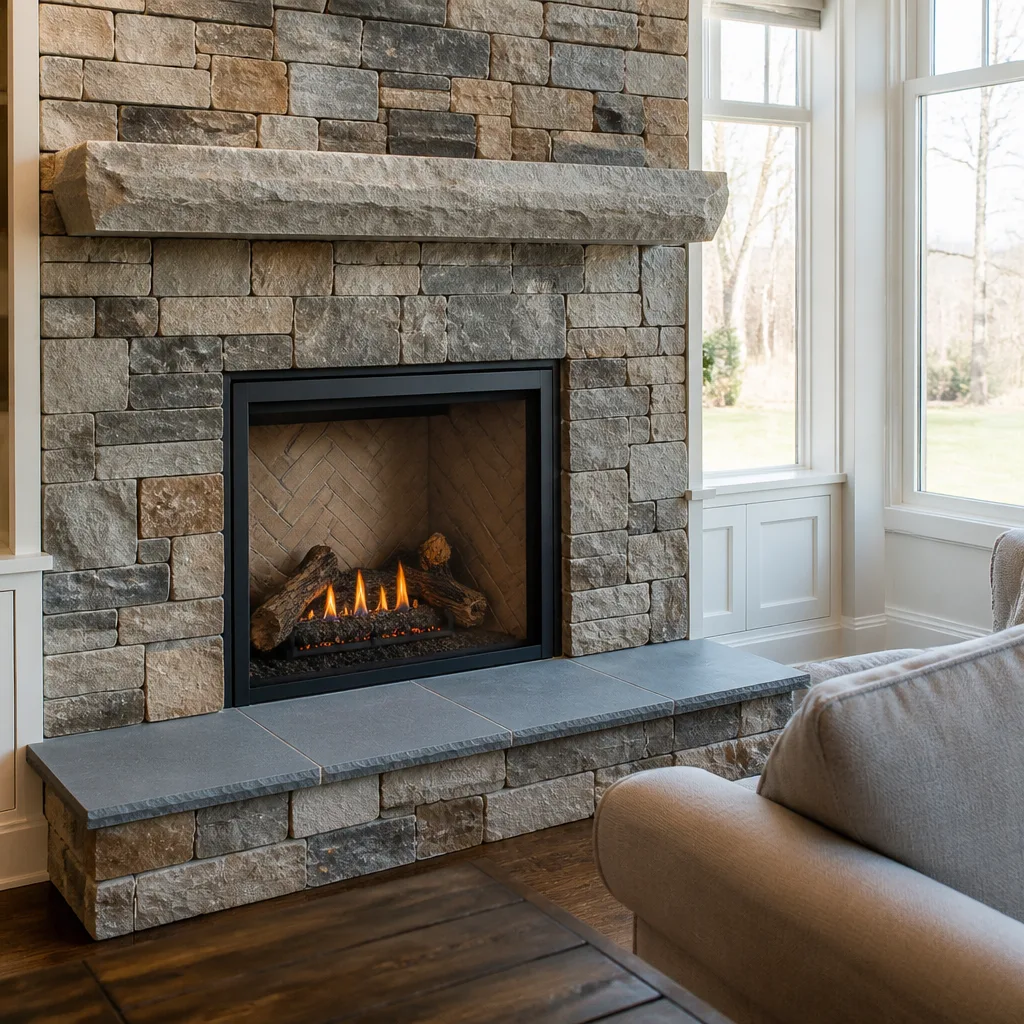 Gas fireplace service
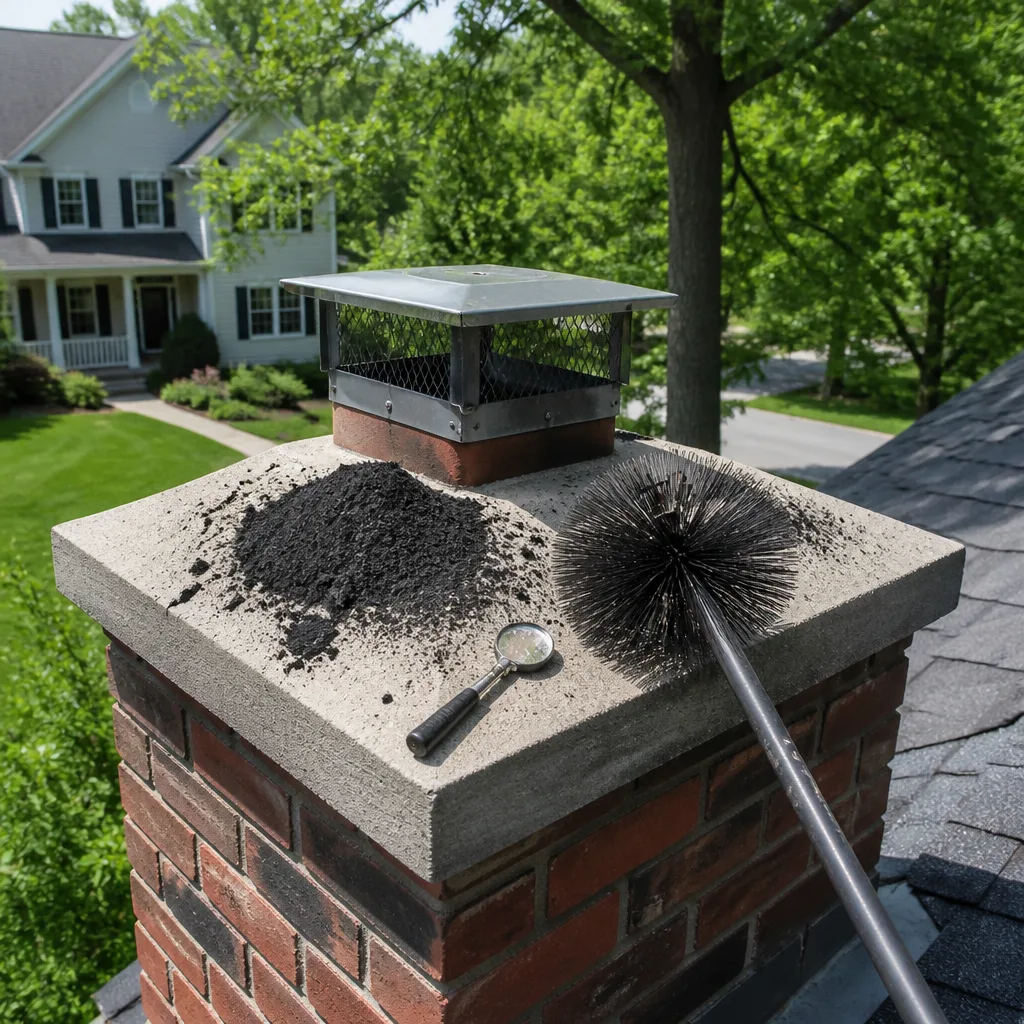
Level 1 sweep and inspection to the NFPA 211 annual standard - flue, crown, cap, and flashing checked and photographed
Chimney sweep logs do not sweep chimneys. They loosen some creosote - which then falls where a brush and vacuum still have to collect it.
Chimney Cleaning Emergency Preparedness Guide for Preston Hollow Homes
Most chimney emergencies don’t announce themselves with flames shooting out of the roof. They start as a low rumble you mistake for the HVAC kicking on. Or a smell you blame on the neighbors. Or a headache you chalk up to a long day. A chimney fire can reach 2,000°F inside the flue in under two minutes, and the homeowners who come through it safely are almost always the ones who recognized the sound and acted in the first 30 seconds. That window is what this guide is about. You’ll learn how to spot a chimney fire in progress, what to do in sequence, how carbon monoxide fits into the picture, what the fire department needs from you, and what has to happen before you light that fireplace again. If you heat with wood or gas in Preston Hollow, this is the page to bookmark before you need it.
Quick Answer
If you suspect a chimney fire, get everyone out of the house, call 911 from outside, and don’t re-enter until the fire department clears the flue. After any suspected flue fire, the chimney needs a Level III inspection before the fireplace is used again, and that inspection report is what your insurer will ask for. If you smell smoke in the house with no fire burning, treat it as a blocked flue, open a window, and get out while you call.
Styles & brands we work with
- Sweep & inspection
- Caps & crowns
- Flue relining
- Masonry repair
- Gas fireplace service
Table of Contents
- How Do You Recognize a Chimney Fire in Progress?
- The Three-Step Response Sequence
- What Chimney Fire Suppressant Sticks Do and Don’t Do
- Carbon Monoxide Risk and Where Your Detector Belongs
- What to Tell the Fire Department When They Arrive
- After the Fire: The Level III Inspection and Your Insurance Claim
- Preventing the Emergency in the First Place
- Common Mistakes to Avoid
How Do You Recognize a Chimney Fire in Progress?
A chimney fire is a combustion event inside the flue, usually fed by creosote that has built up on the flue walls. Creosote is the residue of incomplete wood combustion, and it accumulates fastest in fireplaces that burn green wood, burn hot and fast without enough air, or don’t get swept often enough. Once that deposit ignites, the fire is loud, hot, and confined to a space you can’t see into. That’s the core problem: you’re diagnosing a fire by sound and smell, not by sight.
Here’s what to listen for and look for.
Sounds
- A low roaring or rumbling noise, like a freight train a few blocks away
- Popping or crackling that’s louder and more rhythmic than normal fire noise
- A whooshing sound from the chimney chase
Smells and visible signs
- A strong, hot, tarry smell in the room or outside
- Smoke backing into the room with the damper open
- Flames or sparks visible at the top of the chimney
- Dark smoke pouring from the cap for more than a few minutes after lighting
- Soot or creosote flakes dropping onto the roof or into the yard
- A warped or discolored damper, or heat-warped metal near the firebox
In Preston Hollow, we see a lot of older masonry chimneys on homes built in the mid-century decades, plus newer construction with prefabricated metal flues. Both types can carry a chimney fire, and both give you about the same warning signs. The difference is what happens after: masonry chimneys tend to crack at the flue tile joints, while metal flues can warp or separate at the seams. Neither is something you can assess from the living room. If you notice any of the signs above, treat it as a real fire and act on the assumption that it is.
The Three-Step Response Sequence
When you suspect a chimney fire, the sequence matters as much as the individual steps. Do these in order.
- Get everyone out of the house. Don’t stop to grab valuables, don’t try to close the damper, and don’t go outside to look up the chimney. Leave through the nearest door and take pets with you.
- Call 911 from outside. Tell them you believe you have a chimney fire, give the address, and say whether anyone is still inside. Stay on the line.
- Don’t re-enter the house until the fire department clears you to do so. They may need to check the attic, roof, and chimney chase. If the flue has failed, the fire can travel into framing, and the fire department is looking for that. Let them finish.
The reason for the “don’t go outside and look” step is that a chimney fire can throw burning creosote from the top of the flue. Homeowners standing in the yard looking up are in the debris path. The fire department has gear for this; you don’t.
The other thing that trips people up is the damper. Closing the damper to “smother” a chimney fire seems logical, but it can push smoke and combustion gases into the house instead of up the flue. Leave it alone and get out.
What Chimney Fire Suppressant Sticks Do and Don’t Do
Chimney fire suppressant sticks are a real product and they do something useful: they release a chemical powder when burned that can slow combustion inside the flue. What they are not is a substitute for calling 911 or evacuating. If you already have sticks on hand and the fire is small, you can use one on your way out the door. But you should never stay inside to deploy one, and you should never use one as justification for skipping the 911 call.
Here’s the honest breakdown.
What they do
- Release a suppression powder into the flue that can reduce the intensity of a small, early-stage fire
- Give you a few extra seconds of margin while you’re evacuating
- Work as a precaution if you’re worried about a smoldering deposit but have no active fire
What they don’t do
- Put out a fully developed chimney fire. A 2,000°F flue fire is not something a stick can extinguish.
- Repair the damage already done to the flue, damper, or cap
- Replace a fire department response
- Eliminate the need for a post-fire inspection
We keep suppressant sticks on hand for homeowners who want a first line of defense, but we tell them the same thing every time: the sticks are a supplement, not a strategy. The real strategy is preventing the creosote from getting thick enough to ignite in the first place.
Carbon Monoxide Risk and Where Your Detector Belongs
Carbon monoxide is the quieter chimney emergency, and it’s the one that catches families who never had a fire. CO forms when fuel doesn’t burn completely, and a chimney that’s blocked, cracked, or improperly drafting can push that CO back into the house instead of up and out. A bird nest in the flue, a collapsed liner, a cap that’s clogged with soot, or a damper left closed with a fire burning can all create the blocked-flue scenario.
Symptoms to watch for, especially in more than one person at the same time:
- Headache that doesn’t respond to normal remedies
- Dizziness or lightheadedness
- Nausea
- Confusion or difficulty concentrating
- Fatigue that gets worse the longer you’re in the house and better when you leave
If those symptoms show up with the fireplace or furnace running, get everyone outside and call 911 and your gas utility. Don’t try to find the source yourself.
Where the detector goes
CO is slightly lighter than air, so it rises and mixes with warm air in the room. Place CO detectors at roughly chest height on a wall, or on the ceiling, in hallways outside sleeping areas and on every level of the home. Don’t put them directly above the fireplace or within a few feet of fuel-burning appliances, because normal start-up puff can trigger false alarms. Test them monthly and replace the batteries per the manufacturer’s schedule. A CO detector in the garage is also worth having if your water heater or furnace sits near an attached garage wall.
An annual chimney sweep is the other half of CO prevention, because a sweep is when a technician can see the flue and the cap and catch the blockage before it becomes a closed flue.
What to Tell the Fire Department When They Arrive
The fire department’s job is to confirm the fire is out, check for extension into the structure, and decide whether the house is safe to re-enter. What you tell them shapes how they handle the flue.
Have these facts ready in your head before they arrive:
- How long the fire was burning before you called. If there was a sound or smell before you evacuated, say so, and give your best estimate of when it started.
- What type of fuel was in the fire. Wood, gas logs, pellet, or a combination. The flue material and the fire behavior differ.
- Whether the fireplace was running when you noticed the problem. If it was, say so and whether it was recently lit or had been burning for hours.
- Whether you noticed smoke in the house. Backdrafting smoke into the living room is a different problem than smoke going up the flue, and they need to know.
- The age and type of the chimney, if you know it. Masonry versus prefabricated metal matters for how they inspect the flue after the fire is out.
- Whether anyone has symptoms of CO exposure. Headache, dizziness, or confusion with a fire burning gets a different medical response.
If you have the last sweep or inspection report from your chimney, hand it over. It tells the fire department what the flue looked like before the fire, which helps them assess whether the flue was already compromised. That report is also the first piece of documentation your insurer will want.
After the Fire: The Level III Inspection and Your Insurance Claim
Once the fire department clears the house and the chimney is cool, the fireplace stays off until a Level III inspection is complete. That’s not a policy we invented; it’s what the inspection levels require after a flue fire, structural event, or change in fuel type. A Level III inspection opens up the chimney, meaning the technician accesses the flue through the cleanout, the damper, and if needed, a cut in the chase every few feet to see the flue tile joints and the liner all the way up. It’s the only inspection type that can tell you whether the flue is still safe to use.
What the Level III inspection covers
- The full length of the flue, including joints and seams
- The liner, if present, and the mortar crown at the top
- The firebox and damper assembly
- The smoke chamber and smoke shelf
- The exterior chimney structure and any signs of heat damage
What documentation you need for the claim
- The Level III inspection report, with photos of every defect
- A written scope of work for the repair, itemized by component
- Before photos of the chimney and the damaged areas, if you have them
- The fire department’s report or case number
- Your original homeowner’s policy declaration page
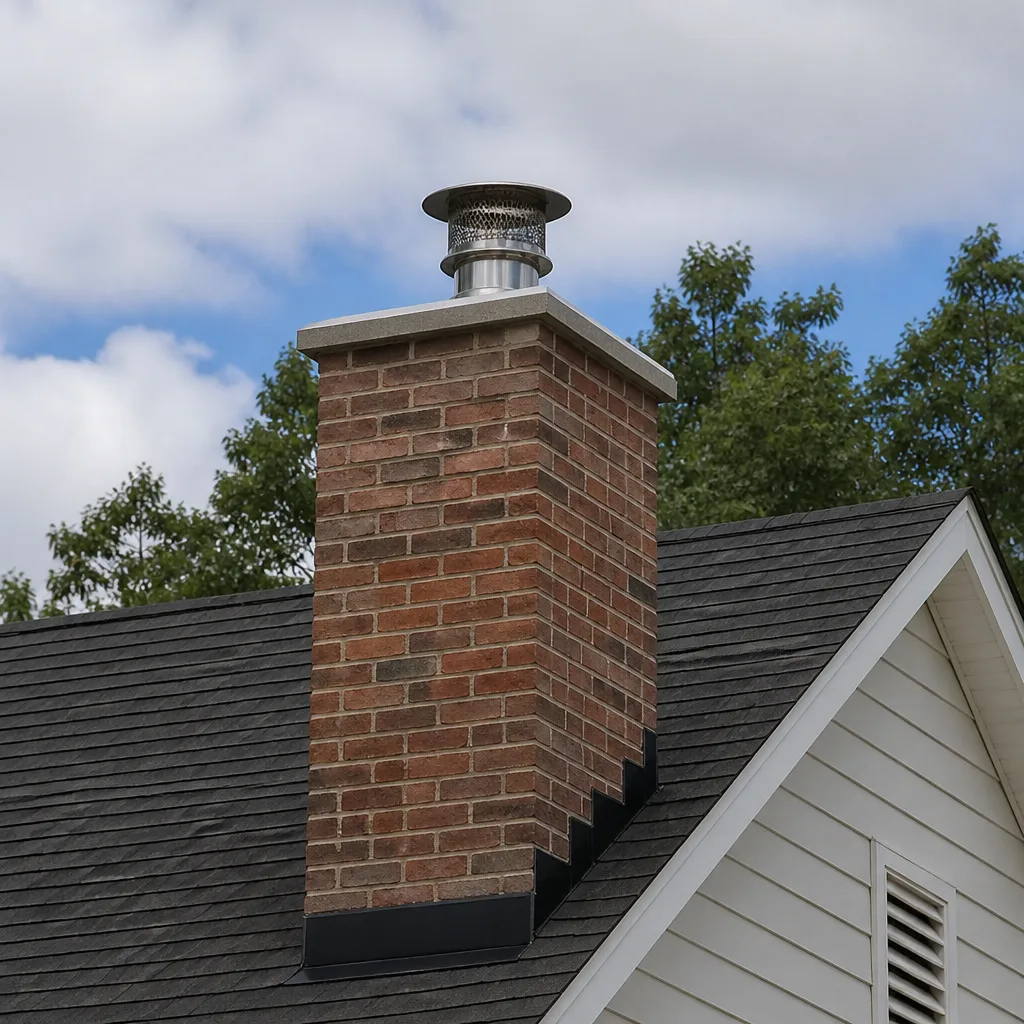
Photographs are the piece most homeowners don’t have and most insurers ask for. Get the inspection done with a company that photographs the inside of the flue and gives you a written report. If the inspection finds that the flue has cracks or liner damage, the repair usually involves relining. For masonry flues, HeatShield is the system we turn to because it resurfaces the existing flue in place rather than requiring a full tear-out. For a flue that needs a new liner because the old one failed, we install DuraFlex flexible liner systems, which handle the offsets and tight clearances that a rigid liner can’t follow. Those two products cover most of the relining work we see after a chimney fire in Preston Hollow.
Preventing the Emergency in the First Place
Almost every chimney fire we’re called to inspect after the fact could have been caught earlier. The math is simple: creosote ignites at the temperature a normal fire produces, and the layer that ignites is the layer that’s been building for a season. Keep that layer thin and you remove the fuel. Here’s how.
Burn dry wood
Seasoned firewood has been split and dried for at least a year, ideally longer, and it has a cracked, gray look with a hollow sound when you knock two pieces together. Wet wood produces more creosote because more of the burn goes into boiling off moisture instead of combusting. If the wood was cut this year, it isn’t ready.
Get the chimney swept before the season starts
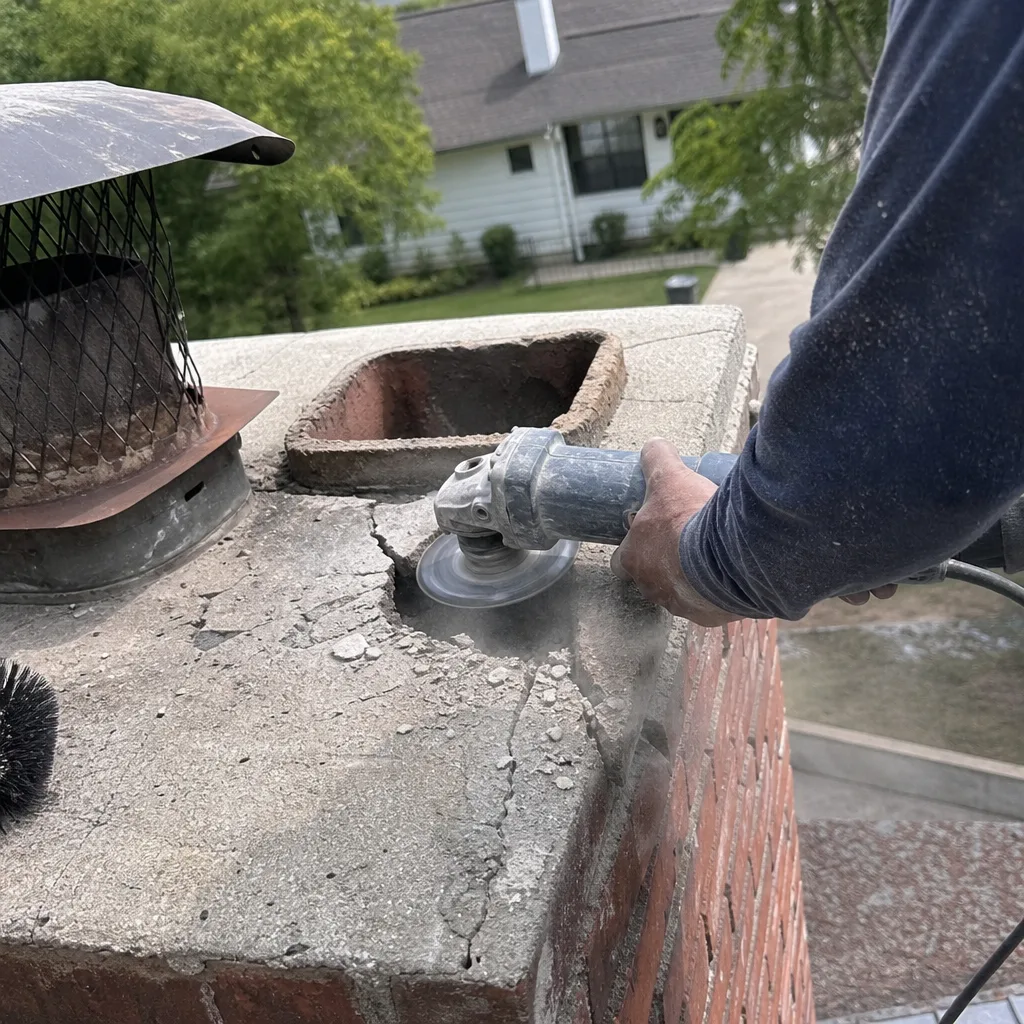
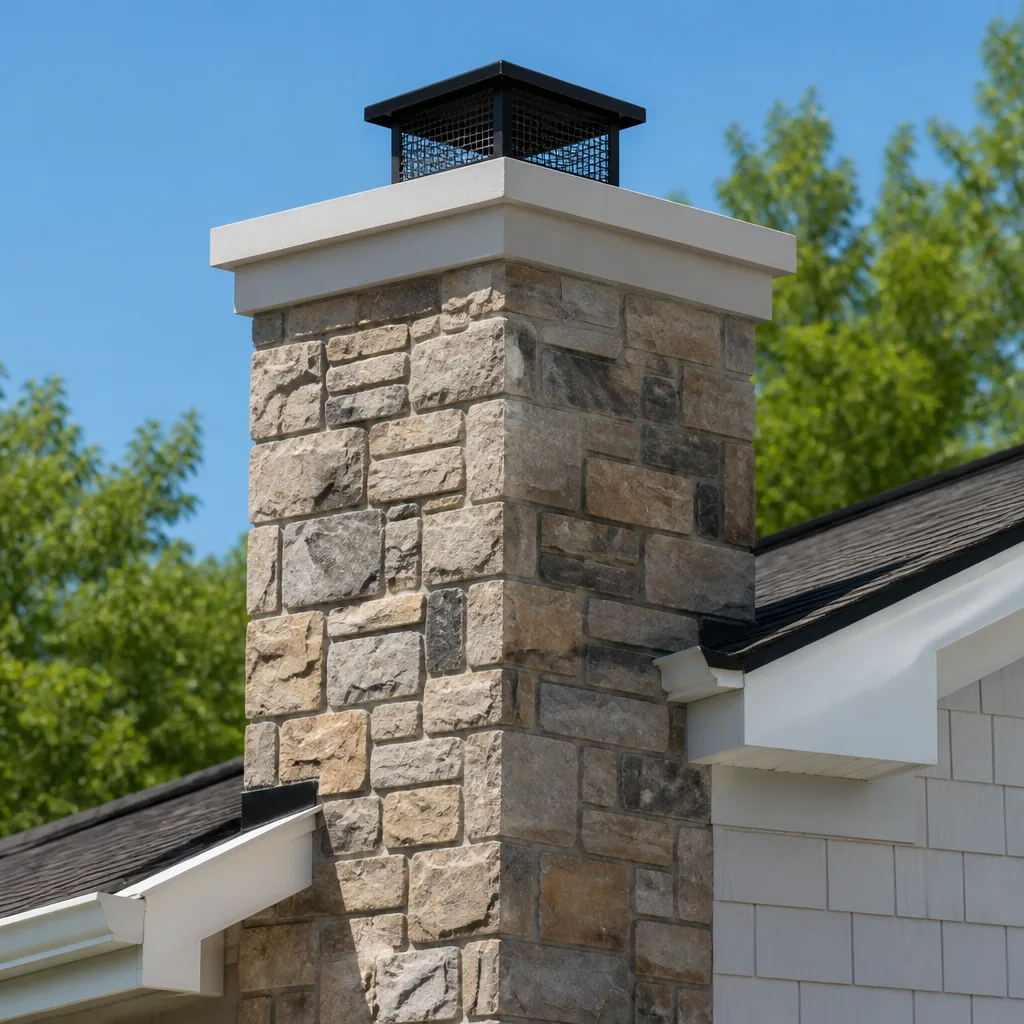
The standard guidance for a wood-burning fireplace is a sweep when there’s about a quarter inch of soot or creosote on the flue, or once a year for regular users. A sweep isn’t just cleaning; it’s the check that tells you whether the cap, crown, and flue are intact. Catching a cracked crown in September prevents the water intrusion that becomes a structural problem by January. Our chimney cap & crown work exists precisely to close that gap before water finds the masonry.
Keep the cap clear and the screen intact
A cap keeps rain, birds, and squirrels out of the flue. A cap with a torn screen does the opposite: it collects debris and blocks the draft. Check it from the ground when the leaves fall and after any storm.
Schedule the inspection before you need it
The worst time to discover a cracked flue tile is right after a fire. The best time is a routine inspection on a cool morning with no fire burning. A Level I or Level II inspection catches the small cracks and the early creosote layers that lead to the emergency you’re reading about.
Common Mistakes to Avoid
- Ignoring the sound. A low roar or rumble from the chimney is not the HVAC or the wind. If you’re not sure, leave and call. The 911 operator would rather hear from you than not.
- Looking up the chimney from the yard. You’re standing under the debris path. Watch from the street or across the yard, not directly beneath the cap.
- Closing the damper to smother a fire. It can push combustion gases into the living space instead of the flue. Leave the damper open and get out.
- Relighting before the Level III inspection. A cracked flue tile visible only from the inside can turn a contained fire into a house fire. Don’t light the fireplace until you have the inspection report in hand.
- Skipping the CO detector because you have a fireplace. The fireplace is exactly why you need one. A blocked or cracked flue is the most common path for CO into a home.
- Trusting a visual from the ground as an inspection. You cannot see the inside of the flue from the driveway, and a cracked crown or a separated flue tile doesn’t show itself from outside. The report is the report.
- Waiting for a smell to clear before acting. If smoke comes into the room with the damper open, the flue is blocked or restricted. Get it looked at before the next fire, not after.
See the difference
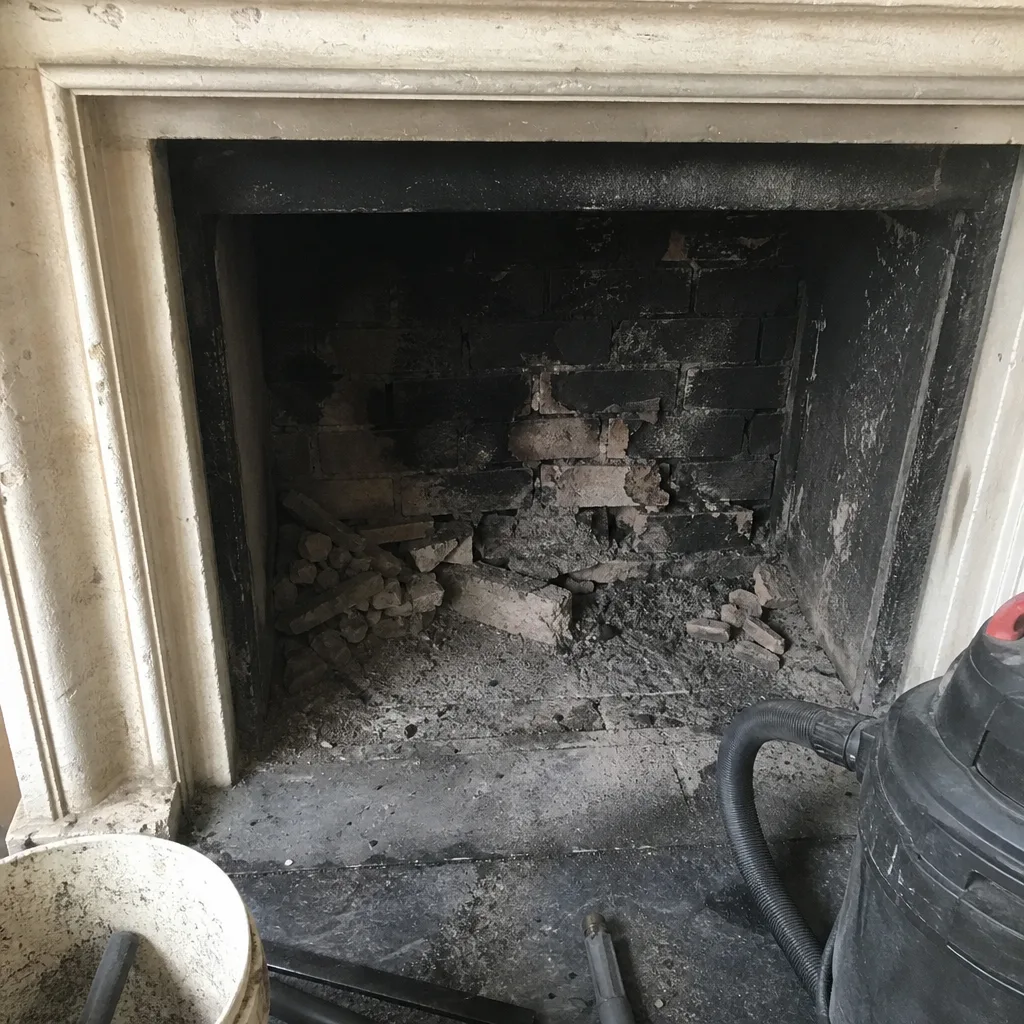 Before
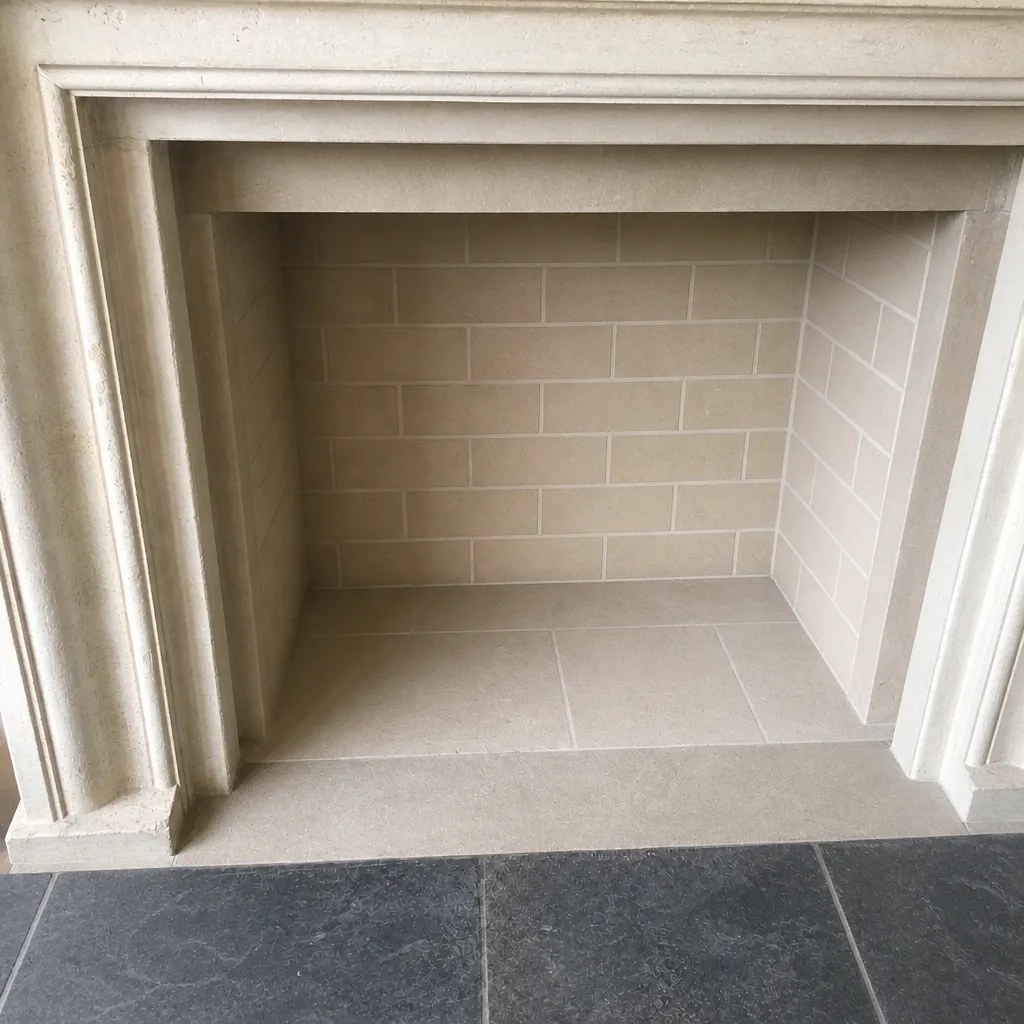 After
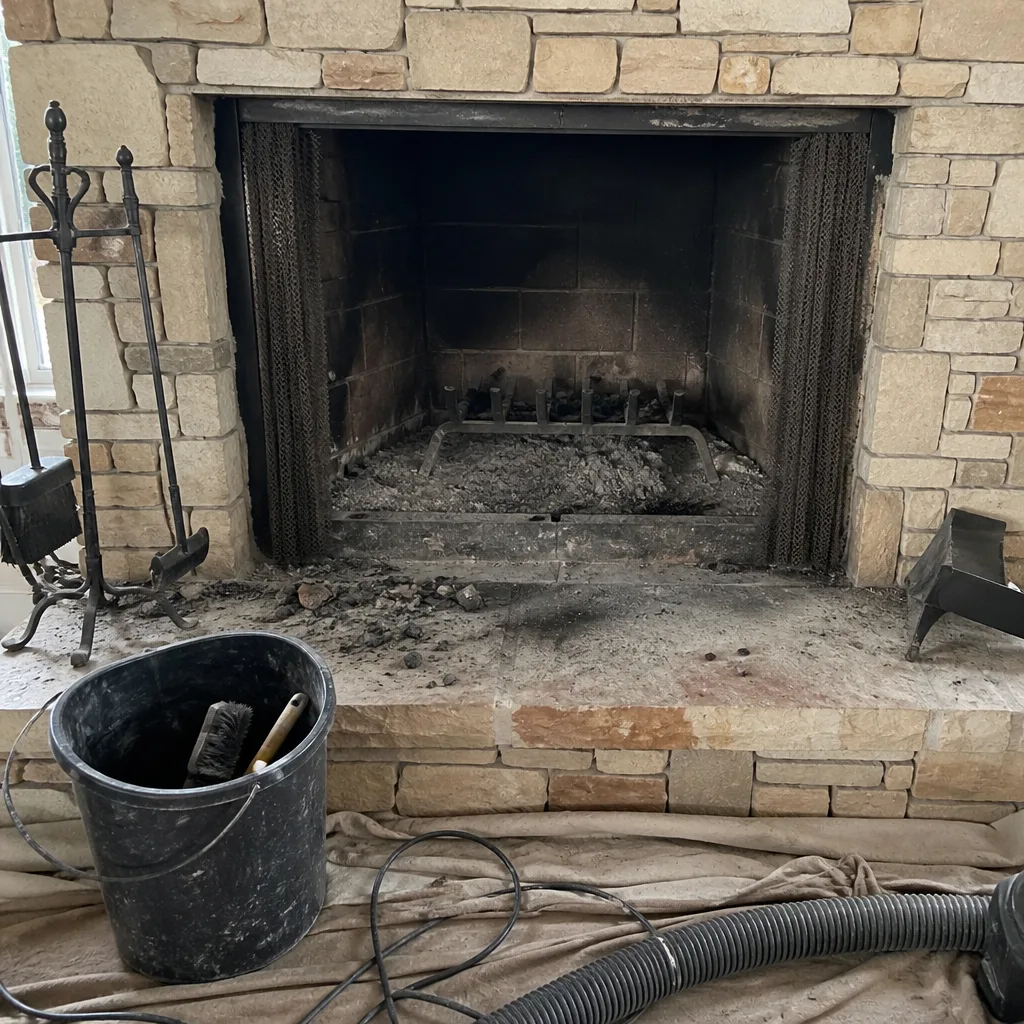 Before
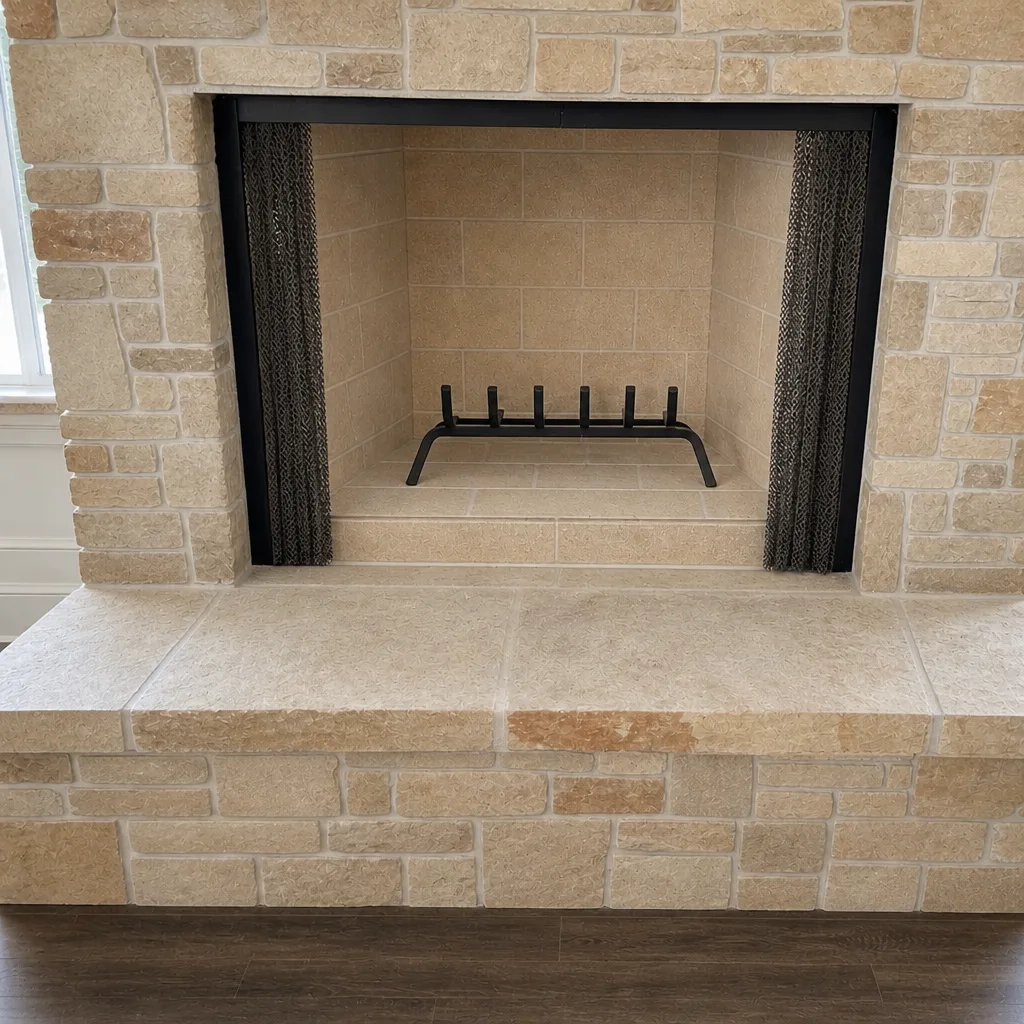 After
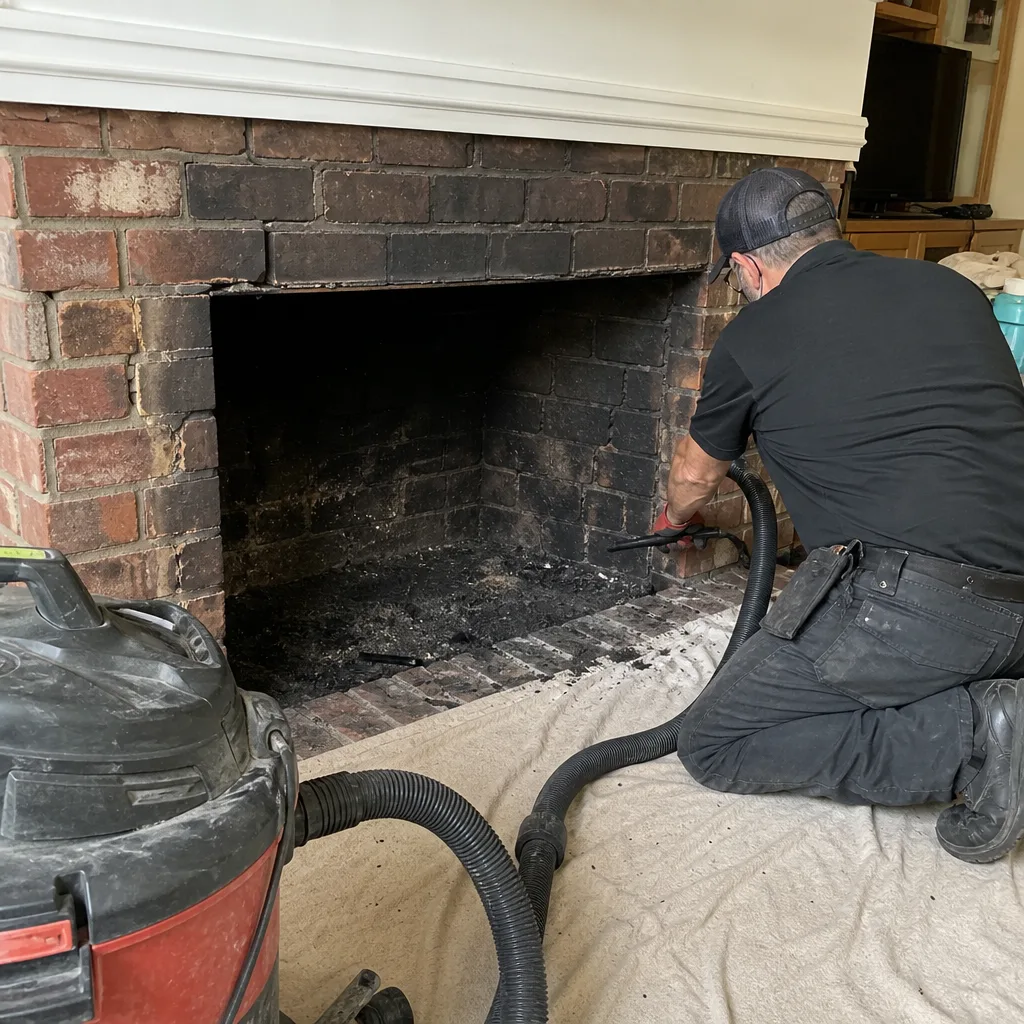 Before
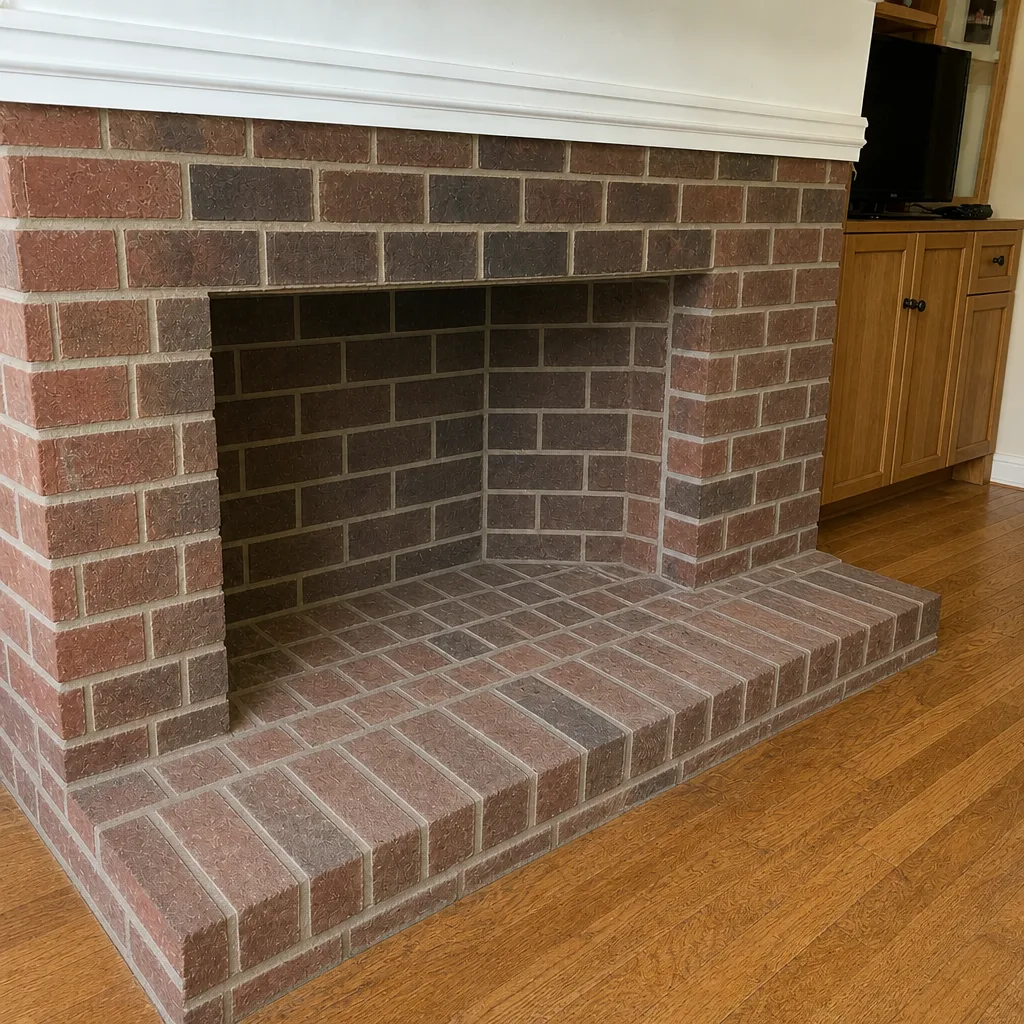 After
When to Call a Professional
Call us when the fire department has cleared your home after a suspected chimney fire and you need the Level III inspection and repair scope in writing. Call when smoke backs into the room with the damper open, when creosote is visible or thick enough that you can hear it flake, or when the cap screen is torn and you can’t see daylight through it. Call before the first fire of the season if you haven’t had the flue swept, and call before listing a home if the chimney hasn’t been inspected in the last few years. We also handle fireplace repair when the firebox or damper is the part that failed.
Chimney Sweep Preston Hollow offers free estimates in Preston Hollow. Call (833) 769-0219. We answer 24/7. Fast dispatch from 7am to 7pm, Sunday through Friday. Our technicians have up to 9 years of experience, and we work with professional-grade brands including HeatShield, DuraFlex, Olympia Chimney, and Famco so a single company handles the inspection, the relining, and the cap and crown work without you coordinating three separate contractors. One company, every step, from the inspection report through the finished repair.
Frequently Asked Questions
The signs are a strong tarry smell, a warped damper, cracked or puffy-looking creosote in the flue, and soot on the roof or in the yard. You may also notice a roaring sound you didn’t have before and heat discoloration on the chimney cap. If any of those are present, have the chimney inspected before you light another fire. Call (833) 769-0219 for an exact quote; estimates are free.
No. A suppressant stick can slow an early-stage fire and give you a few extra seconds to evacuate, but it doesn’t extinguish a developed flue fire and doesn’t replace the fire department. Use it on your way out the door, not instead of the call.
On the wall at roughly chest height or on the ceiling, in the hallway outside each sleeping area, and on every level of the home. Keep it several feet away from the fireplace itself to avoid false alarms from normal start-up puff. Test it monthly.
Yes. A Level III inspection is the only type that opens up the chimney and lets a technician see the full length of the flue, including the joints and seams. Without it, a cracked flue tile or a separated liner seam can go undetected. It’s also the documentation your insurer will ask for on the claim.
Once a year for a fireplace in regular use, or whenever there’s about a quarter inch of soot or creosote on the flue. A home that burns a few fires a season can sometimes go longer, but the annual sweep is also the check that catches cap, crown, and flue damage early. Call (833) 769-0219 for an exact quote; estimates are free.
The creosote layer thickens, and at some point it ignites at normal fire temperatures. The result is a flue fire that can reach 2,000°F in under two minutes and damage the liner, the flue tile, and the surrounding structure. Even a small fire can leave the flue unsafe to use until it’s inspected. Call (833) 769-0219 to schedule a sweep before your next fire; estimates are free.
The Bottom Line
A chimney emergency is won or lost in the first 30 seconds: recognize the sound, get out, call 911, and don’t relight until a Level III inspection clears the flue. Suppressant sticks help you exit, not extinguish. CO detectors at chest height on every level catch the invisible hazard. The fire department needs the fuel type, the timeline, and any symptoms. Your insurer needs the inspection report and photos. And the whole emergency is preventable with a dry wood pile, a clear cap, and a sweep before the season. If you’re in Preston Hollow and want the flue checked before the next fire, that’s the work we do. Chimney Sweep Preston Hollow handles the sweep, the inspection, the cap and crown, the fireplace, and the structural repair under one company, with professional-grade materials from HeatShield, DuraFlex, and Olympia Chimney.
Call (833) 769-0219 for a free estimate. We answer 24/7. Fast dispatch from 7am to 7pm, Sunday through Friday.
Written by the team at Chimney Sweep Preston Hollow.