
Last updated November 22, 2026
 Sweep & inspection
 Caps & crowns
 Flue relining
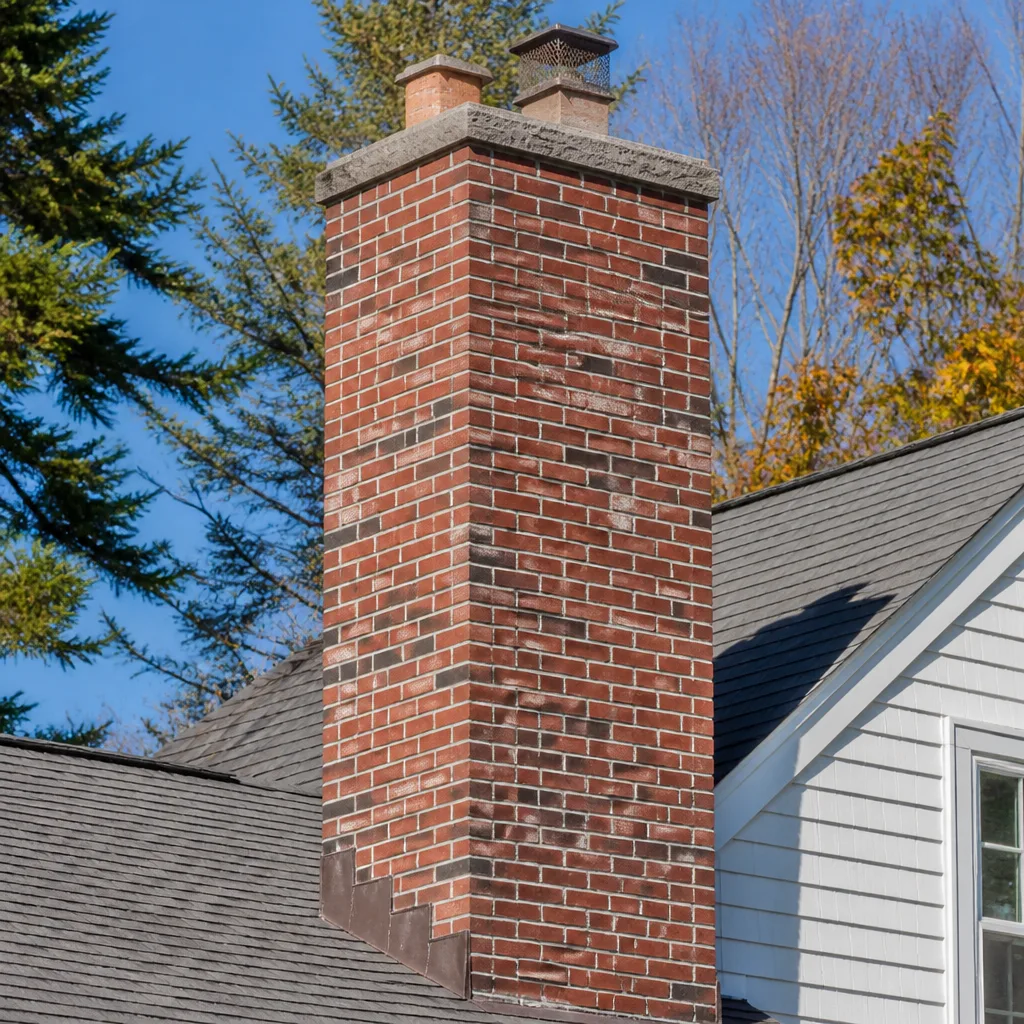 Masonry repair
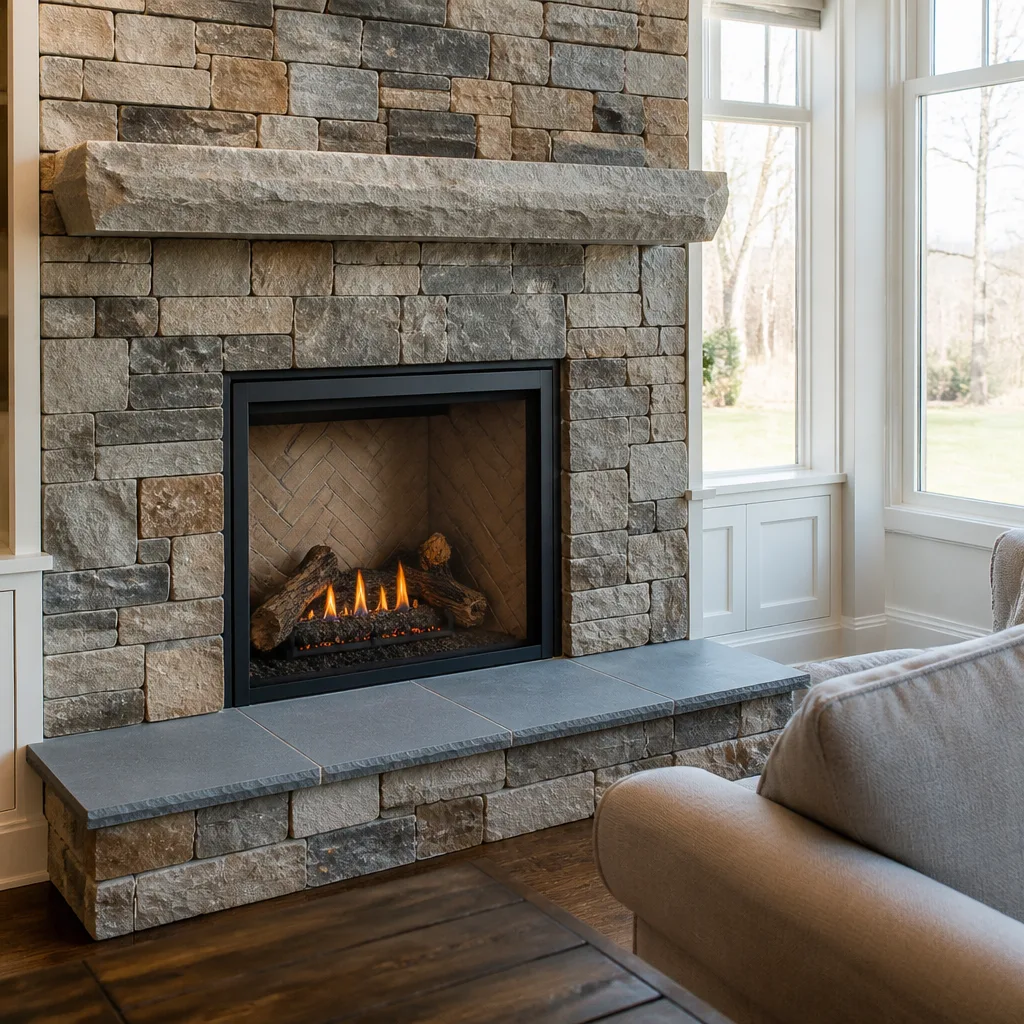 Gas fireplace service
Level 1 sweep and inspection to the NFPA 211 annual standard - flue, crown, cap, and flashing checked and photographed
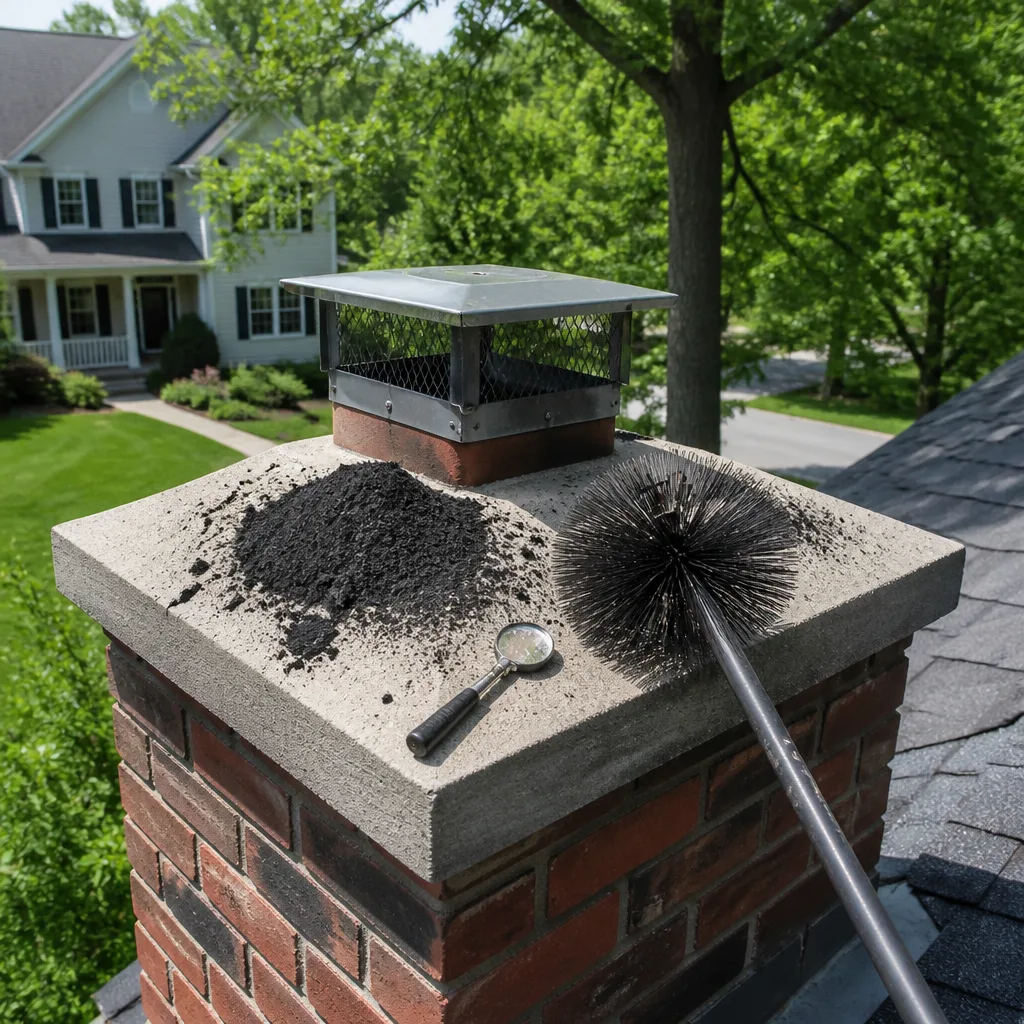
Chimney sweep logs do not sweep chimneys. They loosen some creosote - which then falls where a brush and vacuum still have to collect it.
Chimney Cleaning Warning Signs: A Preston Hollow Homeowner’s Reference Guide
A white stain running down the outside of your chimney isn’t a cosmetic issue. It’s your masonry telling you water is moving through it, and by the time that stain is visible, the damage behind it has usually been building for months. Most chimney problems announce themselves well before they become hazardous, but only if you know what you’re looking at and which part of the system each sign points to. That’s what this guide gives you: a symptom-by-symptom reference for Preston Hollow homeowners, so you can tell the difference between “schedule a cleaning soon” and “stop using this fireplace until someone qualified looks at it.”
Quick Answer
The most reliable warning signs that a chimney needs cleaning or repair are: a strong creosote smell that gets worse in warm weather, dark staining or white efflorescence on the exterior masonry, smoke spilling back into the room, visible cracks in the firebox or flue tiles, a damper that sticks or won’t seal, and flaky debris collecting in the firebox. If you notice any of these, the fireplace should be inspected before its next fire. Signs like smoke backdraft, crumbling flue debris, or a cracked firebox mean stop using the fireplace until a professional assesses it.
Styles & brands we work with
- Sweep & inspection
- Caps & crowns
- Flue relining
- Masonry repair
- Gas fireplace service
Table of Contents
- The Symptom-to-Cause Map: What Each Sign Actually Means
- Three Odors, Three Causes: Creosote, Mold, and Animals
- Why a Fireplace That Drafts Fine Can Still Be Dangerous
- Clay Liner Warning Signs Specific to Preston Hollow Homes
- Stop Using the Fireplace vs. Schedule a Cleaning: How to Tell the Difference
- Reading the Outside of Your Chimney
- What a Level I, II, and III Inspection Each Cover
- When in the Preston Hollow Year These Signs Tend to Appear
The Symptom-to-Cause Map: What Each Sign Actually Means
Here’s the most useful thing to understand about chimney problems: the symptom almost never appears on the component that’s failing. Smoke rolling into the room isn’t a smoke problem, it’s a pressure or blockage problem. A stain on the ceiling near the chimney isn’t a roof problem, it’s usually a flashing or crown problem. Learning to read the symptom back to the cause is what turns a vague worry into an actionable call.
Use this reference when something looks, smells, or sounds off:
- Smoke spilling into the room on lighting or during a burn: a flue blockage, a closed or partially closed damper, negative pressure in the house, or a flue that’s too small for the firebox opening. This is a stop-and-investigate sign.
- Strong smell even when the fireplace is cold: creosote buildup in the flue, especially noticeable in warm, humid weather when the chimney smells like an old campfire. Schedule a cleaning.
- White chalky staining on exterior brick: efflorescence, which means water is migrating through the masonry and depositing salts on the surface. This points to a crown, cap, or flashing failure. It also signals that water has been getting in long enough to do damage.
- Dark or black staining on exterior brick: either smoke escaping past a damaged flue liner or water tracking through soot deposits. Both warrant inspection.
- Visible cracks in the firebox brickwork or mortar joints: heat stress, moisture, or settling. Cracks in the firebox can let heat reach framing, so stop burning until it’s assessed.
- Damper that sticks, won’t open fully, or won’t seal when closed: rust, soot buildup, or a warped damper plate. A damper that won’t seal means you’re losing conditioned air year-round and letting cold air and pests in during the off-season.
- Flaky debris in the firebox floor: spalling flue tile or mortar. This is one of the clearest signals that the liner is deteriorating.
- Rust or corrosion on the firebox, damper, or cap: ongoing water intrusion.
- Loose or missing mortar in the chimney crown: the crown is the sloped concrete top of the chimney, and cracks there funnel water directly into the structure below.
- A cap that’s damaged, missing, or loose: an open flue is an invitation for rain, birds, squirrels, and debris.
If you’re not sure whether what you’re seeing fits one of these patterns, a Chimney Sweep Preston Hollow technician can look at it and tell you plainly. If you already know it’s time for a cleaning, the chimney sweep is the place to start.
Three Odors, Three Causes: Creosote, Mold, and Animals
Homeowners often describe all three as “the chimney smells bad,” but the correct first response is entirely different depending on which one you’re dealing with. Learning to tell them apart will save you time and, in the case of animals, prevent a mess.
Creosote odor is the most common. It smells like a campfire, wood smoke, or tar, and it’s usually strongest in warm weather or on humid days. Creosote is a byproduct of incomplete combustion, and it builds up on the flue walls with every fire. When it’s warm out and the chimney isn’t drawing, that smell migrates down into the living space. The fix is a cleaning, not an air freshener. Creosote is also the leading cause of chimney fires, so persistent creosote smell is genuinely worth acting on.
Mold odor is musty, earthy, and damp. It doesn’t smell like a fire at all. If you notice it near the hearth or in the room adjacent to the chimney, it usually means water is getting into the firebox or masonry and creating a damp environment. A mold smell is a strong hint that your cap, crown, or flashing has failed and water is entering the system. Cleaning the fireplace won’t solve it; you need the water source found and stopped.
Animal intrusion odor is the easiest to identify once you know what to expect. It smells like urine, droppings, or an animal den, and it may come with scratching or chirping sounds, especially in the morning or evening. Birds, squirrels, and raccoons find uncapped flues attractive, and once they’re in, they nest, they soil the flue, and they can block it entirely. Animal intrusion needs removal plus a proper chimney cap & crown to prevent a repeat, and the flue should be cleaned afterward because animal waste is corrosive to flue tiles.
If you can’t identify the smell yourself, describe it as precisely as you can when you call. We answer the phone 24/7, and knowing whether you’re describing smoke, mildew, or an animal helps us tell you whether to light another fire in the meantime. When it’s a straightforward sweep, the chimney sweep service is where most Preston Hollow homeowners start.
Why a Fireplace That Drafts Fine Can Still Be Dangerous
This is the single most counterintuitive point in this guide, and it’s the one that matters most. A fireplace that draws beautifully, lights easily, and sends smoke up the flue is not automatically safe. Draft and creosote are two separate measurements, and one can be fine while the other is not.
Here’s why. Creosote accumulates on the inside walls of the flue. A moderate coating doesn’t restrict the flue enough to change the way the fire behaves. The fire still drafts, the smoke still rises, and everything feels normal. But that coating is fuel. When it ignites, you get a chimney fire, which can burn at very high temperatures and can damage or crack the flue liner without ever being visible from inside the house. A clean drafting fireplace is often the most dangerous one to have a heavy creosote load in, because the homeowner has no reason to suspect anything.
The one visual check you can do from the firebox opening. With the fireplace completely cold, open the damper, take a strong flashlight, and look up into the flue. You won’t see the whole flue, but you’ll see the first few feet of the smoke chamber and lower flue. Look for:
- Glaze or a shiny, tar-like coating on the flue walls. Glazed creosote is the most dangerous grade and won’t come off with a standard brush.
- Flaky, crusty, or powdery black buildup on the tile surfaces. That’s a lighter creosote grade, still worth cleaning, but less urgent than glaze.
- Crumbling mortar between flue tiles or pieces of tile loose in the flue.
- Light showing through where it shouldn’t – through a joint, a crack, or the side of the flue.
- Debris, nests, or animal material anywhere in the visible section.
A good rule of thumb: if you can see any appreciable coating on the flue walls at all, it’s time to schedule a cleaning. Don’t wait for a draft problem to develop, because by then a fire risk has usually been present for a while. Our technicians have up to 9 years of experience, and this check from the firebox is one of the things we look at first on any inspection in Preston Hollow.
Clay Liner Warning Signs Specific to Preston Hollow Homes
Most of the older homes in Preston Hollow were built with clay tile flue liners, and much of the newer construction uses them as well. Clay is an excellent material when it’s intact: it handles heat well and it’s been the standard for decades. But clay is brittle, and it does not tolerate movement, thermal shock, or moisture intrusion. When a clay liner fails, it fails in ways that are easy to mistake for normal aging.
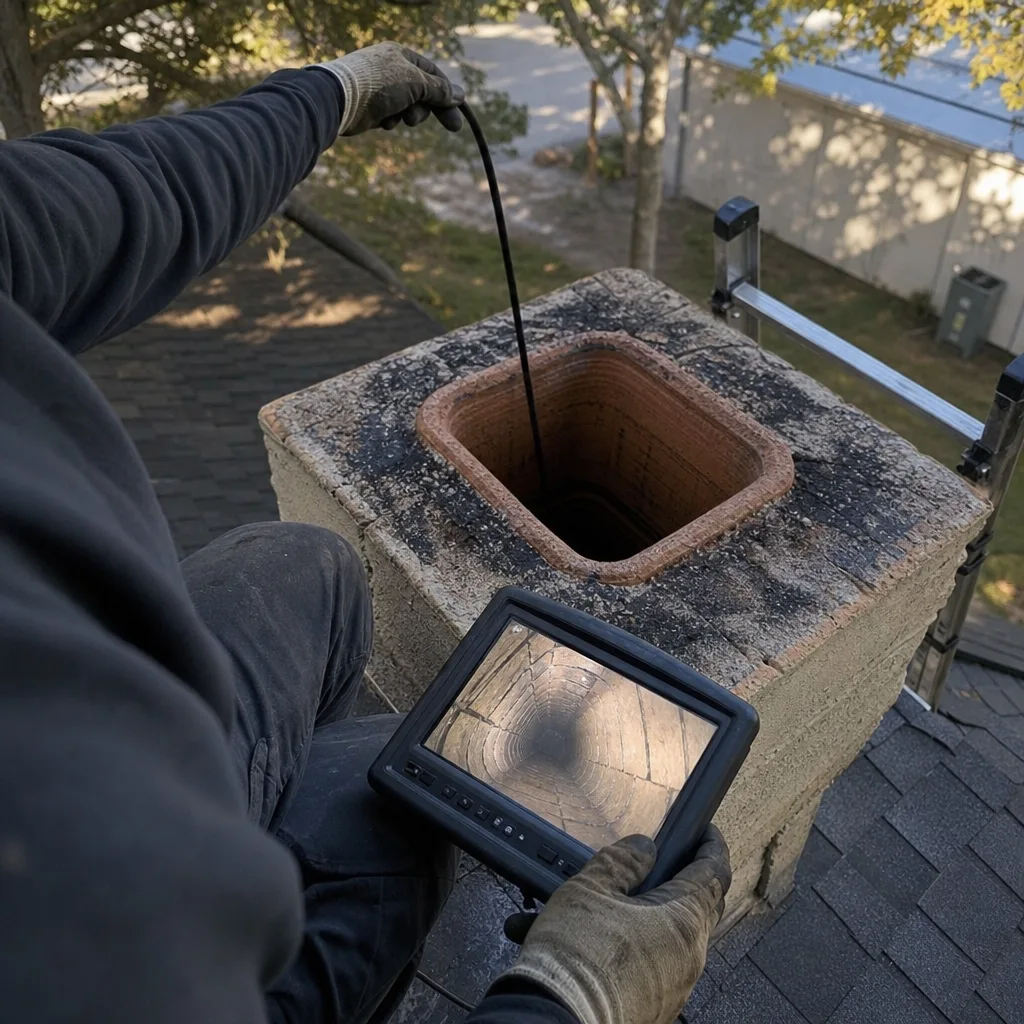
The most important thing to understand: spalling debris in the firebox is not normal aging. Spalling is when flakes of the clay tile surface break off and fall down the flue. Finding flakes of tile in the firebox floor, or a pile of grit that reappears after you clean it out, means the liner is actively deteriorating. That’s not a “next season” problem. It’s a Level II inspection trigger, which is a camera inspection that lets a professional see the entire flue interior, not just the part you can reach with a flashlight from below.
Other clay liner warning signs to watch for:
- Hairline or open cracks in the flue tiles visible from the firebox opening or noted during a camera inspection.
- Displaced or misaligned tiles, which means the liner has shifted and is no longer continuous. Every joint is a place where heat can escape into the surrounding structure.
- Missing or crumbling mortar joints between tiles.
- Efflorescence on the exterior of the chimney, which often means moisture has reached the flue through the masonry and is degrading the tile from the outside in.
- A chimney that’s been through a fire, even a small one. Clay liners crack from thermal shock.
When a clay liner is cracked or spalling, patching it isn’t a real fix. There are two legitimate paths: a proper relining with a flexible stainless system from a manufacturer like DuraFlex, or a resurfacing of the existing flue with a system like HeatShield. HeatShield is what we reach for when the liner is still structurally sound but has cracks or gaps that need to be sealed. It’s a non-invasive resurfacing that restores the flue without tearing the chimney apart, and it’s a service many general sweep companies simply don’t offer. When the liner is too far gone for resurfacing, a DuraFlex flexible liner is the answer. Either way, the decision should come after a camera inspection, not before.
Stop Using the Fireplace vs. Schedule a Cleaning: How to Tell the Difference
Not every warning sign means the same level of urgency, and treating them all as emergencies is just as unhelpful as treating them all as “come back to it later.” Here’s how we sort them.
Signs that mean schedule a cleaning soon (you can still use the fireplace moderately):
- A creosote smell that’s present but not overwhelming.
- A light to moderate coating of soot and creosote visible when you look up the flue, without glaze.
- A fire that’s burning slightly cooler or smokier than usual, but still drafting.
- A small amount of grit in the firebox that’s not a fresh pile after every fire.
- A damper that’s stiff but opens and closes fully.
- An uncapped chimney that needs a cap installed to prevent future problems.
Signs that mean stop using the fireplace until a professional assesses it:
- Smoke spilling back into the room during a burn.
- Any signs of a chimney fire, past or present: a loud roaring sound, a smell of burning tar, puffy or discolored creosote, warped metal, or cracked flue tiles.
- A fresh pile of flaky tile debris in the firebox after every fire.
- Visible cracks in the firebox brickwork or mortar joints.
- Carbon monoxide detector going off when the fireplace is in use – open windows, leave the house, and call from outside.
- A damper that won’t open.
- A strong, persistent smell that you suspect is mold or animal waste.
- A firebox or flue that’s visibly damaged or displaced.
When you’re unsure which category your situation falls into, a proper inspection resolves it. The chimney sweep visit includes a look at the full system, not just a brushing of the flue, and that’s how we determine whether a repair is needed before the next fire. If the assessment finds damage in the firebox itself, that’s a fireplace repair, and we handle it as part of the same visit.
Reading the Outside of Your Chimney
The exterior of your chimney is the part that weather can reach, and it tells you a lot about what’s happening inside. A walk-around with a pair of binoculars is one of the most useful things you can do once or twice a year.
The white stain (efflorescence). When water moves through brick and mortar, it carries dissolved salts to the surface, and when the water evaporates, those salts remain as a chalky white deposit. Efflorescence itself is harmless. What it indicates is not: water is getting into the masonry. On a Preston Hollow chimney, the most common entry points are a cracked crown, failed flashing at the roofline, and missing or damaged caps. Left alone, the water erodes mortar joints, spalls the brick face, and works its way toward the flue liner.
The crown. The crown is the sloped concrete cap at the top of the chimney, and it’s supposed to shed water away from the flue. When the crown cracks, water goes directly down into the chimney structure. This is the number one source of water intrusion damage we see, and it’s why we treat crown repair and cap installation as preventive work, not just repairs.
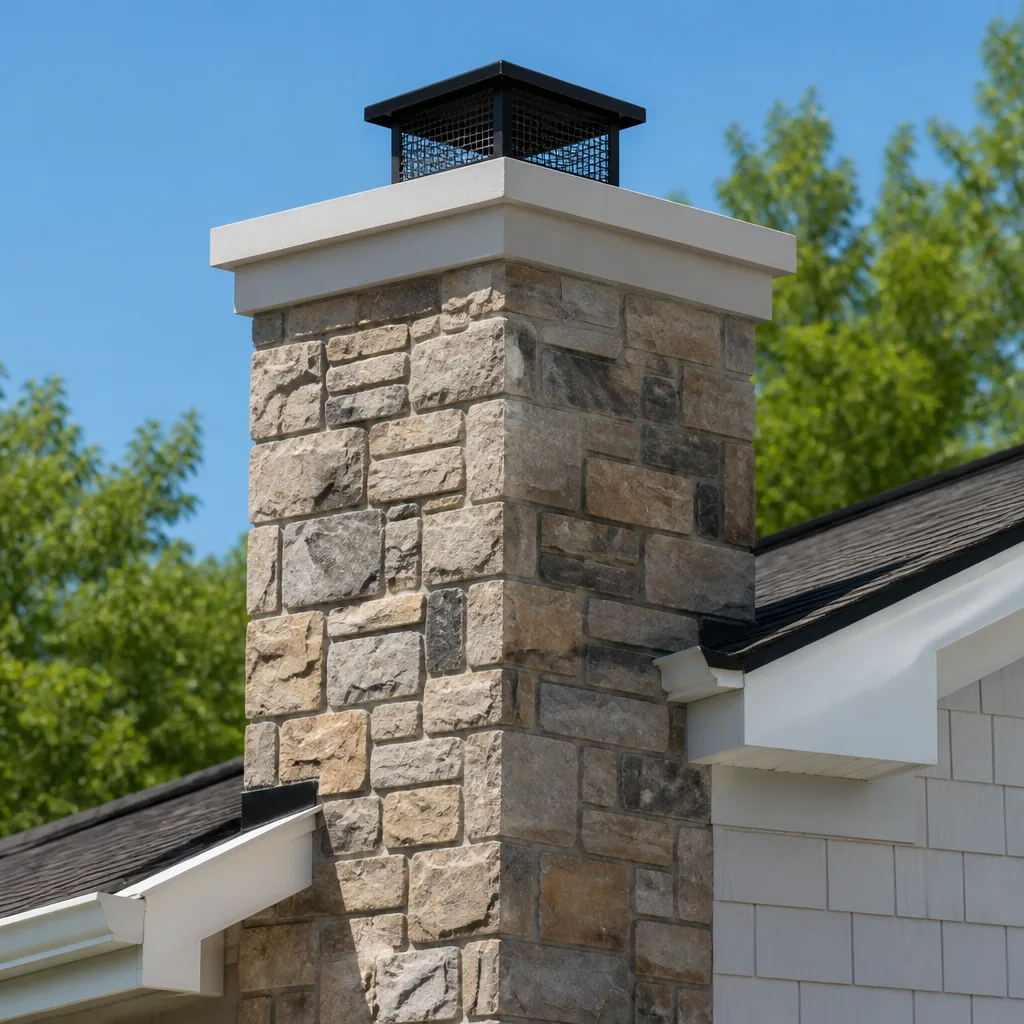
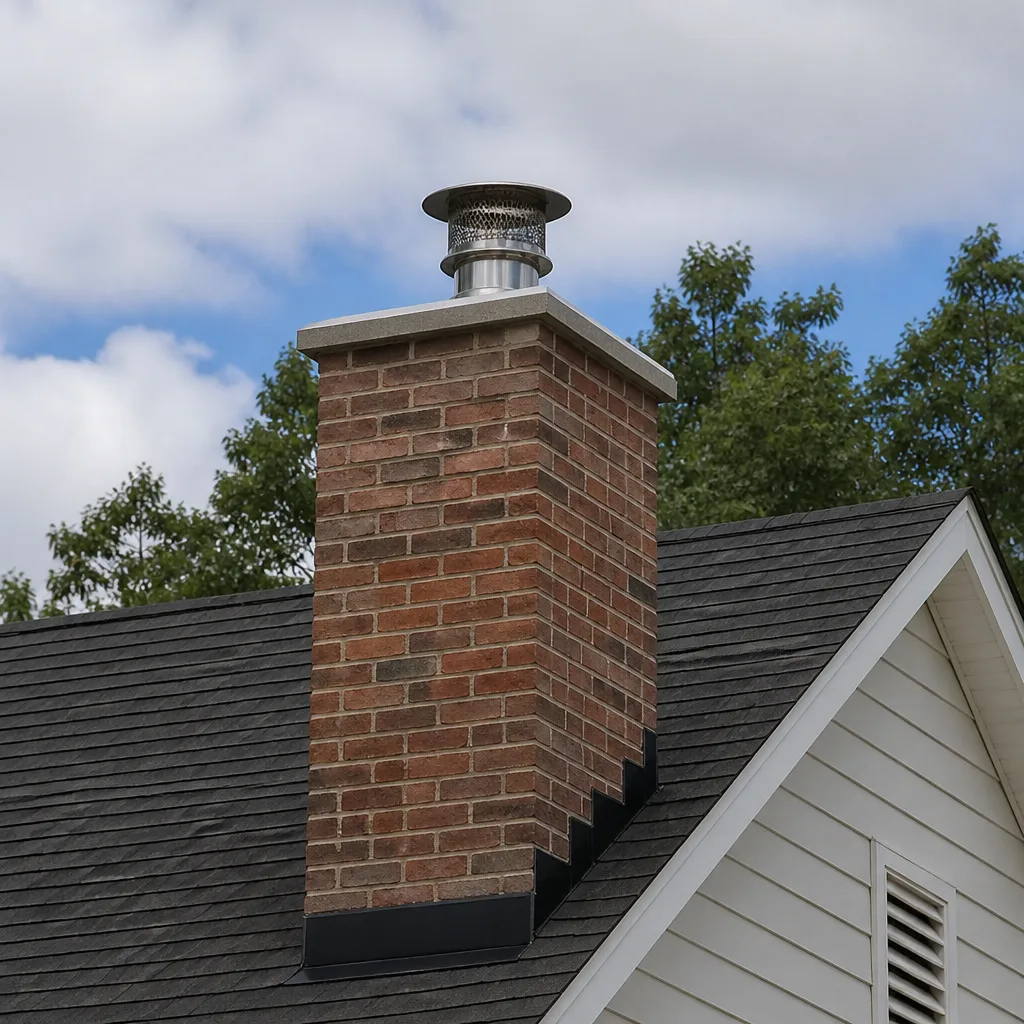
The chimney cap. The cap on top of the flue does three jobs: it keeps rain out, it keeps animals out, and it keeps sparks off the roof. A missing cap is an open door. A damaged cap lets water in and animals enter, and a loose cap can come off in high wind. We use Gelco and Famco caps and crown components because they’re built for this climate and they hold up to Texas sun, wind, and the occasional hailstorm.
Spalling brick and crumbling mortar joints on the chimney stack itself. Spalling brick has a face that’s flaking or popping off. Both of these point to long-term moisture exposure, and both should be assessed before the underlying structure is affected.
Rust stains near the top of the chimney or on the cap. A masonry chimney doesn’t have metal flashing at the top, but a cap, a chase cover, or a metal damper assembly can rust when water sits. Rust streaks are a signal that water has been sitting where it shouldn’t.
If you see any of these on your Preston Hollow chimney, it’s worth a proper look. The chimney cap & crown work is where most exterior water problems get solved, and dealing with it early is far less costly than waiting until the water has reached the firebox.
What a Level I, II, and III Inspection Each Cover
Not all chimney inspections are the same, and knowing which one is happening matters when you’re evaluating a warning sign. The industry standard breaks inspections into three levels.
Level I. The basic inspection, done on an accessible chimney with no known problems. It covers the easily visible parts: the firebox, the damper, the smoke chamber and flue to the extent they can be seen without a camera, and the exterior of the chimney. This is the inspection that goes along with a routine cleaning, and it’s fine for maintenance.
Level II. This one adds a camera inspection of the entire flue interior, plus a look at accessible parts of the chimney in attics, crawl spaces, and around the roofline. A Level II is required when there’s been a chimney fire, when the home is being sold, when there’s a change of fuel type, or when a warning sign has been identified. Spalling debris in the firebox, glazed creosote, smoke backdraft, or a suspected liner crack should all trigger a Level II in Preston Hollow. It’s the only way to see whether a clay liner is intact all the way up.
Level III. Reserved for when a Level II finds something that requires getting into the chimney structure: removing parts of the chimney, or opening up the wall or roof, to inspect concealed areas. It’s rare, and it’s usually the result of a serious Level II finding that needs to be confirmed before a major repair.
When we run an inspection in Preston Hollow, we use a camera and we show you the photo or video of what we found. That’s how we make the recommendation make sense. If you can see the cracked tile or the glaze on the flue walls, the repair conversation becomes much simpler, and you can judge for yourself whether the work is worth doing now or can wait.
When in the Preston Hollow Year These Signs Tend to Appear
Chimney warning signs follow a seasonal rhythm here, and understanding that rhythm helps you catch problems at the right time. Preston Hollow winters are mild, so the fireplace season is shorter than in colder parts of the country, and that shapes the way problems present.
Late spring and summer are when odor complaints peak. With warm, humid air outside and a cold fireplace inside, the chimney loses its draft and creosote smell migrates downward into the house. This is also when the AC is running and the house is closed up, so smells concentrate. If you notice the fireplace smells like a campfire in July, you’re not imagining it – that’s the creosote in the flue, and it’s the clearest signal that a cleaning is overdue.
Late fall is when the first fire of the season happens. This is when smoke backdraft, a stuck damper, or a bird’s nest shows up, because the homeowners haven’t used the fireplace in months and an animal has had time to move in. It’s also when the firebox gives up debris that’s accumulated over the summer. If you have a cap, you’re much less likely to have this problem.
Winter is when heat-related failures show up: a firebox crack that widens from thermal cycling, a liner that spalls under heavy use, or a damper that’s been cycled many times and finally stops seating. Mild winters here mean the fireplace is used in bursts, and those temperature swings are actually hard on clay liners.
Spring is roofing season, and it’s also when exterior water damage becomes most visible. Rain on the roof, followed by sunshine, is what brings efflorescence to the surface. A spring walk-around of your Preston Hollow chimney with a pair of binoculars will tell you more about your crown and cap condition than any other time of year.
The practical upshot: if you can, schedule a cleaning and inspection in early fall, before the first fire, and address any exterior issues in spring, before the rainy season builds. That cadence catches most problems while they’re still small.
Common Mistakes to Avoid
- Assuming a clean-burning fireplace doesn’t need a cleaning. Creosote accumulates in a fireplace that burns well and doesn’t look like it needs anything. That’s exactly the situation that produces a chimney fire. Sweep on a schedule, not on a symptom.
- Treating efflorescence as a cosmetic issue. A white stain on the chimney means water is inside the masonry. Painting over it traps the moisture and doesn’t fix the entry point.
- Ignoring a pile of tile flakes in the firebox. Spalling debris is not normal aging – it’s an active liner failure and a trigger for a Level II inspection. Burning through it is a real risk.
- Putting off the cap because “we’ll get to it.” An uncapped flue is an open invitation for rain, birds, and squirrels. A cap is the cheapest water-intrusion prevention you can buy, and delaying it turns a small job into masonry work.
- Using an air freshener or a fireplace deodorizer to mask a creosote smell. The smell is a symptom. Masking it doesn’t clean the flue and doesn’t reduce the fire risk.
- Hiring whoever shows up with a brush and no camera. A sweep-only visit can clean a flue. It can’t see inside it. Without a camera inspection, a cracked clay liner or a glazed creosote load can be missed entirely.
- Mixing trades. When the crown work, the cap, the liner, and the firebox repair all need attention, coordinating separate contractors for each part of the system is how problems fall between the cracks. One company, doing all of it, is a much better position to be in.
See the difference
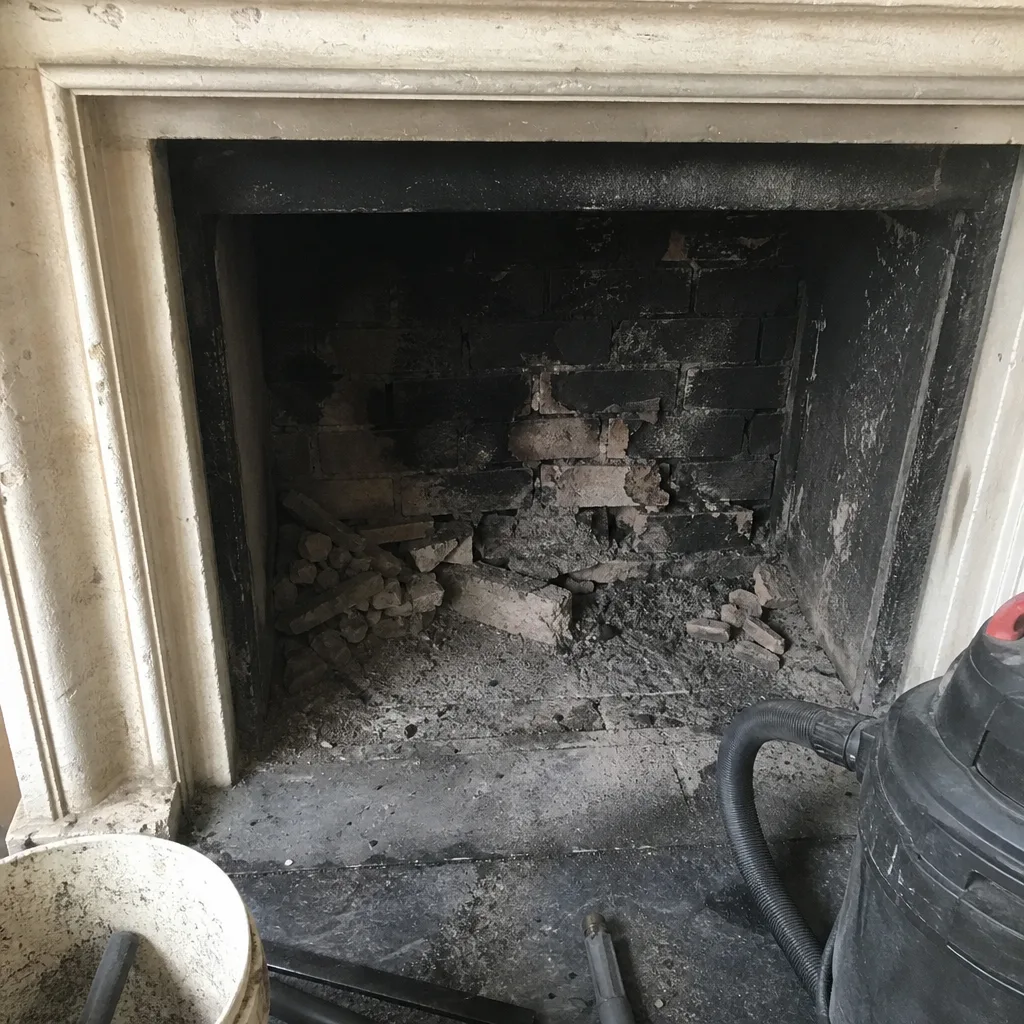 Before
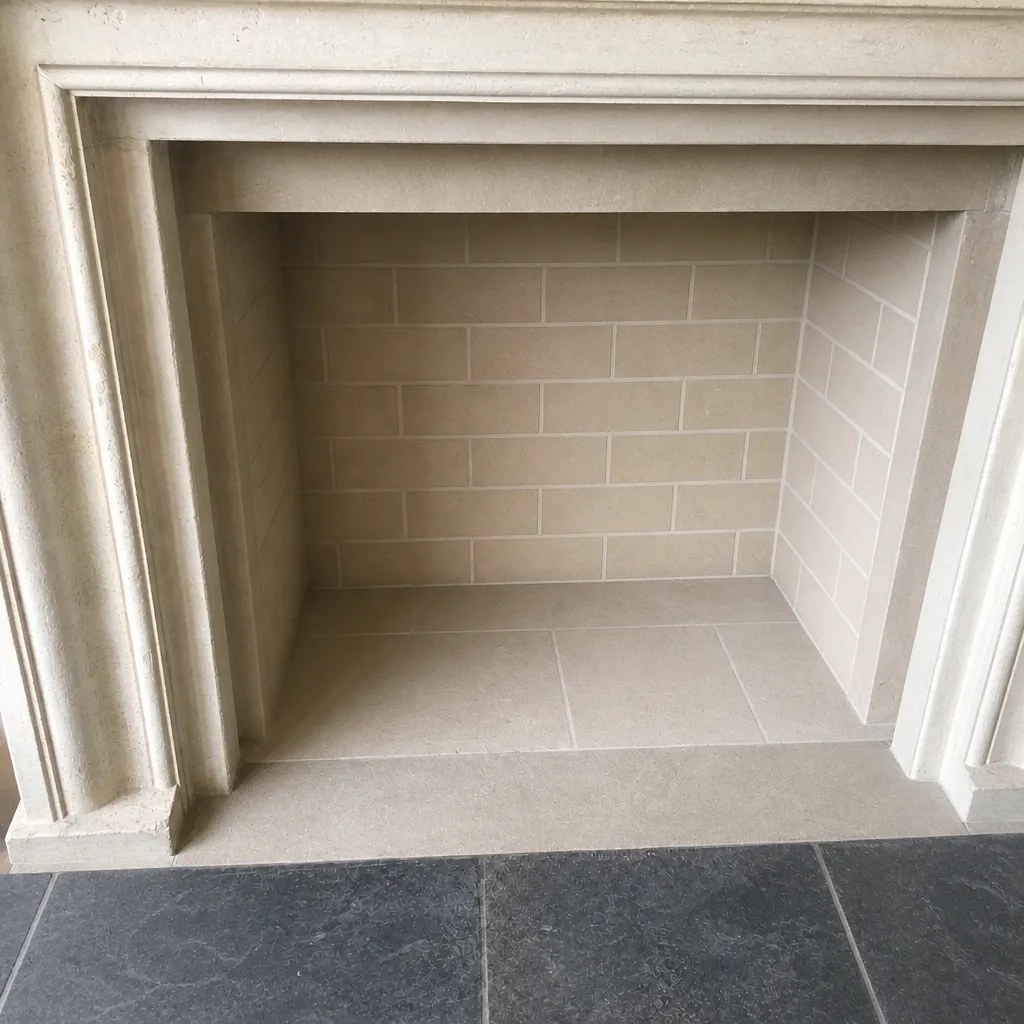 After
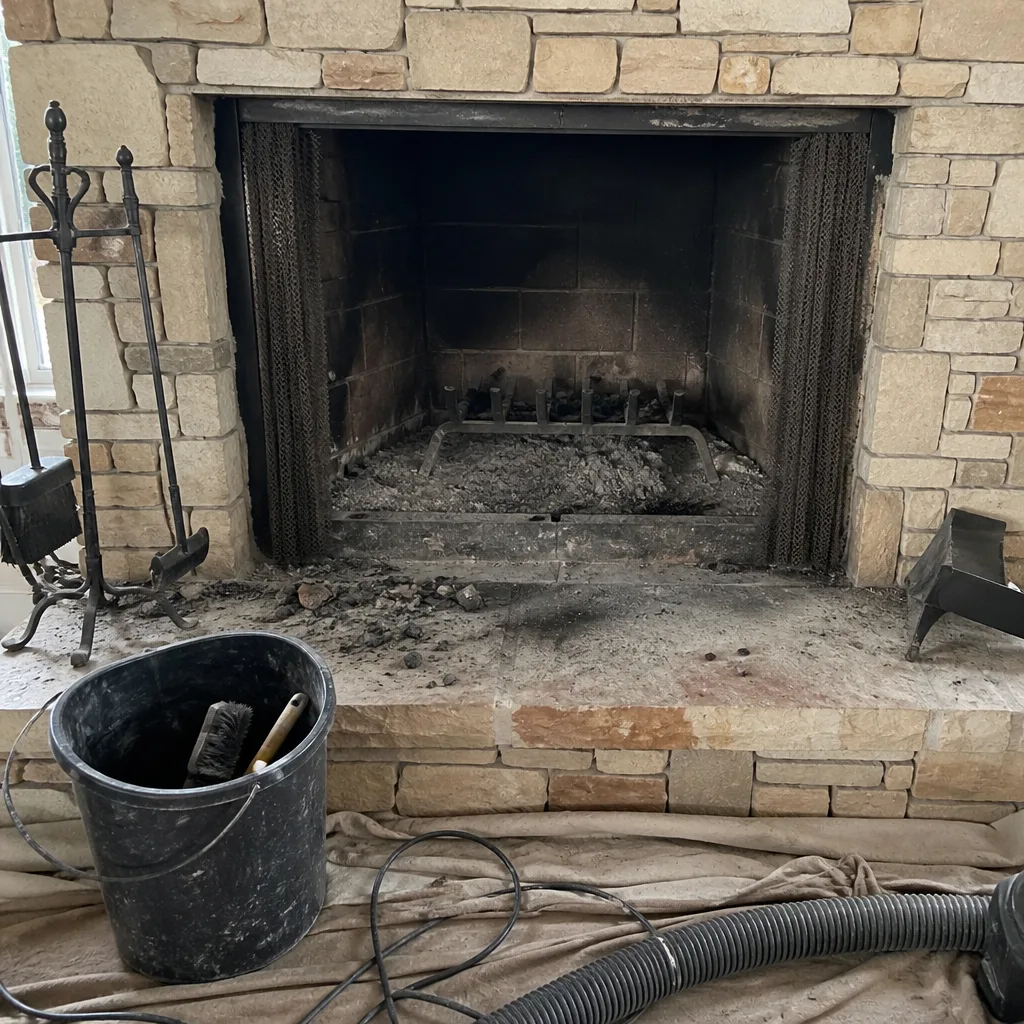 Before
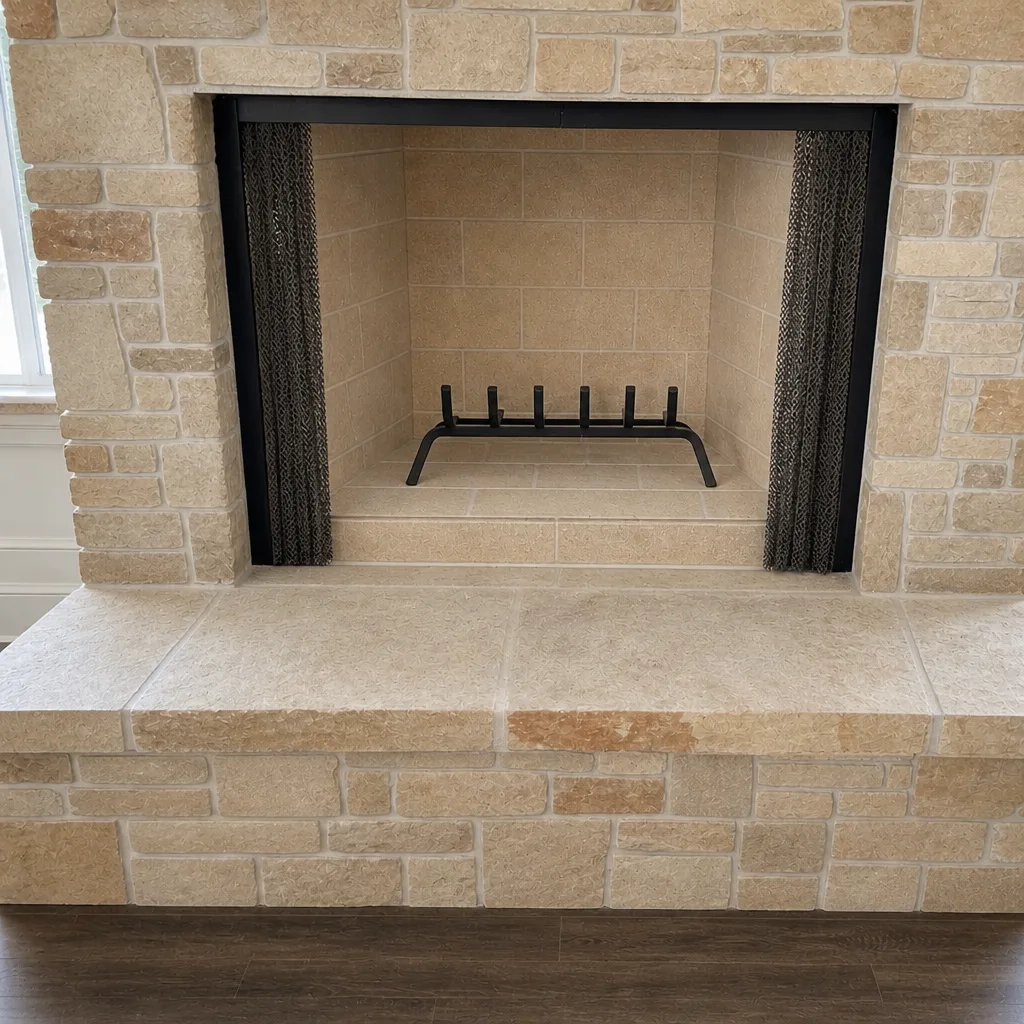 After
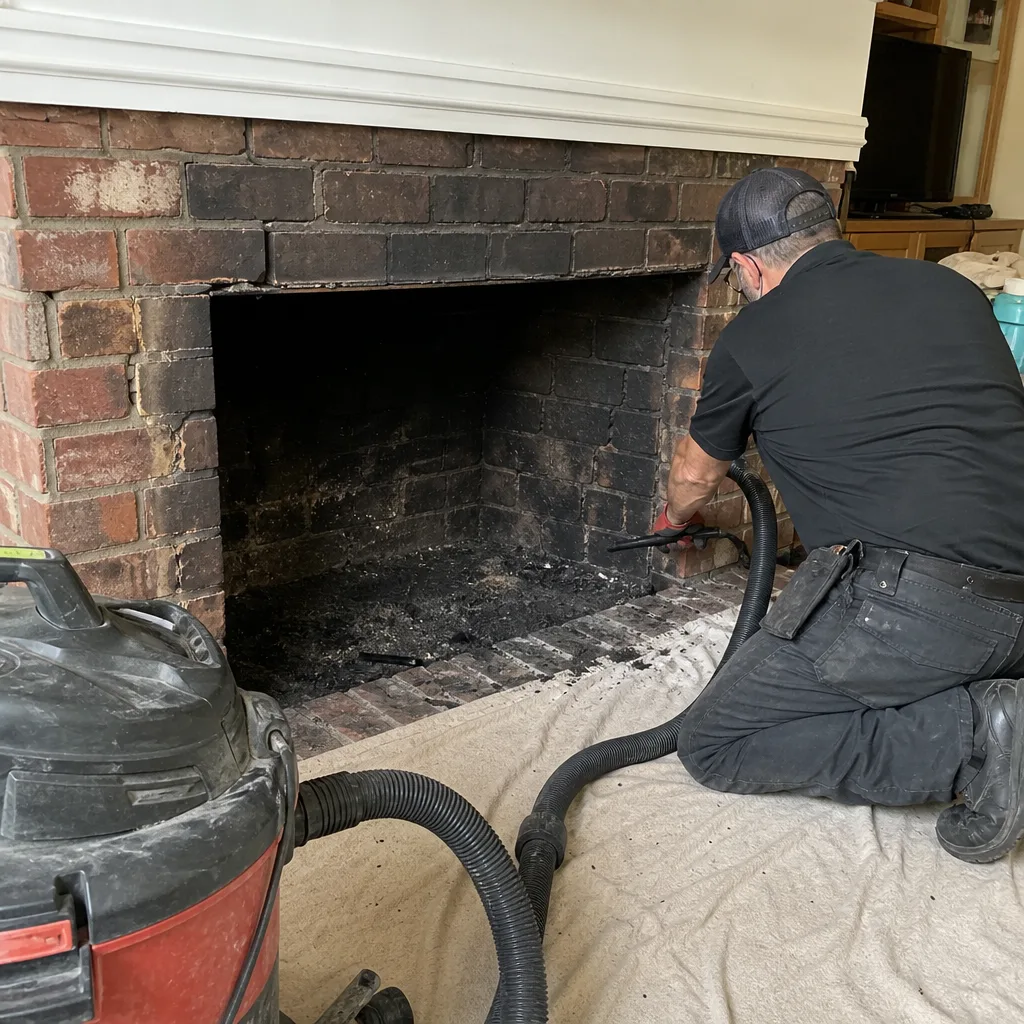 Before
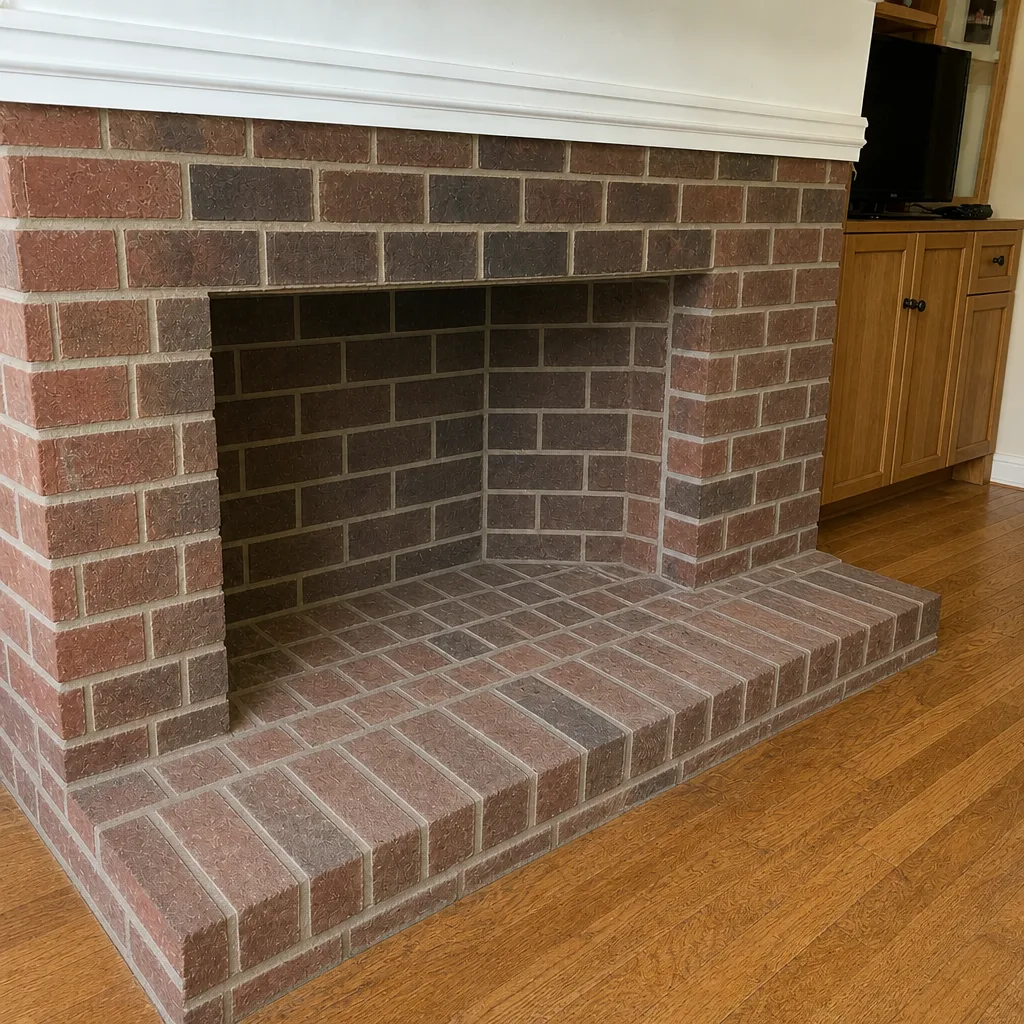 After
When to Call a Professional
Call a professional if you see smoke spilling back into the room, if you smell a persistent creosote, musty, or animal odor, or if you’re seeing flaky debris in the firebox after every fire. Call if you have any reason to believe the chimney has had a fire, if the damper won’t open, if there’s visible cracking in the firebox or the exterior masonry, or if you see efflorescence that’s been present for more than a season. Call if you’re buying or selling a home and don’t know the last time the chimney was inspected. And call if the fireplace simply hasn’t been looked at in several years and you want to know where you stand before the next fire.
Our job on that call is to look, use a camera where it’s needed, show you the photo evidence, and tell you plainly whether the work needs doing now or can safely wait. Chimney Sweep Preston Hollow offers free estimates in Preston Hollow – call (833) 769-0219. We answer 24/7. Fast dispatch from 7am to 7pm, Sunday through Friday.
Frequently Asked Questions
Once a year for a fireplace in regular use, and more often if you burn a lot of fires or burn green or unseasoned wood. The industry standard is an annual inspection with a sweep as needed. Because Preston Hollow winters are mild and fireplace use comes in bursts, a fall sweep before the season starts is the most useful timing. Call (833) 769-0219 if it’s been more than a year, and we’ll get you on the schedule.
The smell itself isn’t the danger – the creosote in your flue is. A strong creosote smell, especially in warm weather, means there’s enough buildup on the flue walls to cause a fire risk. It should prompt a cleaning, not a deodorizer. If you’re not sure whether it’s creosote or something else, call (833) 769-0219 and describe it – we can usually tell which category it falls into over the phone.
Yes. Draft and creosote load are two separate measurements. A fireplace can draw perfectly and still have heavy creosote accumulation in the flue. The visual check from the firebox opening (with a flashlight, looking up the flue) is the fastest way to know. If you see a coating on the flue walls, schedule a cleaning.
Stop using the fireplace and schedule an inspection. Flaking tile debris means the clay liner is spalling, and it’s a signal that a camera inspection is needed. Don’t burn again until someone has looked at the liner. A chimney sweep visit that includes a camera inspection is the right next step, and we can tell you whether a resurfacing or a relining is the correct repair.
Often, yes. If the liner is still structurally sound, HeatShield resurfacing restores the flue from the inside without removing masonry. If the liner is beyond resurfacing, a DuraFlex flexible stainless liner is the standard solution. Both can be done without a full chimney rebuild. The right answer comes from a camera inspection, not from the estimate alone.
That’s efflorescence, and it means water is moving through the masonry and depositing salts on the surface. The stain itself is harmless but what it signals is not. The usual culprits are a cracked crown, failed flashing at the roofline, or a missing cap. A chimney cap & crown inspection is where most of these get traced and corrected. Call (833) 769-0219 and we can take a look.
Creosote continues to accumulate, and at some point it can ignite. A chimney fire can damage or crack the flue liner even when the fire isn’t visible from the room, and it can spread to the structure of the house. Skipping also lets water intrusion, animal intrusion, and small cracks get worse. The safest position is a yearly inspection and a cleaning when it’s needed.
The Bottom Line
Most serious chimney problems give you warning signs long before they become hazardous. The key is knowing which symptom points to which component: exterior staining means water, backdraft means pressure or blockage, creosote smell means buildup, flaking debris means a failing liner, and a stuck damper means the mechanical parts need attention. Sort each sign into “schedule a cleaning soon” or “stop using the fireplace” and you’ll never be caught off guard by a fireplace problem that was visible for months. Get an inspection with camera evidence, so you can see the problem yourself and judge whether it needs fixing now or can safely wait.
If anything in this guide matches what you’re seeing at home in Preston Hollow, call (833) 769-0219 for a free estimate. We answer 24/7. Fast dispatch from 7am to 7pm, Sunday through Friday. And if you’d like a broader picture of what we do, start with the main Chimney Sweep Preston Hollow page.
Written by the team at Chimney Sweep Preston Hollow.