
Last updated November 22, 2026
 Sweep & inspection
 Caps & crowns
 Flue relining
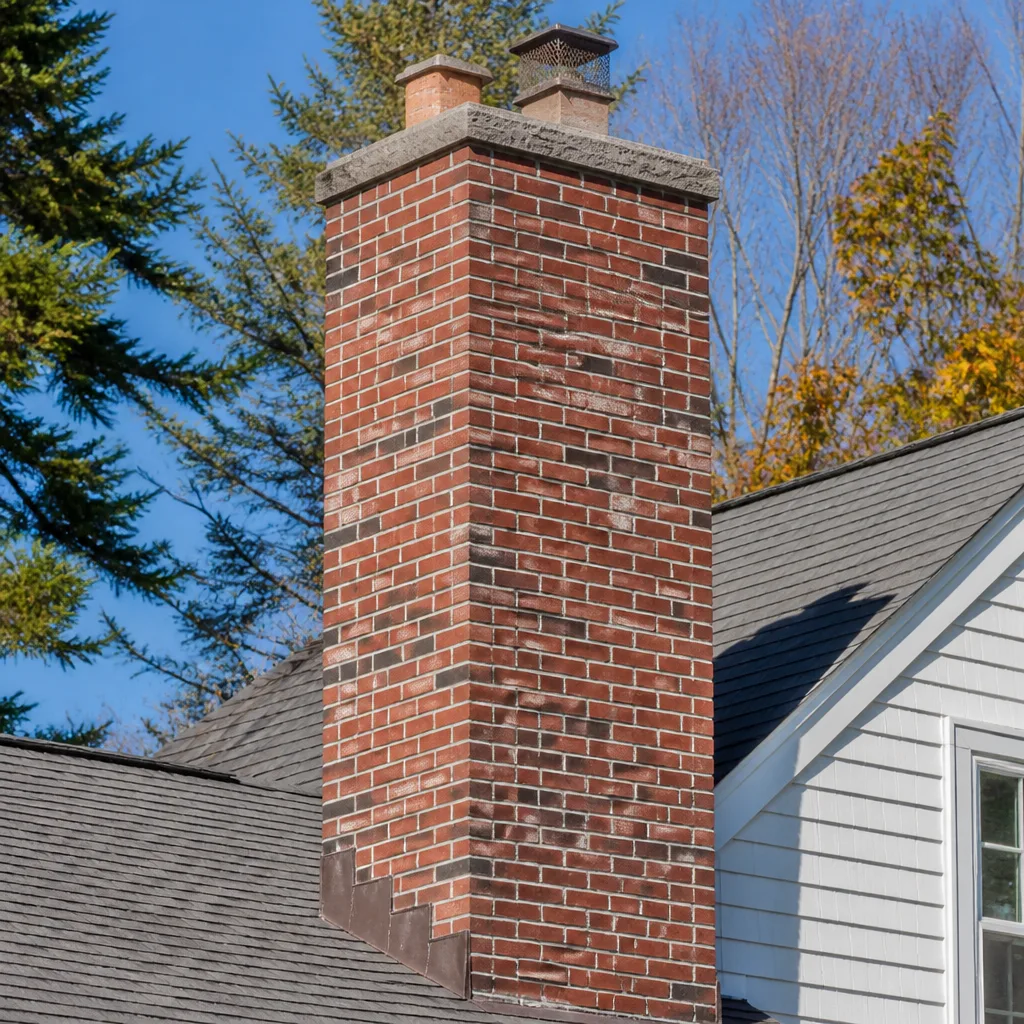 Masonry repair
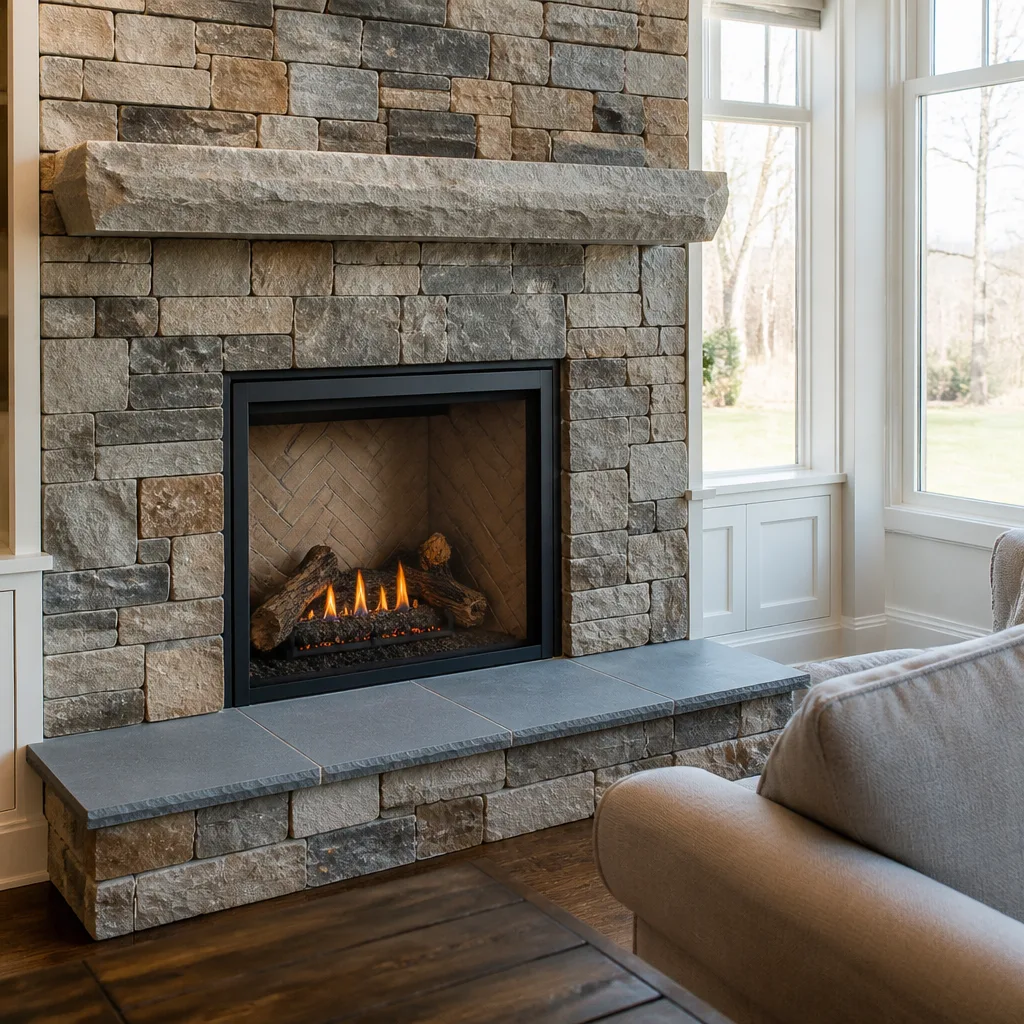 Gas fireplace service
Level 1 sweep and inspection to the NFPA 211 annual standard - flue, crown, cap, and flashing checked and photographed
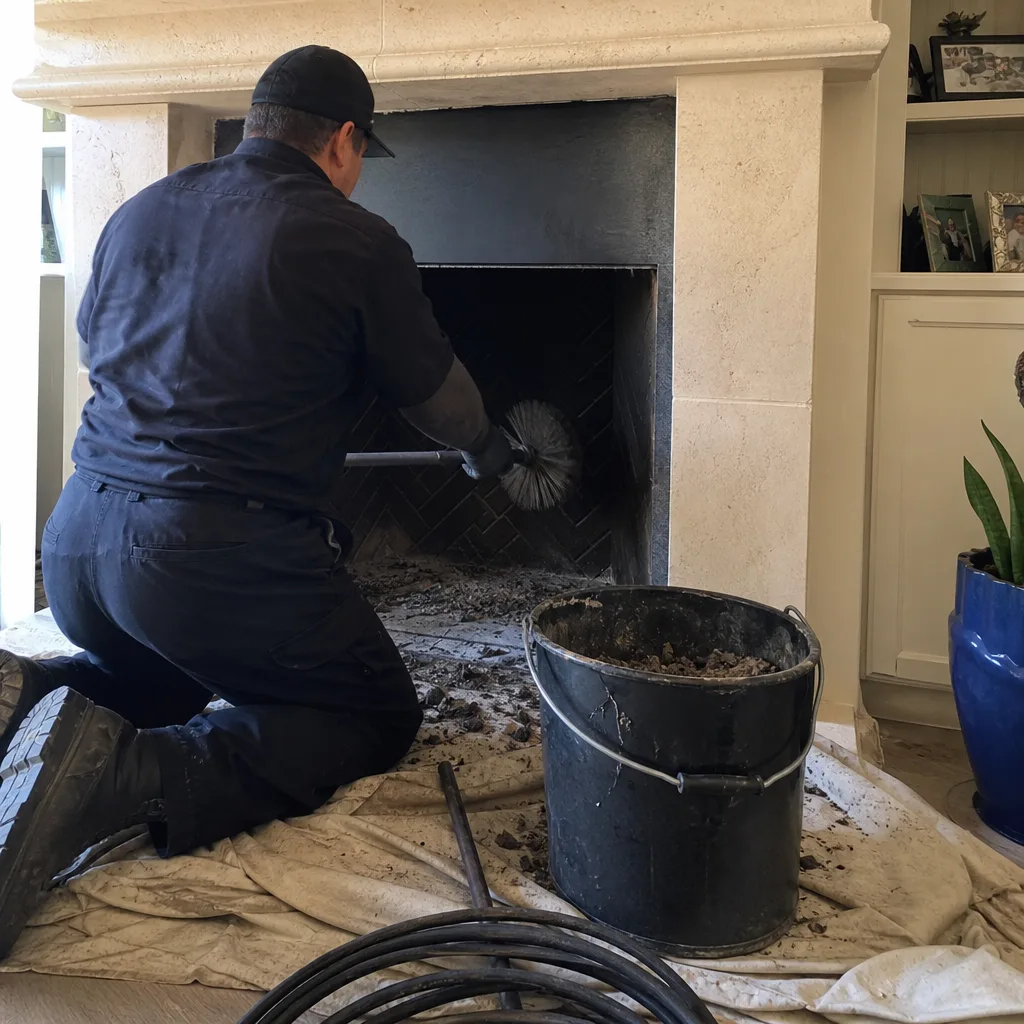
Chimney sweep logs do not sweep chimneys. They loosen some creosote - which then falls where a brush and vacuum still have to collect it.
Chimney Cleaning Permits, Codes & Inspections in Preston Hollow, TX: What You Need to Know
There’s no Texas state license required to sweep your chimney. That sounds reassuring until you realize it also means there’s no automatic baseline of competency the law enforces on anyone who shows up with a brush. Most homeowners in Preston Hollow assume the person on the roof has passed some test, carries some certification, answers to some board. In Texas, none of that is guaranteed. What does govern the work is a different layer entirely: national standards, local building codes, and the permit rules your city enforces on structural changes. This guide walks through what NFPA 211 actually is, when a Preston Hollow chimney repair crosses into permit territory, what a real-estate inspection does and doesn’t look at, and why a code inspection and a professional inspection are two different things that often need to happen together.
Quick Answer
Texas does not license chimney sweeps at the state level, so no state permit is required just to clean a chimney in Preston Hollow. Structural repairs such as liner replacement, crown rebuilds, or firebox reconstruction usually do require a building permit from the local jurisdiction, and all chimney work is expected to follow NFPA 211, the national standard for chimneys, fireplaces, vents, and solid-fuel appliances. Inspections fall into two categories that get confused constantly: a code inspection enforced by a local official, and a professional Level I, II, or III inspection performed by a chimney technician.
Styles & brands we work with
- Sweep & inspection
- Caps & crowns
- Flue relining
- Masonry repair
- Gas fireplace service
Table of Contents
- Why Texas Doesn’t License Chimney Sweeps (And What Fills the Gap)
- What NFPA 211 Actually Requires and How Dallas County Applies It
- When a Chimney Repair Triggers a Building Permit in Dallas
- Code Inspection vs. Professional Level II Inspection: The Difference That Matters
- What a TREC Real-Estate Inspection Covers for Chimneys (And What It Skips)
- How Chimney Fire Insurance Claims Interact With Your Inspection Records
- Preston Hollow Specifics: Climate, Housing Stock, and Chimney Age
- The Step-by-Step Process From First Call to Final Sign-Off
Why Texas Doesn’t License Chimney Sweeps (And What Fills the Gap)
Texas is one of the states with no occupational licensing for chimney sweeps. There’s no state exam, no state-issued credential, no registry maintained by an agency in Austin. Anyone can print a business card that says chimney sweep. That’s the reality, and it’s worth understanding clearly before you book the first appointment in Preston Hollow.
A few things fill that gap. First is NFPA 211, which functions as the de facto rulebook even without a state mandate. Second is local code enforcement, which does hold structural work to a permit and inspection process. Third is voluntary certification through industry bodies, which a serious professional pursues but which the state does not require.
- No state license exists for chimney sweeping in Texas, so “licensed” is not a term that applies to a sweep in this state.
- NFPA 211 is the standard every legitimate chimney professional works to, whether or not a local inspector checks it.
- Local building permits apply to structural repairs but usually not to routine cleaning.
- Voluntary certification from industry organizations is a real quality signal, but you have to ask for it.
What does this mean for you? It means the burden of vetting sits with the homeowner. Ask directly what standard the company works to, what inspection levels they perform, and what documentation you’ll receive after the visit. A sweep who can’t answer those three questions in plain language isn’t a sweep you want on your roof.
Our technicians have up to 9 years of experience, and every job we connect you with starts from the same foundation: work to NFPA 211, document what we find, and show the homeowner the evidence before recommending a single repair.
What NFPA 211 Actually Requires and How Dallas County Applies It
NFPA 211 is the “Standard for Chimneys, Fireplaces, Vents, and Solid Fuel-Burning Appliances,” published by the National Fire Protection Association. It’s the backbone of chimney safety in the United States, and it’s what local code officials reference when they review chimney work in Dallas County.
In plain terms, NFPA 211 sets the rules for:
- Clearances between a chimney and combustible materials like framing, drywall, and roofing.
- Liner requirements for flues serving fireplaces, wood stoves, and other solid-fuel appliances.
- Inspection levels, defining Level I, II, and III inspections and when each is appropriate.
- Condition and maintenance, including when a flue is too damaged to safely use.
- Venting for appliances, ensuring combustion gases exit the home rather than backing up into it.
Here’s the part homeowners in Preston Hollow don’t always grasp. NFPA 211 is not a law by itself. It becomes enforceable when a local jurisdiction adopts it into its building code, which Dallas and the surrounding jurisdictions do for structural and mechanical work. That means a liner installed without meeting NFPA 211 clearance and material standards can fail an inspection, and a chimney with a compromised flue can be red-tagged even though no one was ever “licensed” to inspect it.
In practice, NFPA 211 shows up most often at three points: the initial inspection after you move in, the review of a repair plan before work begins, and the documentation you’ll need if you ever file an insurance claim. We use DuraFlex flexible liner systems for relining work because they meet the standard’s requirements for continuous, sealed flue pathways rather than relying on the original masonry liner that’s likely already compromised.
When a Chimney Repair Triggers a Building Permit in Dallas
Not every chimney job needs a permit. Routine cleaning never does. Small repairs like replacing a cap or resealing a crown usually don’t. But structural work does, and that line is worth knowing before you approve a bid in Preston Hollow.
In Dallas and most surrounding jurisdictions, a chimney repair that probably requires a building permit includes:
- Full liner replacement, whether the liner is stainless steel or a cast-in-place resurfacing system.
- Crown rebuilds, particularly when the crown is being replaced to full thickness rather than patched.
- Firebox reconstruction, where masonry is being removed and rebuilt.
- Chase or chimney stack reconstruction, where the upper portion of the chimney is being taken down and rebuilt.
- Any change to the flue configuration, including adding a second flue or converting from an open fireplace to an insert.
Cosmetic repairs, cap replacements, damper work, and routine maintenance generally do not require a permit. Neither does chimney sweeping, regardless of whether the sweep uncovers issues that will later need one.
What’s important to understand is that permit requirements vary by jurisdiction and by scope. A crown patch might be permitted as maintenance or flagged as structural depending on the scope drawn in the plan. This is why the written estimate needs to spell out the exact scope of work: a vague bid leaves both you and the inspector guessing. Ask your contractor whether they pull the permit, and ask which jurisdiction they’ll file with, because the address in Preston Hollow matters here.
If you’re not certain whether a job on your house crosses the line, the safest path is to ask the local building department before work starts, and to have the contractor include the permit in the scope in writing. A chimney sweep who’s done this work for years will know which repairs get filed and which don’t, and a good one will tell you up front.
Code Inspection vs. Professional Level II Inspection: The Difference That Matters
These two get confused constantly. A code inspection is performed by a local official to verify that permitted work matches code. A professional inspection is performed by a chimney technician to evaluate the condition of the chimney. They overlap, but they are not the same thing, and in Preston Hollow you’ll often need both.
What a code inspection does
A code inspector reviews permitted work against the adopted building code and NFPA 211. They check clearances, materials, and workmanship to confirm the job as filed. They do not sweep the chimney, they don’t run a camera up the flue, and they don’t evaluate creosote levels. Their scope is narrow and specific to the permit.
What a professional Level I inspection covers
A Level I inspection is the standard annual inspection for a chimney that hasn’t changed. Per NFPA 211 it includes:
- Visual check of the accessible portions of the chimney, firebox, and flue.
- Verification that the damper operates and the firebox has no obvious cracks or gaps.
- Assessment of creosote buildup and any obstruction.
- Review of the cap, crown, and visible exterior masonry.
What Level II adds
A Level II inspection adds a video camera run through the flue and is required when the chimney has changed (new appliance, different fuel), when a property is being sold, or after a chimney fire or seismic event. Level II is what we perform before any relining work, because you cannot evaluate a flue you can’t see.
Why they need to happen together
A code inspector signs off on permitted work. A professional inspection documents the condition that motivated the permit in the first place. If you get one without the other, you’re missing half the picture. Have a professional Level II inspection before the permit work is designed, and have a code inspection after it’s completed. That combo gives you a documented chain from problem to solution.
What a TREC Real-Estate Inspection Covers for Chimneys (And What It Skips)
If you’re buying or selling a home in Preston Hollow, your real-estate inspection is governed by Texas Real Estate Commission (TREC) standards. TREC sets what a licensed inspector must and may not inspect, and the chimney is one of the areas with the most ambiguity.
What a TREC inspection includes for chimneys
Under TREC standards, the inspector is required to inspect the accessible portions of the chimney, the firebox, the damper, and the visible portions of the flue from the firebox. They will typically note visible damage, signs of moisture intrusion, and condition of the cap and crown if visible from the ground or roof.
What it deliberately excludes
TREC inspections are explicitly limited by scope:
- No video camera of the flue interior. A TREC inspector is not required to run a camera and almost never does.
- No disassembly of any component to inspect behind it.
- No evaluation of code compliance for prior work.
- No opinion on whether the chimney is safe to use for the next burning season.
- No prediction of the remaining service life of the liner or firebox.
What that means for you: a TREC inspection is a snapshot, not a warranty. It’s a useful starting point, but a clean TREC report on the chimney tells you almost nothing about the interior of the flue. That’s why industry practice, and what we recommend to any Preston Hollow buyer or seller, is to pair the TREC inspection with a professional Level II chimney inspection. That closes the gap and gives both sides of the transaction something they can rely on.
Sellers, this matters strategically. A buyer who receives a Level II report during due diligence is far less likely to renegotiate later. A buyer who discovers a hidden liner problem after closing is far more likely to be upset about it. Get the report before you list.
How Chimney Fire Insurance Claims Interact With Your Inspection Records
If a chimney fire or smoke event ever leads to an insurance claim, the single most valuable thing you can have is documentation of prior inspections and cleaning. This is where the compliance gray zone in Texas has real financial consequences, and homeowners in Preston Hollow should understand it before something goes wrong.
Most homeowner policies treat a chimney fire as a covered event, but they also expect the homeowner to have maintained the chimney reasonably. What “reasonably” means varies by carrier, but it almost always means being able to show:
- That inspection records exist for the property.
- That creosote was being managed (i.e., the chimney was being swept).
- That any identified issues were addressed, not ignored.
- That the work performed met applicable standards (NFPA 211 is what adjusters and their engineers use).
What quietly kills claims is the absence of records. A homeowner who’s been in the house for years without a documented sweep has almost nothing to show when an adjuster asks. Conversely, a homeowner with a clean inspection report from a year ago and a documented sweep history is in a completely different position.
Our practice is to provide a written report with photos after every inspection and every sweep, including the condition of the flue, the creosote level, and the condition of the cap, crown, and firebox. That report is what you’ll produce if it’s ever needed. It’s also what turns a suspicion into a fact: you can see exactly what we saw, which is the same standard we hold ourselves to when recommending liner work or a fireplace repair.
The other half of the insurance question is scope. A claim involving smoke damage to interior finishes is often handled by a different adjuster than a claim involving structural damage to the chimney itself. Having one company that handles the chimney side end-to-end matters, because there’s nobody to hand the file off to when the structural questions come up.
Preston Hollow Specifics: Climate, Housing Stock, and Chimney Age
Preston Hollow chimneys see a specific set of conditions that shape how code applies. Winters here are mild, which is often cited as a reason to skip maintenance, but mild winters aren’t the story. The story is the long burning season from late fall through early spring followed by months of heat and humidity.
That cycle matters for two reasons. First, creosote builds up over a long burn season just as easily in Dallas as it does anywhere else, and glazed (third-degree) creosote is the fuel source that makes chimney fires dangerous. A mild winter doesn’t reduce creosote; it just gives you more months where you’re not thinking about the chimney. Second, the humidity of a Texas summer works on exterior masonry and on the cap and crown more aggressively than in dry climates. Water intrusion at the crown is the leading cause of masonry deterioration and hidden liner damage in this part of Preston Hollow, and it’s the reason we use Gelco and Famco components on cap and crown work: they’re built to hold up to the sun and humidity cycle this region sees.
The housing stock adds a second layer. Preston Hollow has a wide mix of homes, from mid-century construction where the original clay-tile liners have had decades to crack and spall, to newer construction where installation quality is the variable. Older chimneys are more likely to need significant work at first inspection; newer chimneys are more likely to have issues that a Level II catches but a visual doesn’t. Both kinds of homes benefit from the annual inspection cadence the standard calls for.
Another local factor is real-estate turnover. Preston Hollow transactions often involve pre-listing inspections and post-inspection negotiations, so having a professional inspection report ready before a buyer’s inspector climbs on the roof is a practical advantage. It moves the conversation from “what will the buyer find” to “here’s what we found and here’s what’s been done about it.”
Finally, code enforcement here follows Dallas and the surrounding jurisdictions. Local permit and inspection requirements are what they are, and the pattern in Preston Hollow is no different from the rest of the county: structural work gets filed, routine cleaning doesn’t, and NFPA 211 is the standard everyone references whether or not the city has adopted it in writing for a particular scope.
The Step-by-Step Process From First Call to Final Sign-Off
Here’s how a proper job flows in Preston Hollow, from first contact to the paperwork you keep in a file. This is what we walk every customer through, and it’s what a competent sweep will do without needing to be asked.
- Initial call and qualification. Describe what you have: fireplace type, when it was last swept, any known issues. Ask whether the sweep performs Level II inspections, what standard they work to, and what documentation you’ll receive. A sweep who can’t answer those clearly is not the right call.
- Schedule the inspection. Book the inspection before the burning season if possible. Preston Hollow sees demand spike in the fall, so earlier is better for getting on the schedule without pressure.
- On-site Level I or Level II inspection. The technician evaluates the accessible components. If a Level II is called for by a transaction, a change in appliance, or a prior fire, that includes a video camera run through the flue.
- Written report with photos. You should receive a written report documenting findings, with photos of anything that needs attention. This is your record and your protection if you ever file a claim.
- Estimate for any recommended work. The estimate is written, itemized, and tied to what the inspection actually found. Nothing gets recommended without photographic evidence you can see for yourself.
- Permit decision. If the work is structural (liner replacement, crown rebuild, firebox reconstruction), the contractor files the permit with the local jurisdiction before work begins. Ask which jurisdiction and confirm the scope in writing.
- Work performed. Structural work is completed to NFPA 211 and the adopted local code. Materials are documented, whether that’s a HeatShield resurfacing system for non-invasive liner restoration or Copperfield components on the cap and crown.
- Final inspection and sign-off. The code inspector reviews the permitted work. You receive the final report, the permit documentation, and the professional inspection record. That combined file goes in your home records for the next transaction or claim.
Notice what’s not in that list: “the sweep tells you need a new liner and you take their word for it.” The whole point of the process is that every recommendation traces back to evidence. If a sweep can’t show you the photo of the cracked flue tile or the glazed creosote, the recommendation doesn’t clear the bar, and you’re within your rights to say so.
If you’re also thinking about the routine part of the job, a chimney sweep visit is the right starting point. That’s typically where the first honest assessment happens. And if the inspection turns up water intrusion at the top of the chimney, our chimney cap & crown work is where we close that problem before it becomes a liner issue.
Common Mistakes to Avoid
- Assuming a “licensed” sweep exists in Texas. There’s no state license for chimney sweeps in Texas, so any claim of one is either a misunderstanding or a stretch. Ask instead about certification, standard of work, and documentation.
- Skipping the Level II because the TREC report looked clean. TREC inspections don’t run a camera and don’t evaluate whether the chimney is safe for the next burning season. A clean TREC chimney section is not the same as a clean flue.
- Not asking who files the permit. On work that requires a permit, either the contractor files or the homeowner does, and the answer changes the risk profile. Get it in writing which jurisdiction is being filed and who’s responsible.
- Accepting a verbal recommendation without photos. If a technician says you need a full reline but can’t show you the evidence on a photo or video, wait. The safest move in Texas is to get a second professional opinion with documentation.
- Booking the sweep only in October. Preston Hollow schedules fill in the fall, and last-minute booking often means taking whoever’s available. Book the inspection in late spring or summer when the schedule is wider and the technician can take their time.
- Not keeping inspection and cleaning records. The single most important thing you can do for a future insurance claim is to have a documented history. A report you threw away six years ago doesn’t help you today.
- Assuming any sweep can do liner work. Liner replacement and resurfacing require tools and training beyond a standard sweep. Many local sweep-only companies have to turn that work down, so ask before you book if liner work is likely.
See the difference
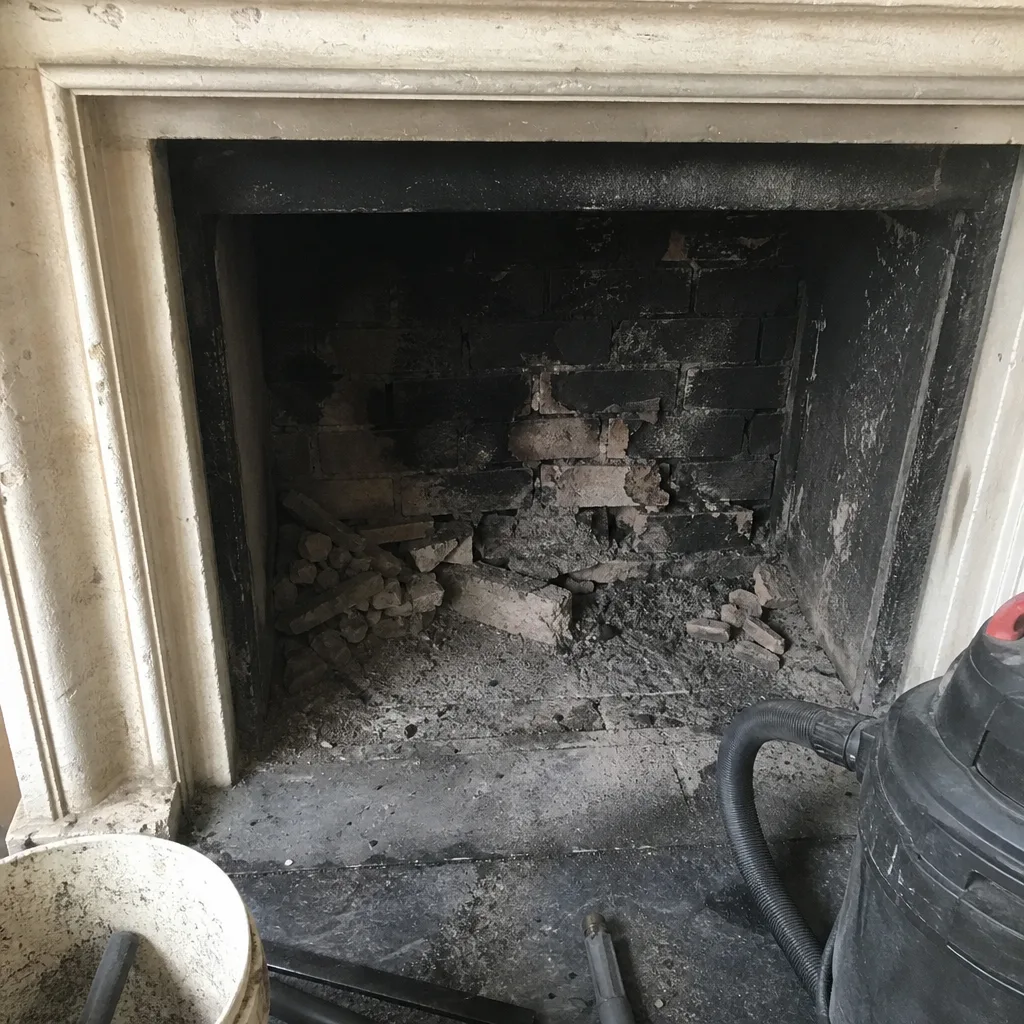 Before
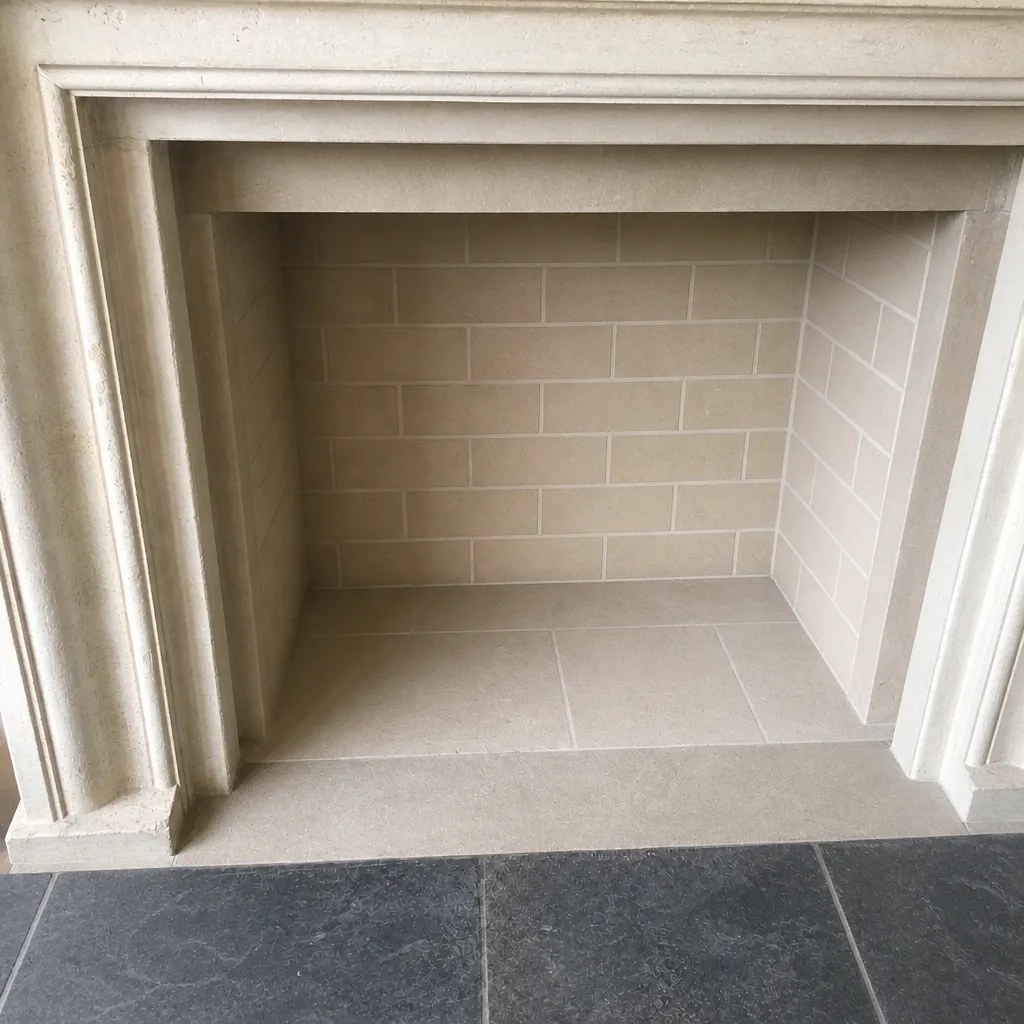 After
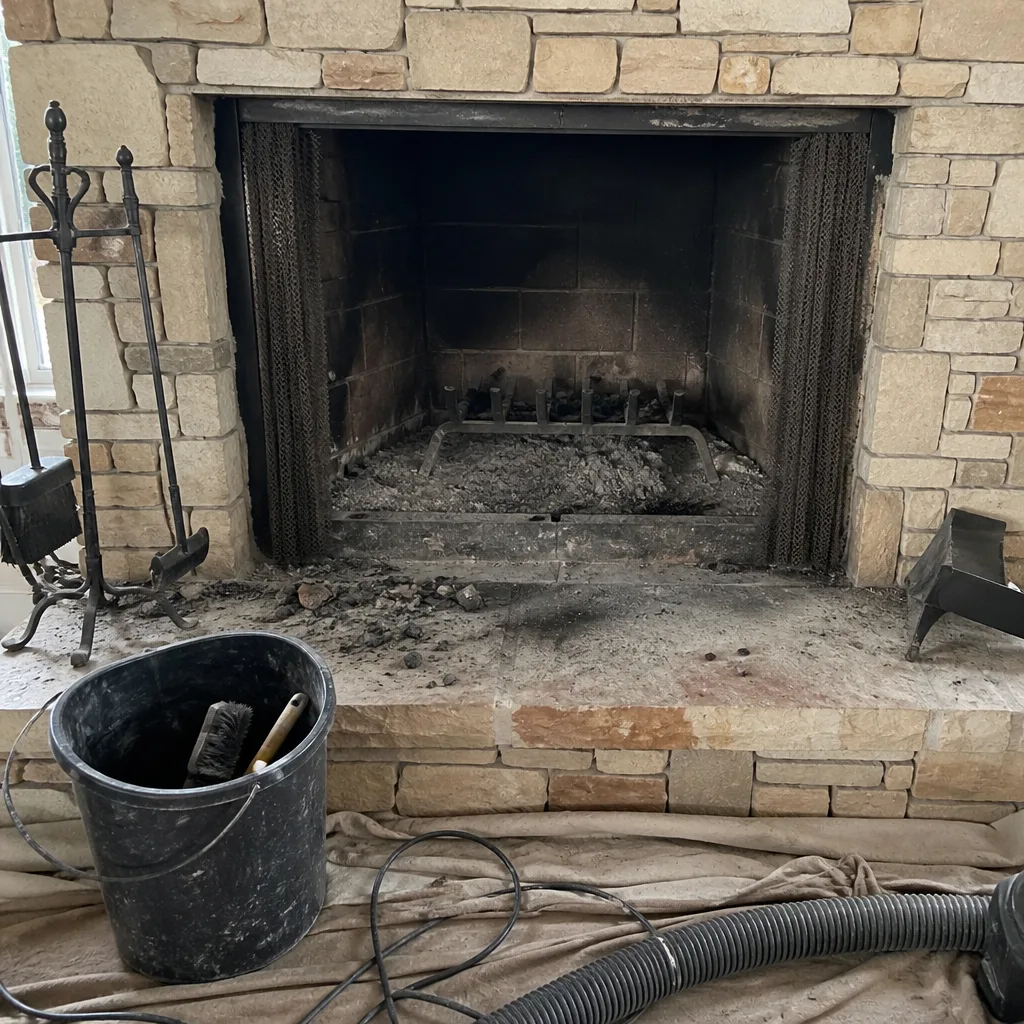 Before
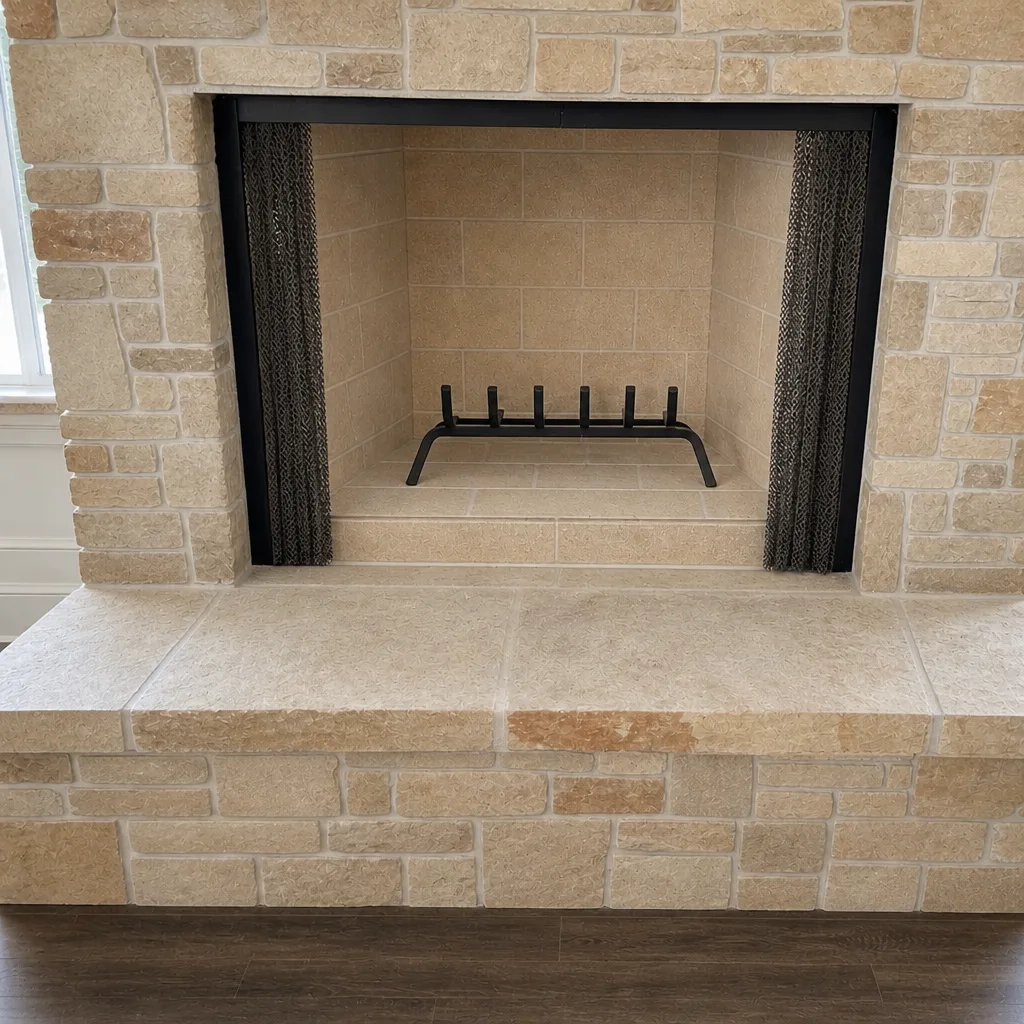 After
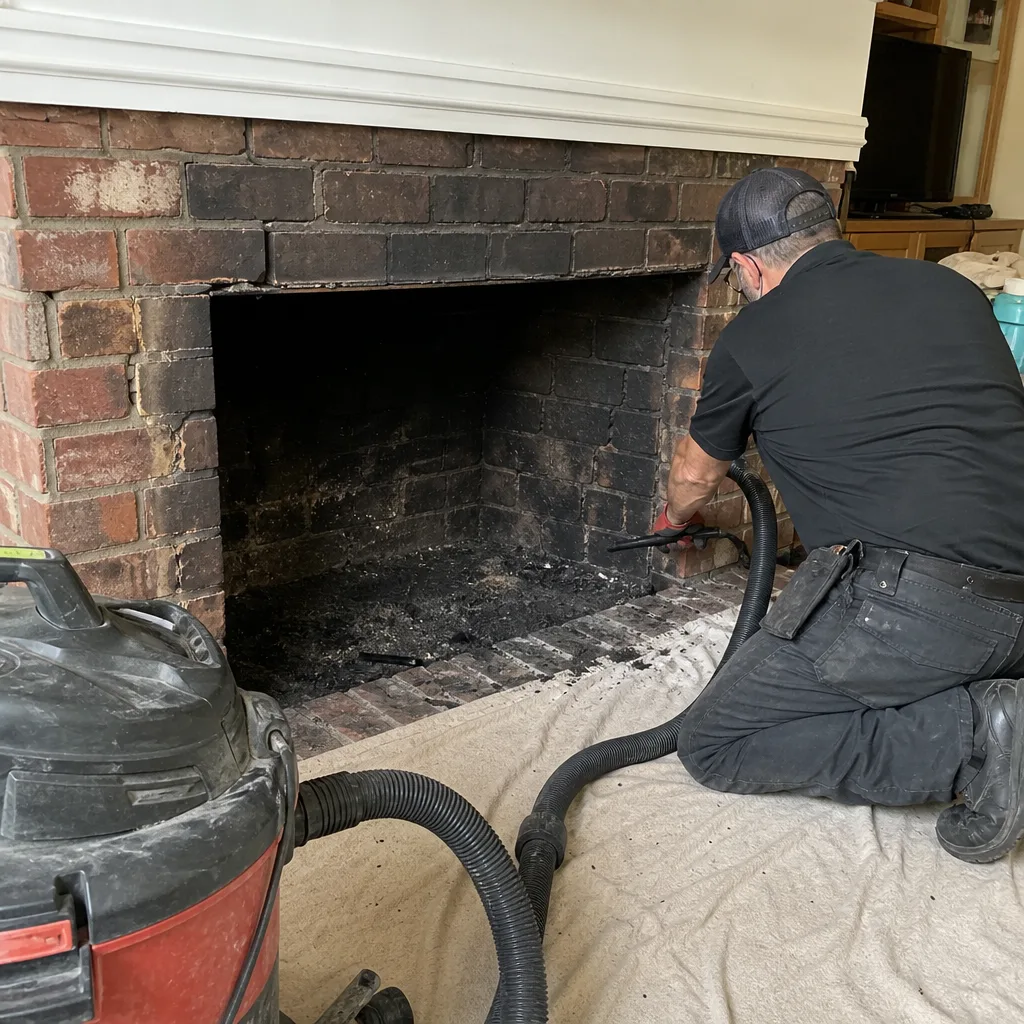 Before
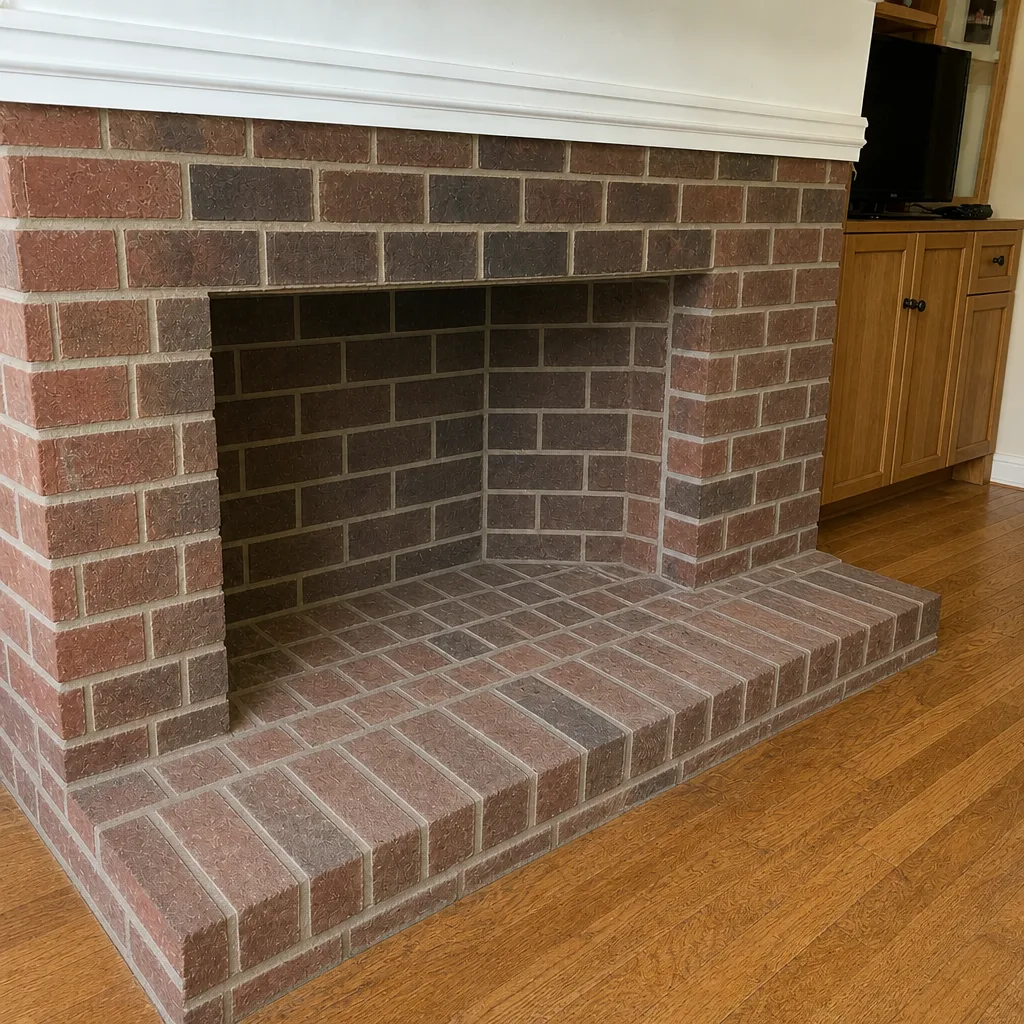 After
When to Call a Professional
Some signs mean call today, others mean call before the next burning season. Call today if you smell smoke in the house when the fireplace is not in use, if there’s visible damage to the firebox or damper, if the cap or crown is missing or visibly failing, or if you’ve had a chimney fire (even a small one you put out yourself). Call before the next burning season if you can’t recall the last sweep, if you’re buying or selling the home, if you’ve just moved in and don’t know the maintenance history, or if you’ve never had a Level II inspection. Call before approving any structural repair, so the inspection and the estimate come from the same place and nothing gets recommended without photographic evidence. Chimney Sweep Preston Hollow offers free estimates in Preston Hollow. Call (833) 769-0219. We answer 24/7. Fast dispatch from 7am to 7pm, Sunday through Friday.
Frequently Asked Questions
No. Routine chimney cleaning in Preston Hollow does not require a building permit, and there is no state licensing requirement for a chimney sweep in Texas. A permit only comes into play when the work is structural, such as liner replacement, a crown rebuild, or firebox reconstruction. Call (833) 769-0219 for an exact quote; estimates are free.
No. Texas does not license chimney sweeps at the state level, so there is no state exam, no state credential, and no state registry for the trade. The industry standard that applies to the work instead is NFPA 211, and local building codes govern structural repairs. Ask a sweep what standard they work to and whether they perform Level II inspections. Call (833) 769-0219 with any questions about the standard; estimates are free.
A code inspection is performed by a local official to verify that permitted work matches the building code, and its scope is limited to the permit. A Level II chimney inspection is performed by a professional technician and adds a video camera run through the flue to evaluate the condition of the chimney. In Preston Hollow, both typically happen on structural jobs: professional inspection before the work is designed, code inspection after it’s completed. Call (833) 769-0219 to book a Level II inspection; estimates are free.
No. A TREC real-estate inspection is limited by scope: it covers the accessible portions of the chimney, firebox, damper, and visible flue, but the inspector is not required to run a video camera and almost never does. It also doesn’t evaluate whether the chimney is safe for the next burning season. Pair it with a professional Level II inspection if you’re buying or selling in Preston Hollow. Call (833) 769-0219 to book one before the transaction closes; estimates are free.
Structural repairs generally require a building permit, including full liner replacement, crown rebuilds, firebox reconstruction, chase or stack reconstruction, and any change to the flue configuration. Cosmetic repairs, cap replacements, damper work, and routine cleaning generally do not. Because requirements vary by jurisdiction and scope, confirm with the local building department before work begins and have the contractor put the permit in the written scope. Call (833) 769-0219 for help determining what your job needs; estimates are free.
Industry practice under NFPA 211 is an annual inspection, and a sweep whenever creosote buildup reaches a level that warrants it (typically one-eighth of an inch, per the standard). The mild winters in Preston Hollow don’t reduce creosote buildup during a long burning season, so annual inspection remains the right cadence even when you’ve had a “light” year. Call (833) 769-0219 to book an inspection before the next burning season; estimates are free.
The Bottom Line
Texas doesn’t license chimney sweeps, and that’s an uncomfortable fact to sit with. What fills the gap is a combination of NFPA 211, local building code, and a professional standard that a serious sweep holds themselves to regardless of what the state requires. In Preston Hollow, that means understanding when a permit applies (structural repairs, generally), what a code inspection does versus a Level II inspection (different things, both useful), and what a TREC inspection will and won’t cover (it won’t look up the flue). Get a professional Level II inspection before you approve structural work, keep the written report with photos, and pair it with the code inspection after the work is done. That’s the compliance picture that actually protects you.
Written by the team at Chimney Sweep Preston Hollow.