
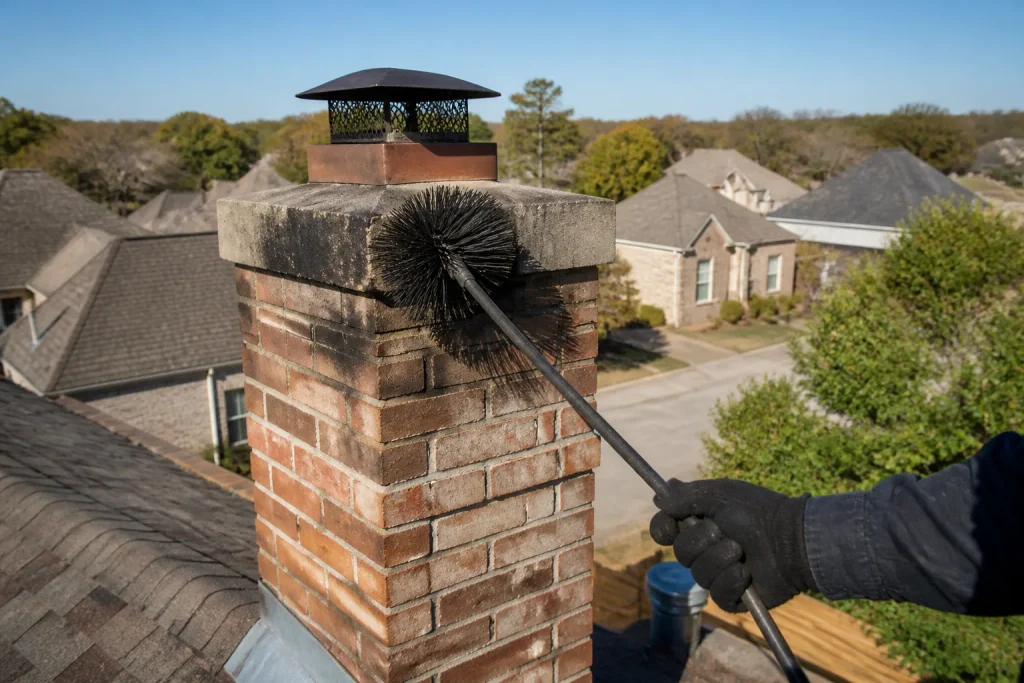
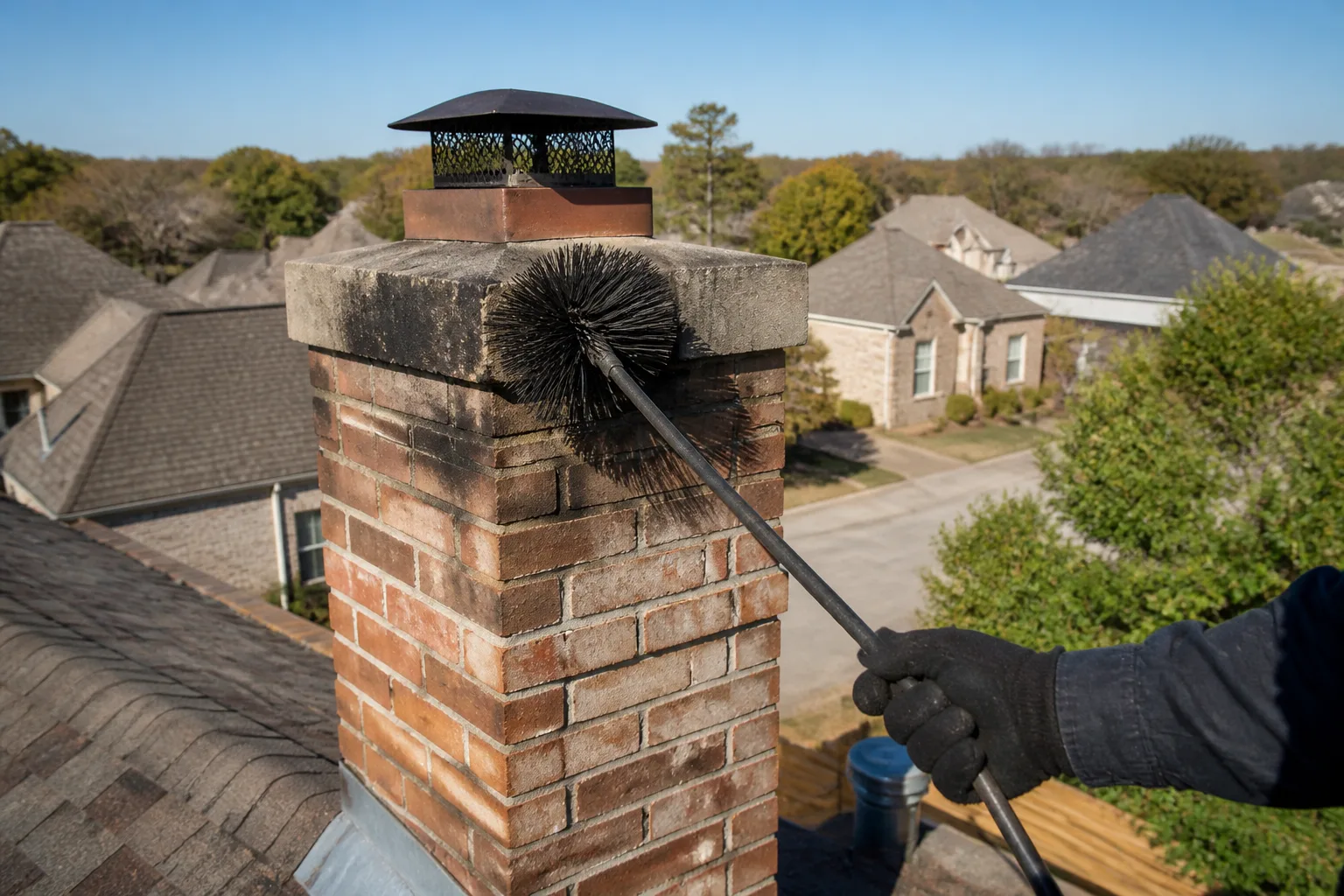
Top Signs You Need Chimney Cleaning Service – Don’t Ignore These
That faint campfire smell in your Preston Hollow living room on a warm October afternoon isn’t ambiance. It’s creosote off-gassing through micro-cracks in the flue, and it’s been building since April. Most homeowners wait for something dramatic: a roaring chimney fire, a collapse, a carbon monoxide detector going off. In our experience, the chimney rarely announces itself that way. It whispers. Ticking metal, a musty draft, a fire that takes three tries to catch – those are the warnings. Learn to hear them and you’ll spend far less on repairs.
If you’d rather not climb onto the roof or guess at what’s happening inside the flue, call (833) 769-0219. We answer 24/7. Fast dispatch from 7am to 7pm, Sunday through Friday.
What Are the Signs Your Chimney Needs Cleaning Right Now?
The clearest sign a chimney needs sweeping is a creosote layer thicker than 1/8 inch on the flue walls, but since most homeowners can’t see that, watch for these instead: a strong campfire or tar smell when there’s no fire, a fire that struggles to catch or drafts smoke into the room, black soot flaking onto the firebox floor, and a rough, crunchy texture visible just above the damper. Any one of these means the flue is overdue. Here’s what we tell Preston Hollow homeowners to look for:
- Smell test: A sharp, acrid, or campfire odor on a warm day is creosote vaporizing. A musty, damp-earth smell points to water intrusion instead.
- Sound test: Ticking or popping from the chimney – especially when the fire is dying down – can signal creosote flaking or metal components expanding unevenly. Popping during a fire is a red flag worth a professional look.
- Draft test: Smoke rolling out of the firebox instead of up the flue, a fire that needs kindling and prayers to ignite, or a lazy, weak flame.
- Visual test: Soot streaks above the firebox opening, black flakes on the hearth, or a heavy, glossy buildup visible up the throat.
Signs 1 through 3 usually mean cleaning is overdue. Sign 4 with glossy, glassy creosote – what we call glazed creosote – may mean the flue has moved past a simple sweep into resurfacing territory. That distinction matters, and it’s the first thing a proper inspection sorts out.
Cleaning Signs vs. Damage Signs: Why the Difference Matters
A dirty chimney needs a sweep. A damaged chimney needs repair before anyone sweeps it. Confusing the two is how small problems become structural ones. Cleaning signs are cosmetic and reversible: soot, flaky creosote, a smoky draft. Damage signs are structural: cracked flue tiles, a crumbling crown, a rusted damper, separated mortar joints, or a chimney cap that’s gone missing. In our experience across Preston Hollow, homeowners often call for a routine chimney sweep and learn the flue tiles are cracked – and that’s a good outcome, because we caught it before it turned into a liner replacement.
Your chimney is a system – cap, crown, liner, firebox – and we service all of it. When a sweep reveals damage, you’re not handed off to another contractor. We handle the resurfacing with HeatShield, relining with DuraFlex flexible liner systems, and cap or crown work with Gelco and Famco components. One company, every step. That matters here because water intrusion through a failed crown is the leading cause of chimney damage, and a sweep-only company that can’t fix a crown just tells you to find someone who can.
Why North Texas Chimneys Age Differently
Our humid summer heat does something to creosote that cold-climate climates don’t have to worry about: it softens and re-cures it. Creosote that builds up through spring and sits through a Preston Hollow summer absorbs moisture from the air, breaks down, and can migrate into hairline cracks in the flue tile. By the time October arrives, a chimney that sat unused all summer may actually be in worse shape than one that saw steady winter use, because dormant chimneys don’t get the seasonal airflow that helps dry things out.
The result is a specific pattern we see in Preston Hollow: a fireplace sits idle from March to October, the creosote weathers, and the first fire of the season produces that campfire smell and a sluggish draft. None of that means your house is about to burn down. It means your chimney went through a summer it wasn’t designed for. A sweep before the heating season – ideally in early fall – is the practical response. We use Chimney Sweep Preston Hollow standards for every job, which means a full camera inspection and a written report of what we found, not just a brush and a handshake.
The Signs Homeowners Dismiss: Smells, Sounds, and Draft
Most homeowners think of chimney problems as visible. The most useful warning signs aren’t. They’re sensory, subtle, and easy to explain away:
Smells
A musty smell is different from an acrid one. Musty means moisture – a failed cap, a cracked crown, water wicking into the masonry. Acrid or campfire-like means creosote. If you can smell your fireplace when it’s not burning, something is off in the flue.
Sounds
Ticking, popping, or a metallic crackle when the fire dies down can indicate creosote flaking or components expanding under heat. Chimney fires aren’t always dramatic; some burn quietly inside the flue and go unnoticed. If you’ve had a hot, fast-burning fire and heard popping, don’t assume it was just the wood.
Draft Behavior
Smoke rollout, slow ignition, and a fireplace that only works when the window is cracked open all point to a draft problem. Sometimes it’s a dirty flue. Sometimes it’s a blocked cap. Sometimes it’s a house that’s too airtight – a real thing in newer Preston Hollow construction. Either way, it’s worth a professional look before you light another fire.
Light humor break: if your fireplace only works when the whole family stands in the living room holding their breath, that’s not a quirk. That’s a diagnosis.
What a Fireplace That “Seems Fine” Can Hide
The absence of symptoms is not clearance. At the flue tile level, damage is often invisible from the firebox. Hairline cracks in the flue liner open as the chimney heats, and those cracks let carbon monoxide and hot gases into the wall cavity – quietly, invisibly, without any smell or sound to warn you. That’s why we don’t declare a chimney “fine” from a glance up the firebox. We run a camera. We show you the photos. Nothing is recommended without evidence you can see for yourself.
This is also where a home inspector’s “chimney looks okay” note often falls short. A flashlight from the hearth can’t see a cracked tile six feet up or a crown that’s separated from the flue. When we’re on site, we check the cap and crown, inspect the firebox and damper, and camera the flue. If the work can wait, we tell you it can wait. If it can’t, we show you why. That’s the whole point of a certified-grade inspection, and it’s why our technicians train with the same professional brands – Olympia Chimney and DuraFlex among them – that certified chimney professionals specify nationwide.
Your Pre-Call Self-Assessment Checklist
Before you call, run through these five checks so you can describe symptoms accurately and get the right technician dispatched. We use this list ourselves when taking a call, because the details change the visit:
- Smell: Is the odor musty or acrid? Musty means water; acrid means creosote.
- Sound: Any popping, ticking, or crackling when the fire dies down?
- Draft: Does smoke roll out of the firebox, or does the fire struggle to catch?
- Visual: Soot streaks, black flakes, cracked exterior masonry, or a missing cap?
- History: Has the chimney been swept in the last year? When did you last burn? Did you notice anything different after a hot fire?
Write the answers down. A technician who knows beforehand whether the problem is smell, draft, or sound can bring the right tools and give you a more accurate estimate. Our technicians have up to 9 years of experience, and a clear symptom description saves everyone time.
The Bottom Line
The signs that matter most aren’t dramatic. They’re sensory – smells, sounds, drafts – and they’re easy to normalize until they become structural. If you’ve noticed any of them, the next step isn’t a roofing contractor, a handyman, or a guess. It’s a proper inspection with camera evidence. If you’re in Preston Hollow and need help, Chimney Sweep Preston Hollow offers free estimates – call (833) 769-0219. We answer 24/7. Fast dispatch from 7am to 7pm, Sunday through Friday.
Frequently Asked Questions
Most chimneys should be swept at least once a year, and more often if you burn wood heavily or notice any of the signs above. The practical rule: before each heating season, and any time you smell creosote or notice draft problems. Call (833) 769-0219 for a free estimate.
No. A campfire smell when the fireplace isn’t burning means creosote is off-gassing or the flue has micro-cracks letting odor back into the room. It’s a sign to get the chimney inspected before you light another fire. Call (833) 769-0219 to book an inspection.
You can, but “seems fine” doesn’t clear a chimney. Flue tile cracks and thin creosote layers are invisible from the firebox. A camera inspection is the only way to know. We don’t recommend work without photos you can see – and we’ll tell you plainly when a job can wait. Call (833) 769-0219 for a free estimate.
It depends on the damage. Minor cracks and pitting can often be restored with HeatShield resurfacing, which is non-invasive and avoids a full tear-out. Severely damaged flues need a proper reline with a DuraFlex flexible liner system. An inspection with camera evidence tells you which one applies. Call (833) 769-0219 and we’ll show you what we find.
Written by the team at Chimney Sweep Preston Hollow.
Need Chimney Cleaning Help?
Call Chimney Sweep Preston Hollow - the local pro we connect you with is licensed and insured, here with fast help in Preston Hollow.
(833) 769-0219