
Copperfield Chimney Sweep in Preston Hollow: A Homeowner’s Guide
When your chimney sweep hands you an invoice that lists a “Copperfield liner section” or “Copperfield rain cap,” you’re looking at a professional-grade supply brand – one whose products are only as good as the hands that install them. Copperfield doesn’t sweep chimneys. It makes the components that go inside them, and it sells those components to the trade. If that name showed up on your paperwork and you’re not sure whether you were quoted something real or something padded, this guide walks you through the product line, what a proper installation looks like, and how to read the invoice line by line. If you’d rather skip the homework and get a straight answer about your own flue, call (833) 769-0219 and we’ll talk it through.
What Is Copperfield, Exactly?
Copperfield is a wholesale chimney supply brand. It manufactures and distributes the parts and systems that chimney professionals install: flexible stainless liners, rain caps, top-sealing dampers, and the hand tools that sweeps use in the field. It does not perform sweeps, inspections, or repairs, and it doesn’t sell to homeowners off the shelf. When you see Copperfield on an estimate in Preston Hollow, that’s a signal the technician is specifying a professional-grade component rather than a generic substitute.
That distinction matters more than it sounds. A chimney is a system – cap, crown, flue, liner, damper, firebox – and each part has a job. The cap keeps water and animals out. The liner contains combustion gases and protects the masonry from heat and corrosive byproducts. The damper controls airflow when the fireplace isn’t in use. Generic parts can fit those jobs. Brand-name parts are engineered and tested to a specification, which is why certified sweeps tend to standardize on a small roster of brands they trust.
We work with Copperfield alongside HeatShield, Gelco, Olympia Chimney, and Famco, and we choose between them based on the job, not on what’s easiest to order. A flexible liner for a tall, offset flue is a different problem than a rain cap for a short masonry stack. Matching the material to the flue is most of the work.
Which Copperfield Products Show Up in Preston Hollow Homes?
Preston Hollow has an unusually mixed housing stock. You’ll find older masonry fireplaces with clay tile liners, mid-century homes where a gas insert was added later, and newer builds with factory-built fireplaces and prefabricated flues. Each type calls for different Copperfield components, and the product categories below cover the vast majority of what we specify locally.
- Flexible stainless liners. The workhorse product. Used to reline a damaged or undersized flue, and the most common Copperfield line item on a Preston Hollow estimate. The liner is sized to the appliance, insulated, and connected top to bottom.
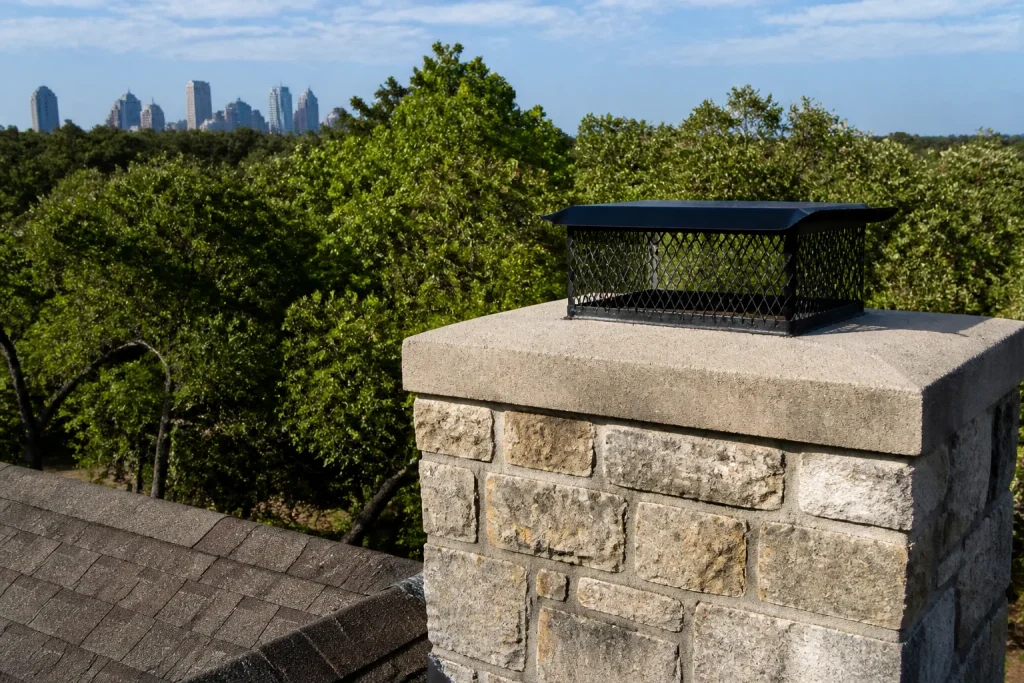
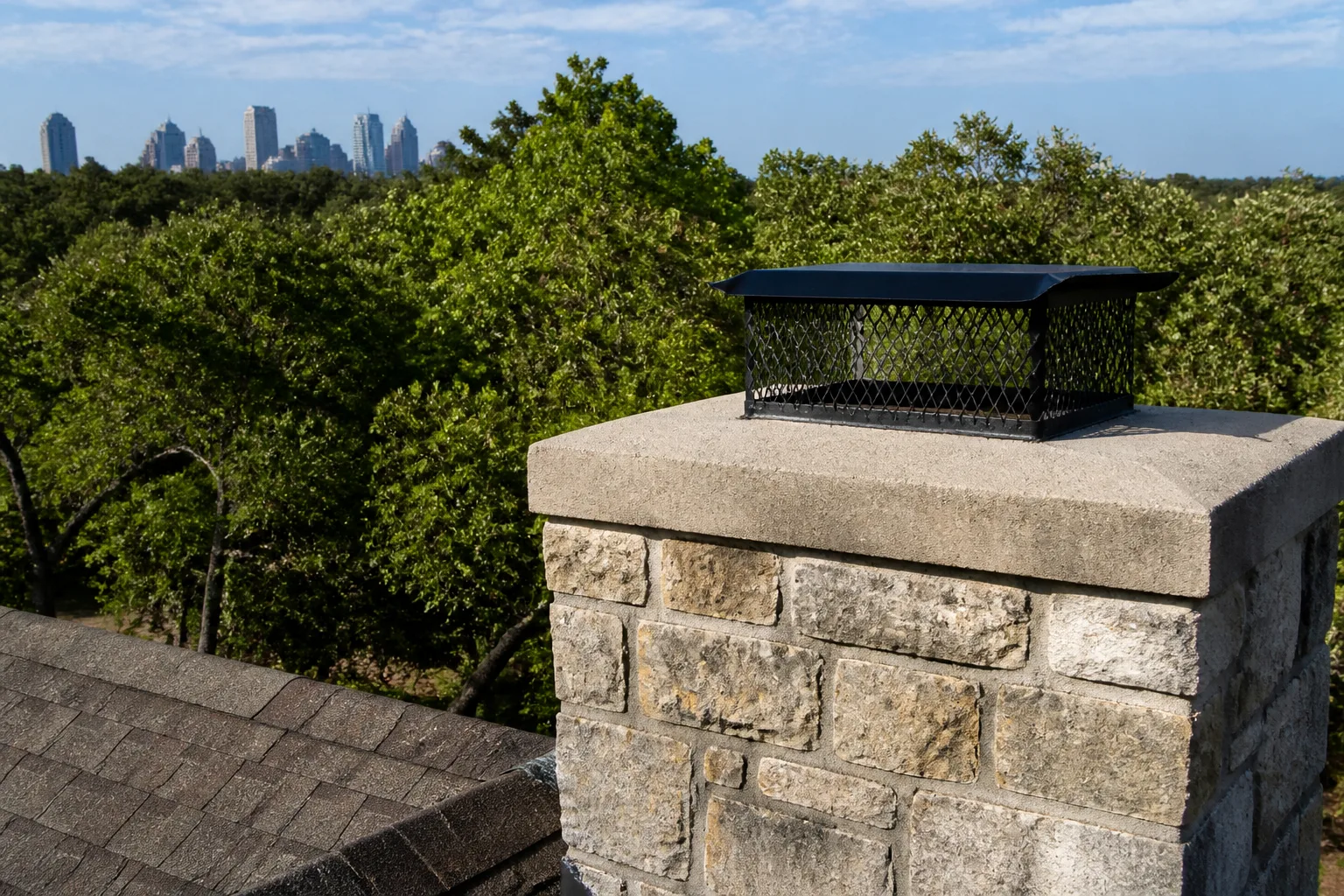
- Rain caps and top-sealing dampers. Caps keep water, birds, and debris out of the flue. Top-sealing dampers do the same job plus seal the flue tight when the fireplace is idle, which cuts the stack effect that pulls conditioned air up and out of the house.
- Chimney pots and crowns. The masonry crown at the top of the stack sheds water away from the chimney. When it cracks, water gets into the structure. A cast or formed crown replacement is often the single most cost-effective repair on an older Preston Hollow chimney.
- Dampers and hardware. Throat dampers, fireplace doors, and the smaller hardware that keeps a firebox working the way it should.
- Tools. Brushes, rods, and the field equipment sweeps use during a cleaning. Not a homeowner purchase.
In our experience, flexible liners and caps account for most of what homeowners actually see on a quote. The tool category is behind the scenes – unless, of course, someone is trying to bill you for it.
Why Do Certified Sweeps Specify Brand-Name Components?
A certified sweep specifies brand-name components because the performance difference shows up in real use, not in a brochure. A name-brand flexible liner is tested to a published specification for temperature rating, corrosion resistance, and wall thickness. A generic liner might meet those numbers on paper and fail them in a hot flue three winters later. When a component fails, the failure mode is either a chimney fire hazard or a slow water intrusion problem, and neither is something you want to discover by accident.
There’s a second reason. Brand-name components come with documentation – installation instructions, warranty terms, and a clear paper trail. If something goes wrong and you need to make a claim, the brand and the model number on your invoice are what makes the claim possible. A generic liner with no manufacturer on the label typically has no warranty behind it at all.
The brand is only half the equation. The other half is the hands. A Copperfield liner installed by someone who skipped the insulation, cut the length short, or forgot to seal the top plate is a brand-name product doing a generic job. That’s why we care as much about who installs the part as which part gets installed. A proper chimney sweep should be able to explain every line on the invoice, not just hand you a total.
What Does a Proper Copperfield Liner Installation Look Like?
A proper Copperfield liner installation starts with measurement, not with a box. The technician measures the flue height, checks for offsets and damage, and confirms the appliance type and venting requirements before anything is ordered. From there, a quality job follows a recognizable sequence, and a homeowner who knows the sequence can tell a careful installation from a rushed one.
- Flue cleaning and camera inspection. You can’t line a dirty or damaged flue. The flue gets swept and inspected first, and the technician should show you what the camera saw.
- Sizing to the appliance. The liner is matched to the fireplace or appliance it serves. Too small and it drafts poorly; too large and it cools too fast.
- Insulation wrap. An insulated liner holds heat inside the flue, which improves draft and protects the surrounding masonry. Skipping insulation is one of the most common shortcuts we see.
- Top plate and cap. The top of the liner is sealed to a plate at the crown, and a cap goes over the whole assembly. This is where water intrusion is either prevented or invited.
- Bottom connection. The liner connects to the appliance or firebox insert with a proper adapter, not tape and hope.
- Documentation. You should receive the brand, model, and length of the liner, plus the warranty terms.
We use DuraFlex flexible liner systems for relining work, and HeatShield for resurfacing liners that are damaged but structurally salvageable. Both are technical jobs that go far beyond standard sweep work, and they’re the reason a homeowner in Preston Hollow should ask what brand and what system is being installed rather than just accepting a number.
What Voids a Copperfield Warranty?
Most Copperfield component warranties are voided by installation that doesn’t follow the manufacturer’s instructions. That usually means one of three things: a DIY installation by someone who isn’t a qualified professional, installation by an uncertified technician who skipped required steps, or installation that doesn’t match the appliance and flue configuration the component was rated for. The warranty covers the part. It doesn’t cover a mistake.
This is the practical reason to care about who does the work. A Copperfield liner is a real investment, and the warranty is part of what you’re paying for. If the installation isn’t done to spec, the warranty on that part is effectively gone, and you’re left with a brand-name component and no recourse. Ask for the documentation. Keep it. If you ever sell the home, that paperwork is a small but real asset.
The same principle applies to caps and crowns. A Gelco or Famco cap installed correctly keeps water out for years. Installed badly, it leaks at the seam and you’re back where you started. Water intrusion is the number one cause of chimney damage we see in Preston Hollow, and most of it starts at the top.
How Do You Read a Copperfield Chimney Invoice?
Read a Copperfield chimney invoice by matching every line to a specific part and a specific job. A professional estimate should list the brand, the component, the quantity, and the labor as separate lines, and it should be clear about what’s included and what isn’t. If a line says “liner” with no brand and no length, ask. If a line says “misc. materials,” ask what those are.
- Brand and model on every component. Copperfield, HeatShield, Gelco, Olympia Chimney, Famco – the name should be there. If it isn’t, ask why.
- Linear feet and diameter for liners. A liner is priced by length and size. You should see both.
- Labor separated from materials. Not every company breaks this out, but a clear estimate usually does.
- Inspection findings attached. The camera report is the evidence behind the recommendation. Ask to see it.
- Warranty terms in writing. Which parts are covered, for how long, and what voids the coverage.
One more thing worth knowing: an inspection catches small cracks before they become structural problems. If a technician recommends a full reline on the first visit with no camera evidence, that’s a reason to get a second opinion. Nothing should be recommended without evidence you can see for yourself, and we’ll say plainly when a repair can safely wait.
When to Call a Pro
Call a pro when the flue is damaged, when the cap or crown is cracked, when you smell smoke in the house with the damper open, or when it’s been more than a year since the last sweep. A clean flue reduces creosote buildup – the leading cause of chimney fires – and creosote is not something to inspect by flashlight from the firebox. The flue interior, the liner connections, and the crown are all places a homeowner can’t safely or accurately assess. It’s also worth calling if you’ve been handed a Copperfield estimate and want a second set of eyes on it.
Our technicians have up to 9 years of experience, and we’ve seen plenty of both – careful installations and rushed ones. We can tell you which is which, and we can tell you when the answer is “leave it alone for now.”
Related services in Preston Hollow: we handle chimney cap & crown work to stop water intrusion at the top of the stack, and fireplace repair when the firebox, damper, or doors need attention. One company, every step – no handoffs between contractors.
The Bottom Line
Copperfield is a professional supply brand, not a sweep service. The name on your invoice tells you what component was installed, and the installation quality tells you whether that component will do its job. Ask for the brand, the model, the camera evidence, and the warranty terms. A brand-name part in a badly installed system is no better than a generic part, and often more expensive. If you’re in Preston Hollow and need help sorting out what’s actually going on with your chimney, Chimney Sweep Preston Hollow offers free estimates – call (833) 769-0219. We answer 24/7. Fast dispatch from 7am to 7pm, Sunday through Friday.
Frequently Asked Questions
No. Copperfield is a wholesale chimney supply brand that manufactures flexible liners, caps, dampers, and tools for the professional trade. It doesn’t perform sweeps, inspections, or repairs. When a Preston Hollow technician quotes a Copperfield component, that’s a supply brand on the estimate, not the company doing the work. Call (833) 769-0219 if you want help reading an estimate that lists one.
Generally yes, because a brand-name liner is tested to a published specification and comes with a documented warranty. The performance difference shows up in temperature rating, corrosion resistance, and long-term durability inside a hot flue. That said, the install matters as much as the part. A Copperfield liner installed to spec by a qualified technician outperforms a generic liner, and a Copperfield liner installed badly underperforms one. Call (833) 769-0219 for a free estimate on your flue.
Usually not. Most Copperfield component warranties are voided by installation that doesn’t follow the manufacturer’s instructions, which typically covers DIY work and installation by uncertified labor. The warranty covers the part, and only when it’s installed correctly. Keep the documentation from a qualified installation; it’s what makes a claim possible. Call (833) 769-0219 to talk through your options.
You need a liner when the existing flue is cracked, deteriorating, undersized for the appliance, or unlined. A camera inspection is the only reliable way to know. A technician should show you the footage and explain what it means before recommending anything. If someone quotes a reline without camera evidence in Preston Hollow, get a second opinion. Call (833) 769-0219 to schedule an inspection – estimates are free.
Written by the team at Chimney Sweep Preston Hollow.
Need Chimney Cleaning Help?
Call Chimney Sweep Preston Hollow - the local pro we connect you with is licensed and insured, here with fast help in Preston Hollow.
(833) 769-0219