
Last updated November 22, 2026
 Sweep & inspection
 Caps & crowns
 Flue relining
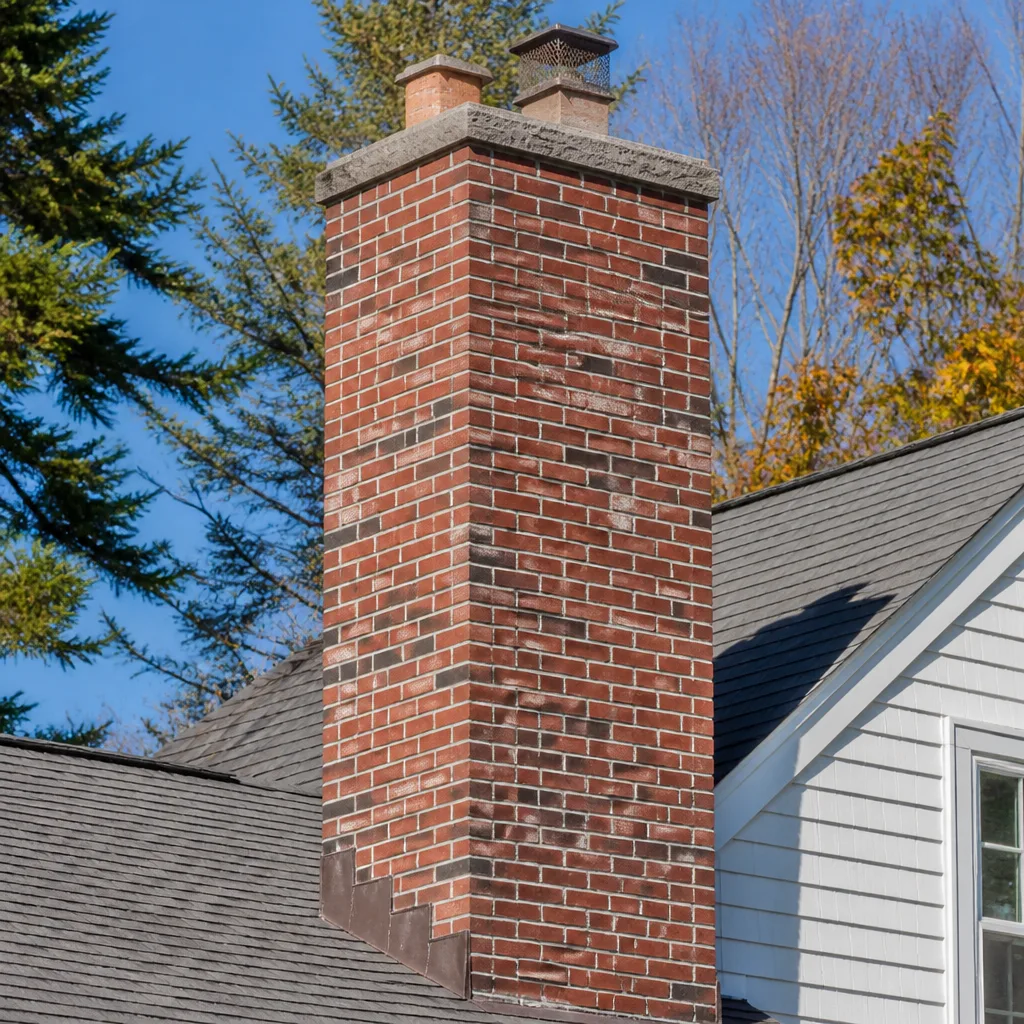 Masonry repair
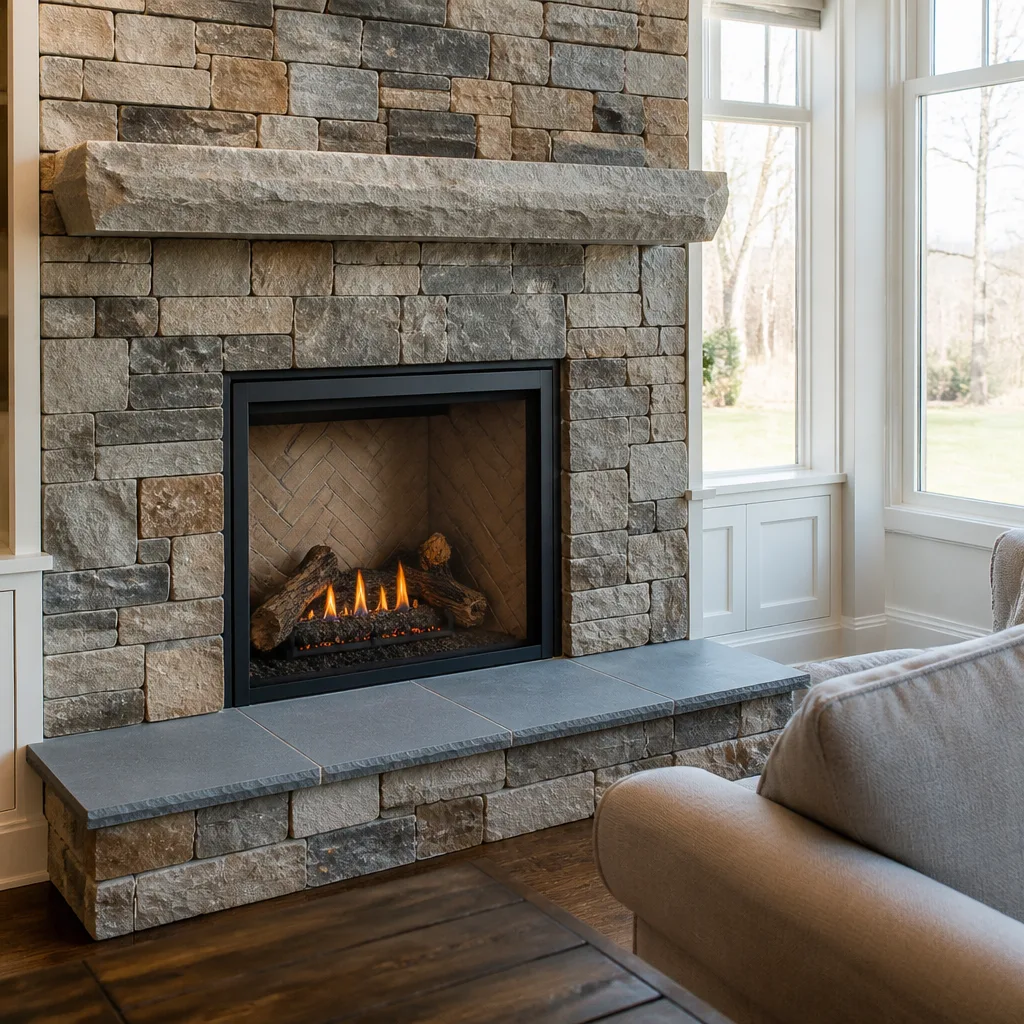 Gas fireplace service
Level 1 sweep and inspection to the NFPA 211 annual standard - flue, crown, cap, and flashing checked and photographed
Chimney sweep logs do not sweep chimneys. They loosen some creosote - which then falls where a brush and vacuum still have to collect it.
DIY vs Professional Chimney Cleaning: The Preston Hollow Homeowner’s Decision Guide
You can buy the same brushes a chimney sweep uses. The polypropylene rods, the right-sized flue brush, the drop cloths – most of it is available at a hardware store or online for less than the price of a single professional sweep. So why do chimney fires still happen in homes where the owner swore the flue was clean? Because brushing is the easy part. Recognizing second-degree creosote glaze, spotting a hairline crack in a tile liner, or knowing whether that smoke shelf is doing its job takes training and a flashlight and years of looking at flues that have gone wrong. This guide explains what a Preston Hollow homeowner can legitimately handle, where DIY cleaning turns risky, and how to tell the difference before you light the next fire.
Quick Answer
A homeowner can safely remove ash and debris from the firebox, check the damper by hand, and inspect the exterior cap from the ground. Actual flue cleaning and any assessment of creosote stage, liner integrity, or smoke shelf condition should be done by a professional, because the cleaning itself is worthless without an accurate diagnosis. In Preston Hollow, where mature pecans and live oaks drop debris onto caps year-round and long, humid summers give creosote plenty of time to cure, that diagnosis is the whole point.
Styles & brands we work with
- Sweep & inspection
- Caps & crowns
- Flue relining
- Masonry repair
- Gas fireplace service
Table of Contents
- What a Homeowner Can Legitimately Do Themselves
- The Three Stages of Creosote and Why They Matter
- When DIY Cleaning Stops Being Adequate and Becomes Risky
- What Professional HEPA Vacuuming Actually Accomplishes
- The Insurance and Liability Angle Nobody Talks About
- An Honest Cost-Benefit Framing
- Inspection, Documentation, and the Paper Trail
- Using DIY Maintenance Between Professional Sweeps
What a Homeowner Can Legitimately Do Themselves
There’s real work you can do around the firebox and hearth without touching the flue, and doing it well makes every professional sweep more effective. Firebox debris removal tops the list: scooping out cold ash, sweeping up soot-stained brick with a stiff brush, and wiping down the glass on a fireplace door are all safe, useful tasks. Leftover ash insulates the firebox floor and can shorten the life of the grate, and soot buildup on the surround is acidic enough to dull a finish over time.
Next is the damper. With a cold firebox, you can reach up and work the damper by hand, confirming it opens smoothly, seats flush when closed, and doesn’t wobble on its pivot. A damper that sticks open wastes heat up the flue all winter; one that sticks shut turns your fireplace into a smoke machine the moment you light it. You can also check the firebox walls for obvious crumbling mortar or loose bricks and note anything that looks off.
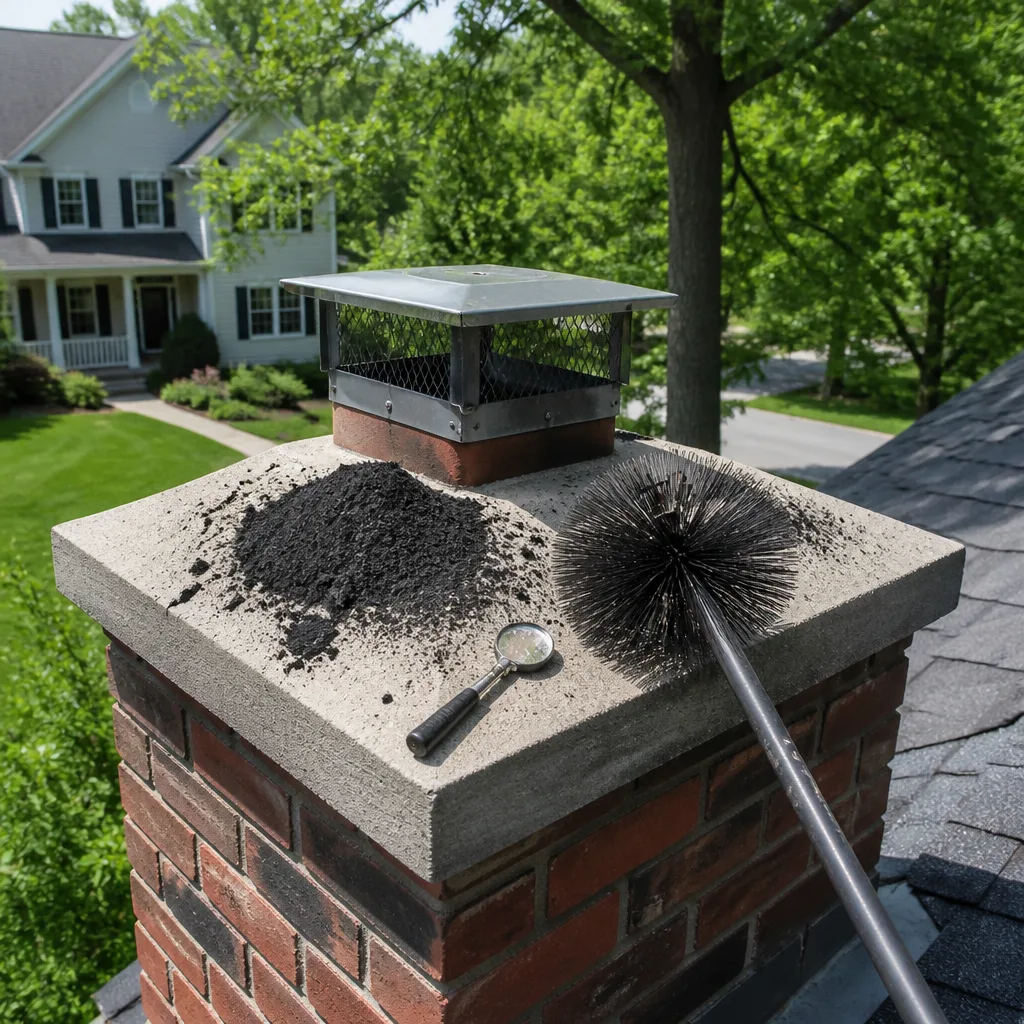
Exterior cap inspection from the ground is the third legitimate task. With binoculars, look at the cap and crown from your yard. Is the cap still seated, or is it cocked to one side? Is the spark screen intact, or has it rusted through? Are there twigs, leaves, or a bird’s nest wedged in the mesh? In Preston Hollow, pecans and live oaks dump debris onto caps for weeks each fall, and a blocked cap is the most common cause of a smoky first fire of the season. What you should not do is climb onto a steep roof to check it – fall injuries are the most serious risk in chimney work, and no cap inspection is worth a trip to the emergency room.
One more thing a homeowner can do: keep a written log. Date every fire, note anything unusual (smoke rolling into the room, a smell of creosote on warm days, soot flakes on the hearth), and write down when the last sweep happened. That log becomes genuinely valuable later. We’ll explain why in the insurance section.
The Three Stages of Creosote and Why They Matter
Creosote is the residue left behind when wood smoke cools on the flue walls, and it forms in three distinct stages that call for very different responses. Understanding them is the clearest way to see why DIY cleaning tops out fast.
- First-degree creosote is flaky, soot-like, and brushes off easily. It looks like black dandruff. A stiff brush removes it cleanly, and this is the stage most chimney fires start from when it accumulates too deep.
- Second-degree creosote is harder, crusty, and often shiny-black. A brush will score the surface but won’t fully remove it. This stage needs mechanical agitation and often a chemical creosote remover to break it down.
- Third-degree creosote is glazed, tar-like, and baked onto the flue wall. It looks like hardened varnish and ignites at a much lower temperature than the flaky stuff. In our experience, glazed creosote is where fires actually come from, and no consumer brush removes it. It usually requires chemical treatment over time or, in severe cases, relining.
Here’s the crux of the whole DIY question: a homeowner can clean first-degree creosote and feel successful. Then the firebox looks clean, the tools get put away, and the fire gets lit. But if that flue had moved into second-degree glaze hidden two feet higher, the cleaning didn’t just miss it – it created a false sense of compliance. That’s the liability trap. A clean-looking firebox is not a clean flue.
Preston Hollow’s climate adds a wrinkle. Long, warm, humid summers mean creosote has months to cure and harden between burning seasons, so a flue that ended winter at first-degree can start the next season closer to second-degree. That’s one reason we recommend scheduling a chimney sweep in late summer or early fall, before the first fire of the season, rather than after your first smoky evening.
When DIY Cleaning Stops Being Adequate and Becomes Risky
DIY cleaning becomes genuinely risky in four specific conditions. If any of these apply to your chimney, stop and call a professional, even if the firebox looks fine.
- Suspected glazed creosote. If you can see shiny black tar on the flue walls (use a flashlight and a mirror, or a phone camera with flash aimed up the flue), the creosote has entered third-degree territory. Brushing it can chip it into flakes that fall back onto the smoke shelf, and the glaze itself remains. This is a professional-only situation.
- Any suspicion of liner damage. Cracks, spalling, missing mortar joints between tiles, or gaps at the flue collar all mean the flue isn’t containing what it’s supposed to. Cleaning a damaged liner with a stiff brush can widen cracks and dislodge tiles. A camera inspection, which we always include with a sweep, is the only way to know.
- Prior chimney fire history. If this chimney has ever had a fire inside the flue, whether you heard the roar or the neighbor did, the liner has likely been compromised. Chimney fires can crack tiles or warp metal liners without ever breaking through to the house, and the damage isn’t visible from the firebox.
- Odor or smoke problems. If you smell creosote on warm days, or smoke rolls into the room when you light a fire, the problem is usually draft or pressure, not cleanliness. More brushing won’t fix a smoke shelf that’s been damaged or a flue that’s undersized for the firebox.
Safety matters here. Chimney fires are the injury case this trade exists to prevent, and carbon monoxide is a real risk when a flue is blocked or cracked. None of that is meant to scare you off a fireplace. It’s meant to be honest about which jobs are yours and which aren’t. Reaching up a flue with a brush is physical work, but the danger isn’t the brush – it’s what the brush can’t show you.
What Professional HEPA Vacuuming Actually Accomplishes
A homeowner’s shop vac and a plastic tarp setup is not the same as a professional HEPA vacuuming rig, and the difference isn’t cosmetic. A standard shop vac filters at roughly 1 to 5 microns for large debris but pulls fine soot particles straight through the exhaust. When you brush a sooty flue with a shop vac running next to you, you’re aerosolizing soot into the room the entire time. That soot ends up on upholstery, in HVAC returns, on kids’ toys, and in the air that your family breathes for hours afterward.
Professional sweeps work with three-stage HEPA filtration: a pre-filter, a secondary filter, and a true HEPA final stage rated to trap particles down to 0.3 microns at 99.97% efficiency. That’s the same grade of filtration hospitals use. Combined with proper negative-pressure containment at the firebox opening and sealed drop cloths, the sweep keeps soot inside the vacuum rather than inside your home.
Why does this matter for Preston Hollow specifically? Because soot is stubborn, and a fireplace in a living room next to a white sofa or a textile-covered reading nook doesn’t recover from a botched DIY cleaning quickly. Our technicians have up to 9 years of experience with these rigs, and the difference between a proper job and a shop vac job often shows up as a faint gray film on the ceiling within a day. That film is the visible signature of the particles you didn’t trap.
One thing worth noting: HEPA vacuuming is included with every professional sweep, and it’s one of the few features of the job that DIY can’t replicate at any price point. You can buy the brush. You can’t buy the containment.
The Insurance and Liability Angle Nobody Talks About
If a chimney fire damages your Preston Hollow home, whether your insurance carrier covers the loss cleanly can hinge on documentation. This is where DIY cleaning creates a hidden problem. Most homeowner policies cover a sudden chimney fire as an accident. But when a claim is filed, the adjuster’s first question is: what has been done to maintain this chimney?
If the answer is “I cleaned it myself,” the carrier may argue there’s no evidence of maintenance, and could cite improper cleaning technique or a missed condition as contributory negligence. If the answer is “Here’s a dated sweep report from a professional, with photos of the flue before and after,” the claim goes through much more smoothly. That report is more than paperwork. In our experience, a sweep report and photo inspection are what prevents a five-figure loss from becoming a coverage dispute.
There’s a second angle: liability to others. If a chimney fire spreads to a neighbor’s property in Preston Hollow, an adjuster on the neighbor’s side will likely look at your maintenance records. A documented professional sweep removes most of the ambiguity. A homeowner’s own cleaning log, even a careful one, is worth far less than a professional invoice with a date and a technician’s note on liner condition.
This isn’t a reason to avoid DIY maintenance. It’s a reason to think of professional sweeps as part of the paper trail that protects your property. Every sweep you book with us comes with a camera inspection and a written report you can keep with your insurance documents. If a claim ever happens, that report becomes evidence of diligence rather than absence of it.
An Honest Cost-Benefit Framing
Here’s the honest math. Purchasing the gear for a proper DIY cleaning – a polypropylene rod set, multiple brush sizes, a HEPA-rated shop vac, and a proper soot mask – runs a homeowner somewhere near or above the cost of the sweep itself. That’s before you factor in the time, the risk of damaging a liner, and the near-certainty that you won’t catch the second-degree creosote. The DIY equipment cost argument falls apart the moment you price the actual gear needed for a safe job.
Where DIY makes sense is between professional sweeps. If you’re burning regularly in Preston Hollow and you get a professional sweep every year (or more often if you burn daily in season), you can safely handle:
- Emptying ash from the firebox before it exceeds an inch in depth
- Wiping down the firebox’s glass door and surround
- Sweeping soot off the hearth and detailing the surround
- Checking the damper and reporting any sticking
- Clearing debris from the cap from the ground (never from the roof)
- Keeping the maintenance log current
What DIY should not include is brushing the flue, spraying anything into it, or making decisions about whether it needs to be cleaned based on how the firebox looks. Those are the tasks where cheap tools become expensive mistakes. The cost of a professional sweep in Preston Hollow is a fraction of the cost of replacing a damaged liner, and even a small fraction of one fire-damaged room. If the choice is “one sweep per year plus my own upkeep” versus “no sweep and I do it myself,” the first option wins on both safety and dollars.
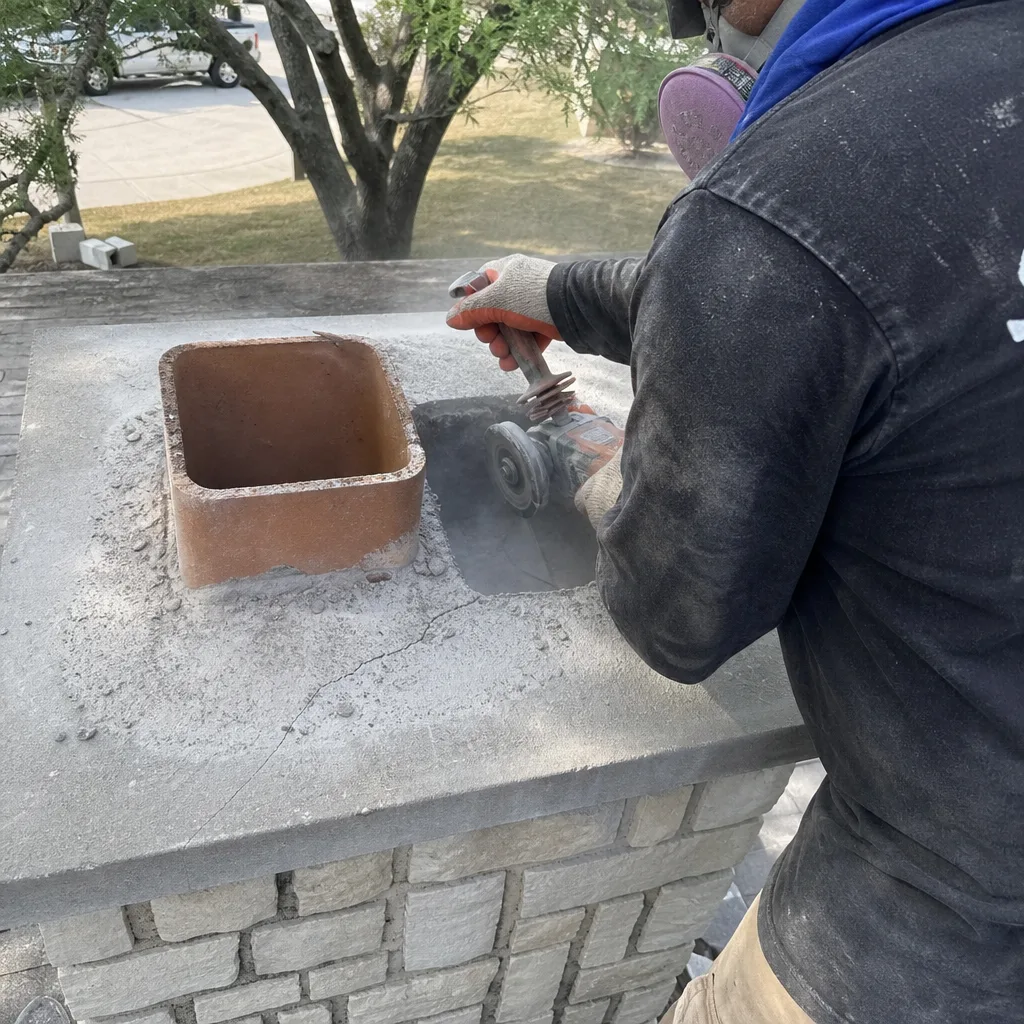
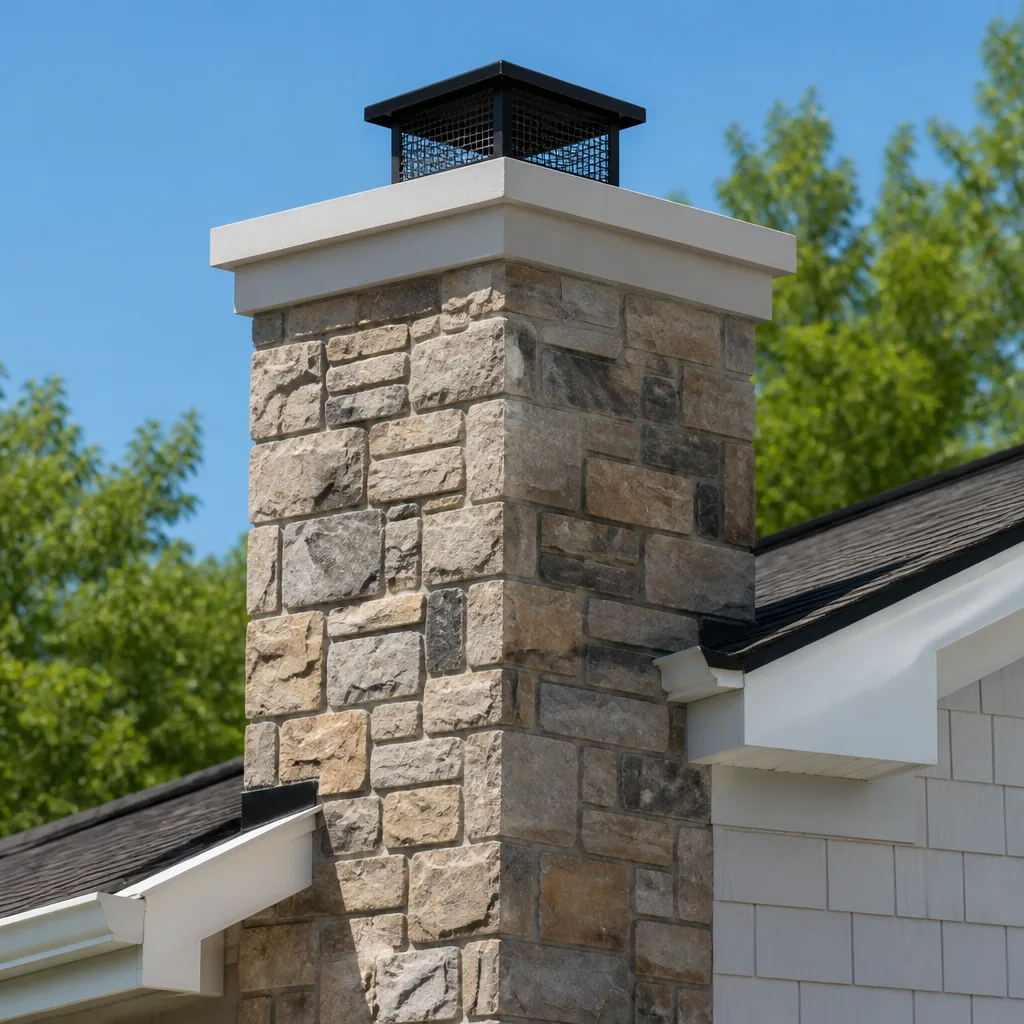
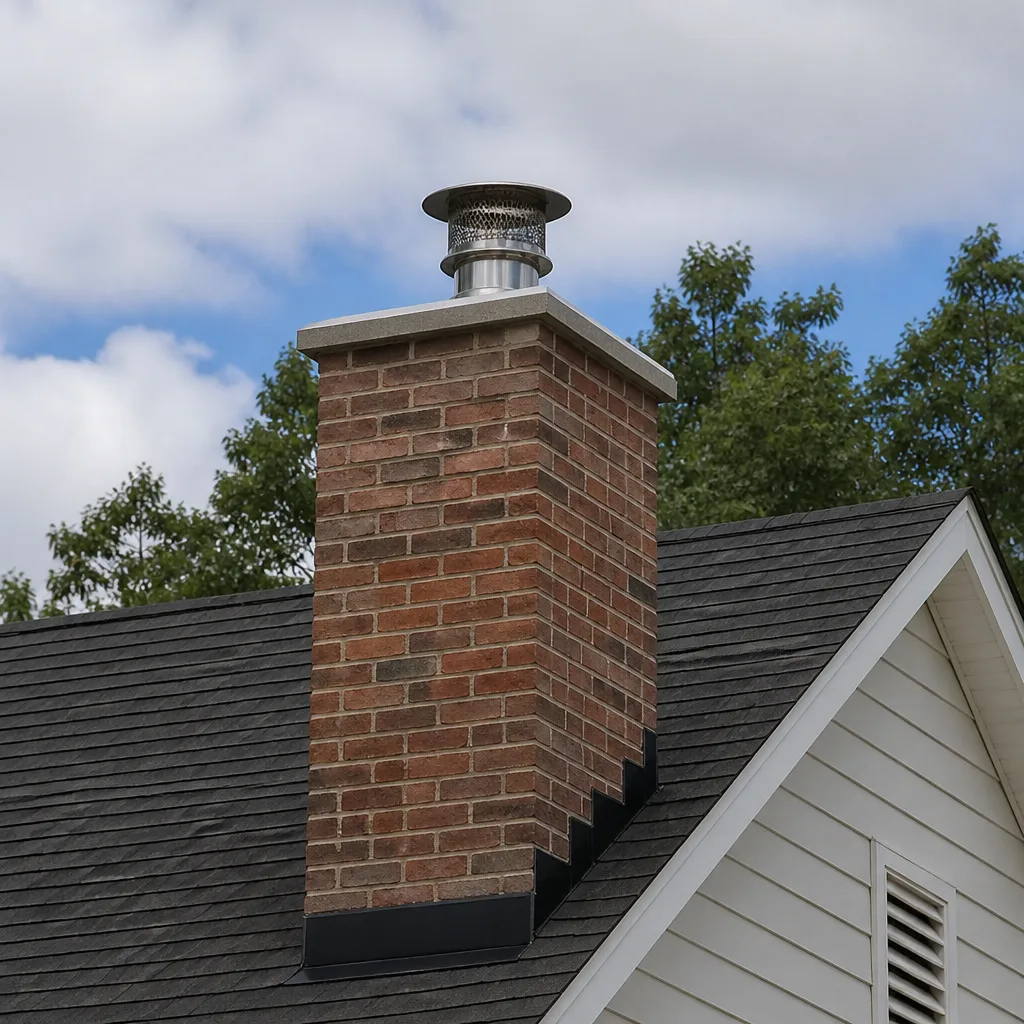
If your chimney has any damage already – a spalled crown, a rusted cap, a failing liner – the DIY math gets worse fast. That’s work for a professional chimney specialist who can assess the whole system. A chimney cap & crown installation using Gelco and Famco components is a specific repair, not a general maintenance chore, and it pays for itself by preventing the water intrusion that leads to expensive liner and masonry work.
Inspection, Documentation, and the Paper Trail
An inspection is a distinct service from a sweep, and it’s the piece of professional work that DIY cannot replace. A sweep cleans; an inspection assesses. The two are usually done together, but they answer different questions. The sweep answers “is the flue clear?” The inspection answers “is the whole chimney system safe to use?”
Our professional team treats inspection as protection, not an upsell. A typical inspection covers:
- Firebox and damper – looking for cracked brick, failed mortar, warped damper frames, and rust.
- Smoke chamber and smoke shelf – the curvy area above the damper that’s invisible from below without a camera. This is where creosote hides and draft problems usually originate.
- Flue and liner – a camera run up the full length, watching for cracks, gaps, missing joints between tiles, and misaligned sections.
- Crown and flashing – checking for cracks in the crown, separated flashing, and any path for water intrusion.
- Cap and spark screen – confirming the cap is seated and the screen is intact.
- Exterior masonry – looking for spalling brick, deteriorating mortar joints, and any tilt or separation in the stack.
Every inspection we do is accompanied by a photo report, which is the document that ends up mattering most. It shows the homeowner exactly what the technician saw, so nothing has to be taken on faith. That’s the real answer to the “am I being sold something I don’t need?” hesitation: you see the photos, you decide with evidence, and if work can safely wait a year, we tell you it can wait a year.
If the inspection reveals damage to the flue liner, that’s where HeatShield liner resurfacing or a DuraFlex flexible liner system comes into play. HeatShield is a non-invasive resurfacing approach that repairs damaged flues from the inside without demolition, and it’s the kind of work a sweep-only outfit simply can’t offer. DuraFlex flexible liner systems are the alternative when the flue needs a full reline, and they’re a service many local cleaners aren’t equipped to perform. Either way, the decision to reline is based on camera evidence, not on a technician’s word.
Using DIY Maintenance Between Professional Sweeps
Once a professional sweep has cleaned and documented your chimney, DIY maintenance between sweeps is genuinely valuable and carries almost no risk. The key is to stay inside the boundaries we’ve drawn: firebox, damper check, ground-level cap inspection, and the log. Everything above the smoke shelf belongs to a trained specialist.
In Preston Hollow, there’s a seasonal rhythm worth knowing. Spring and summer are when the chimney sits dormant, and that’s when exterior conditions matter most. Look at the cap from the ground after every big storm. The region gets heavy rain in spring, and a cap that’s been knocked loose or a crown with a hairline crack lets water in all summer long. Water intrusion is the single largest source of chimney damage we see, and it’s also the most preventable – a properly seated cap with a serviceable crown handles it. Aesthetic upkeep of the firebox is where homeowner elbow grease really pays: regular ash removal and hearth cleaning extend the life of the grate and the surround for years.
Fall is when the professional sweep should be booked, ideally before the first fire, because that’s when the creosote from the prior season gets assessed while the chimney is still cold and easy to work on. Winter is when you burn, and your DIY work is mostly ash-scooping and keeping an eye on smoke behavior. If you notice the fire burning sluggishly, smoke lingering in the room, or an odd smell on warm days, note it and mention it at the next chimney sweep booking. Those are the clues that tell a technician where to point the camera first.
Spring is also when a lot of homeowners decide to finally address a nagging issue they’ve been ignoring all winter – a fireplace that hasn’t worked well in years, a damper that sticks, or a firebox in need of fireplace repair. That’s the right season for it: no urgency, no fire in the grate, and plenty of time to complete work before the next burn season. A fireplace system is a set of connected parts – cap, crown, liner, smoke chamber, firebox, damper – and a specialist who services the whole system avoids the handoff problem that comes from hiring a generalist for one piece and a mason for another.
Common Mistakes to Avoid
- Judging the flue by the firebox. A clean firebox tells you nothing about the flue above it. The creosote that actually causes fires lives higher up, and the second-degree glaze that brushes off partially is what gives people false confidence. Look with a camera, not with your eyes from below.
- Using a shop vac as a soot vacuum. A standard shop vac blows fine soot back into the room. The soot film on ceiling and upholstery after a DIY cleaning is the visible sign of aerosolized particles – which is also the air your family was breathing during the job.
- Climbing onto the roof for cap inspection in Preston Hollow. Long, dry months make roof surfaces slippery with dust and leaf litter, and falls from even a modest height cause serious injuries. Check the cap from the ground with binoculars and leave the roof to trained technicians.
- Brushing a suspect liner. If you don’t know whether the liner is cracked or missing joints, a brush can widen cracks and dislodge tiles. Clean only what you can see and diagnose the rest professionally.
- Skipping professional documentation. Firebox cleanup without a dated sweep report leaves you with no paper trail for insurance. That simplifies your maintenance but weakens your position if a claim ever gets filed.
- Treating a brush and tarp as a full cleaning. A DIY job captures the flaky creosote and misses the glaze, the smoke shelf, and the liner check. It’s not a smaller version of a professional sweep – it’s a different task with different limits.
- Ignoring the smell of creosote on warm days. That odor means there’s a creosote deposit that’s still active in the flue. It’s not a “wait and see” situation; it’s a cue to get the flue assessed before the next fire.
See the difference
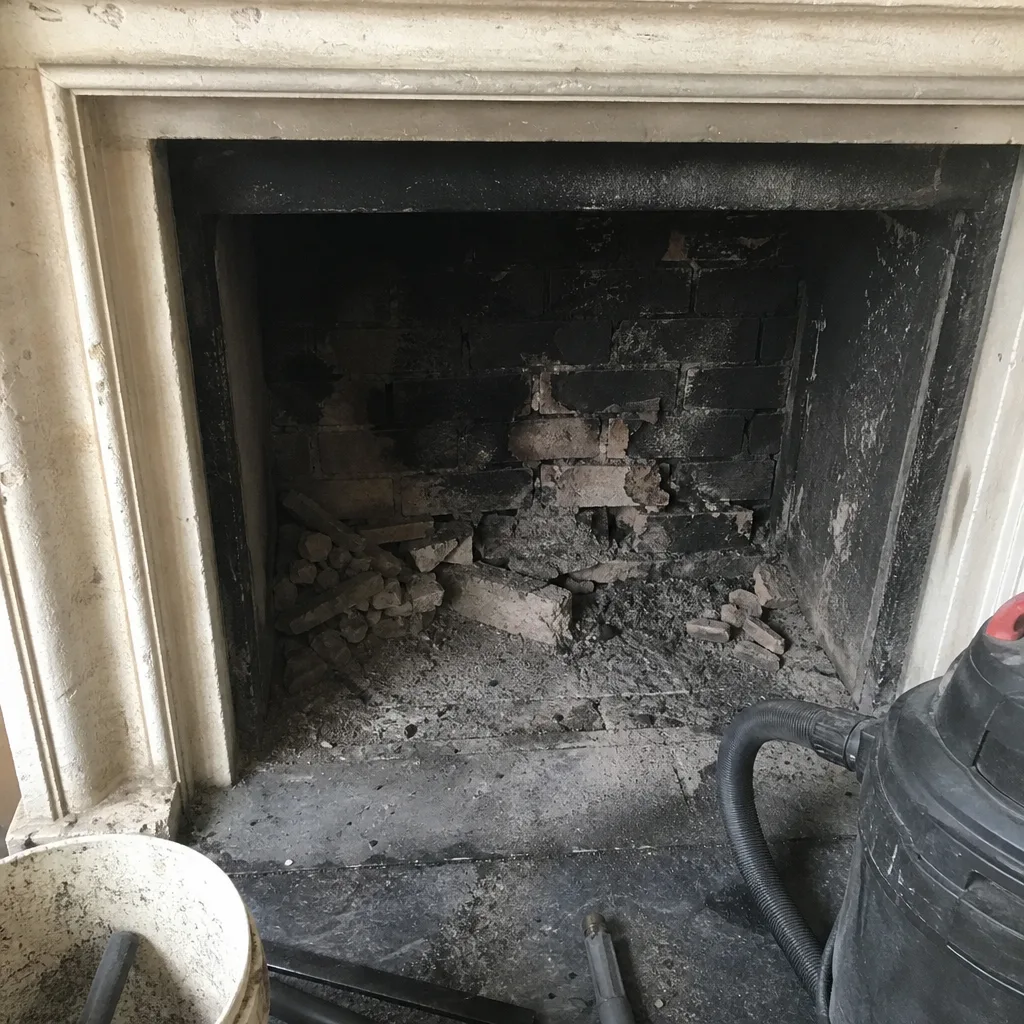 Before
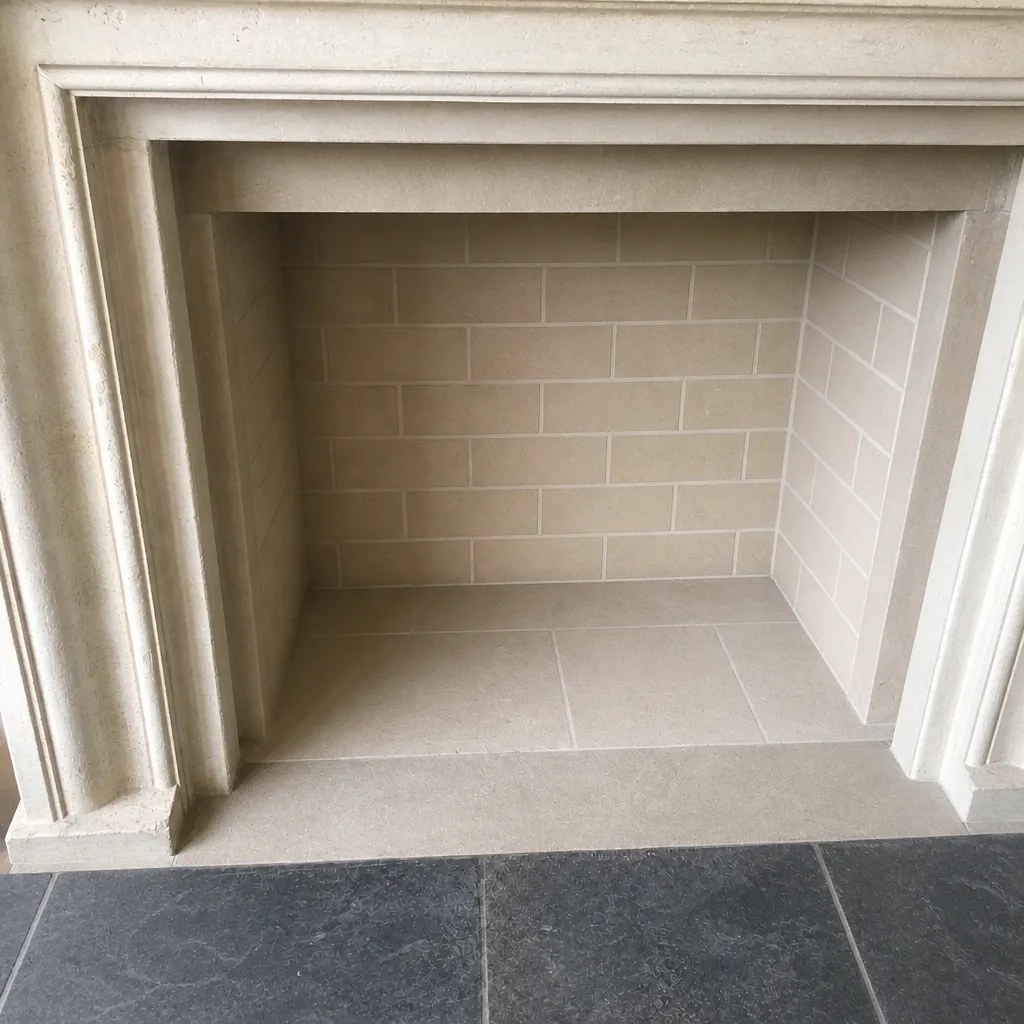 After
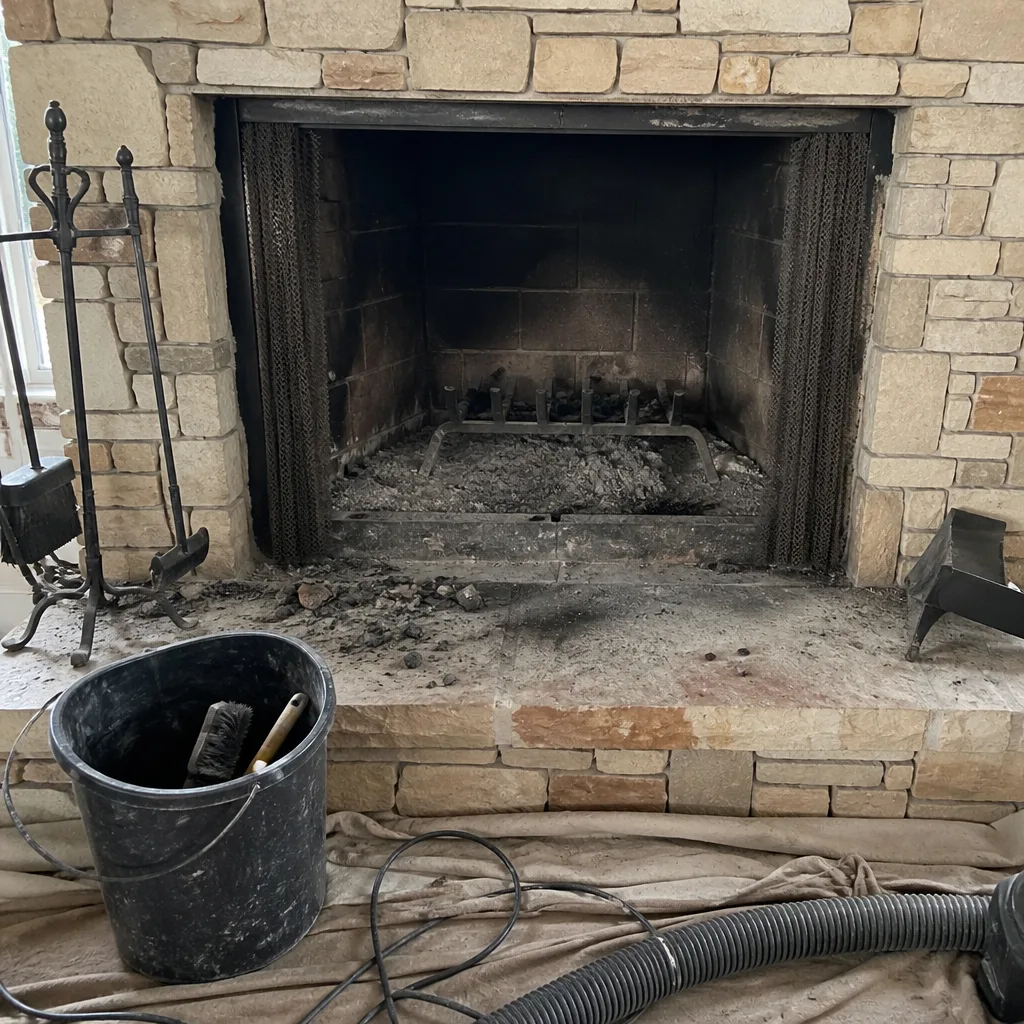 Before
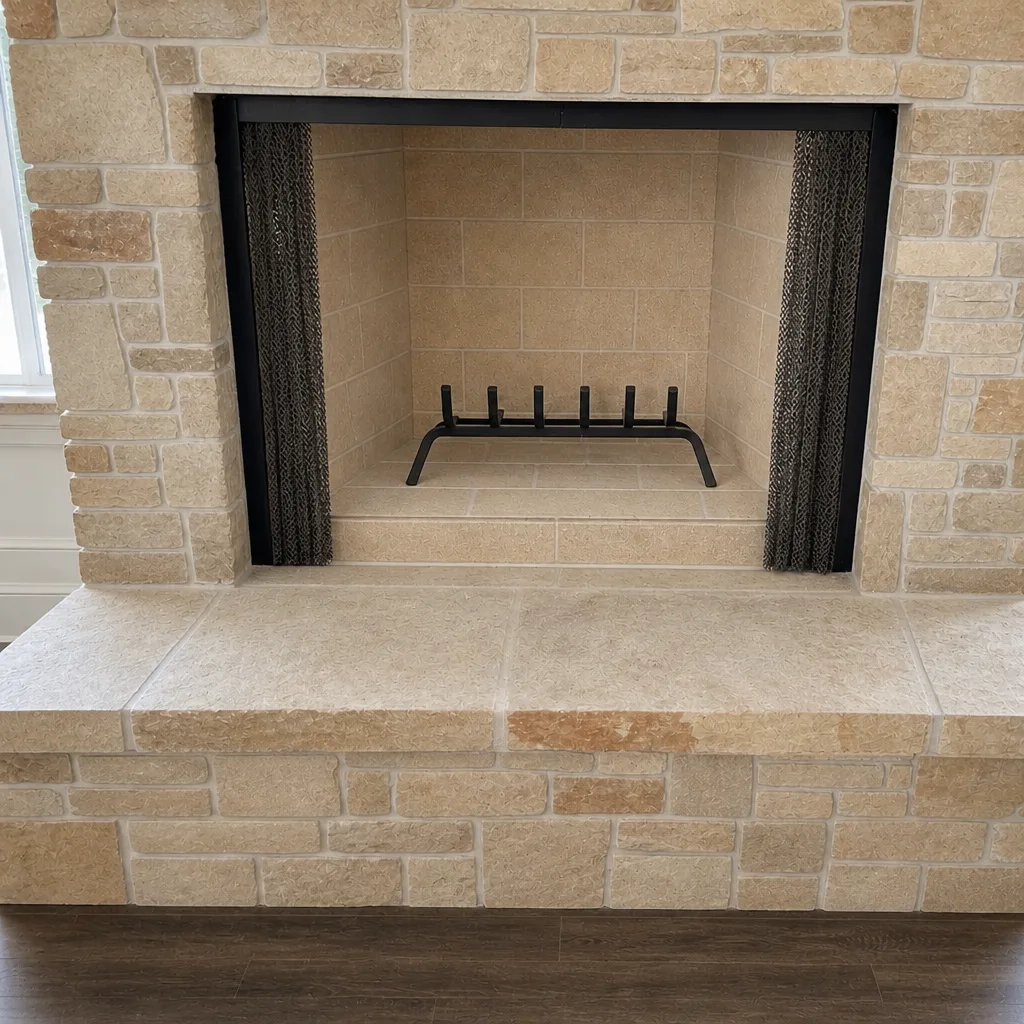 After
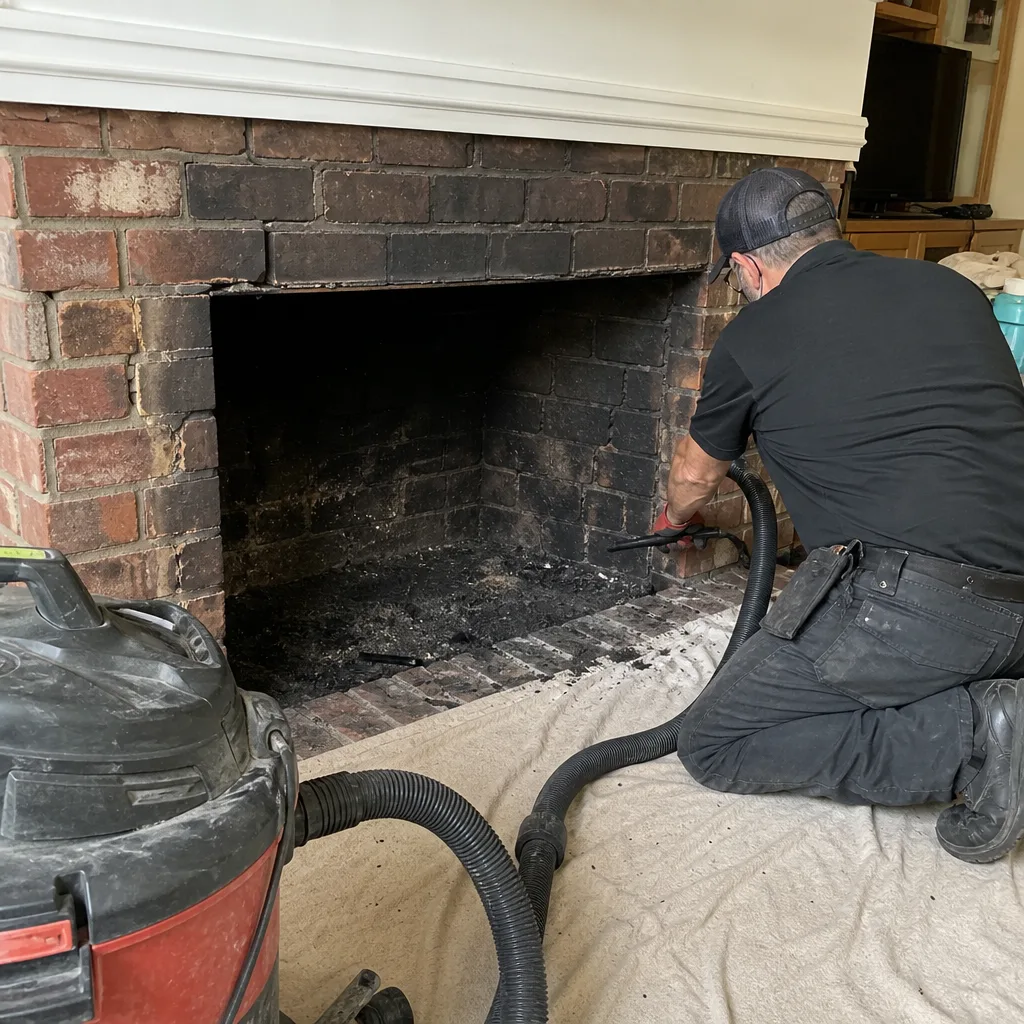 Before
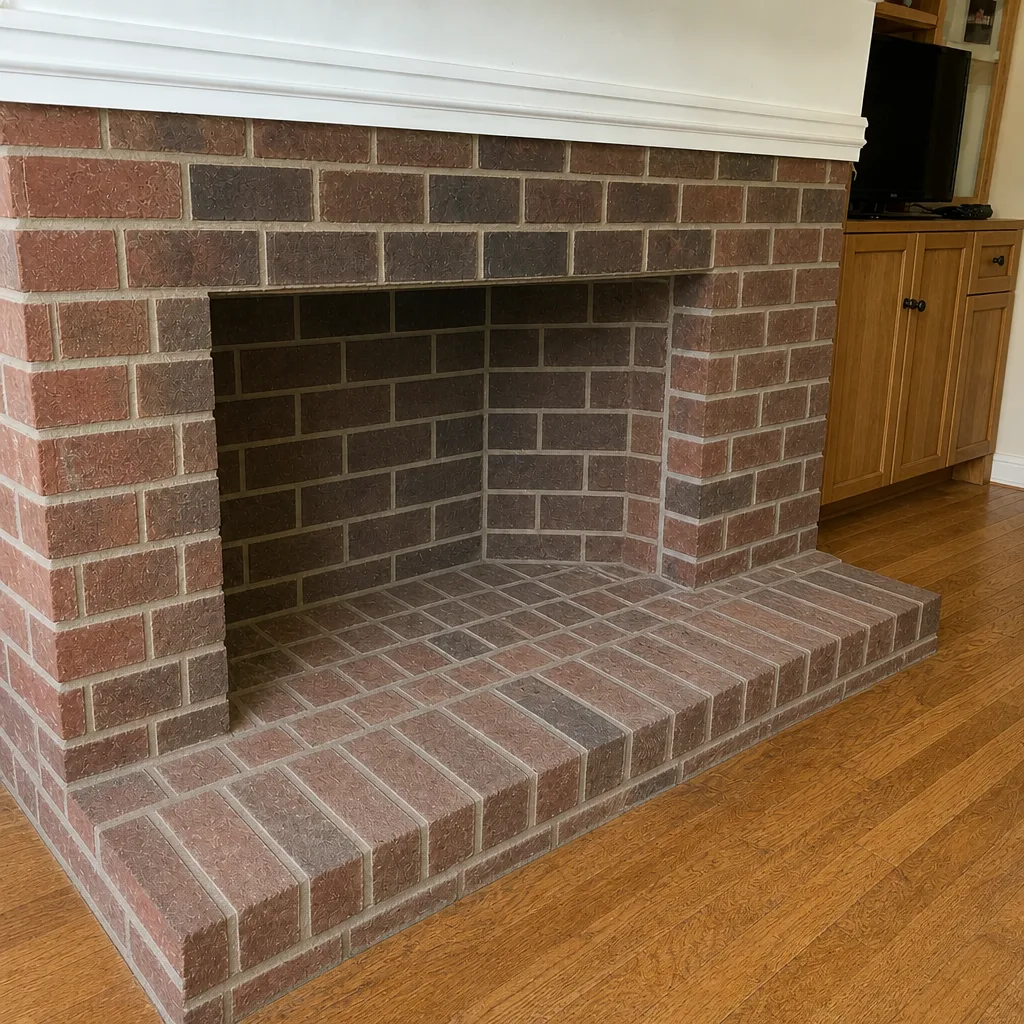 After
When to Call a Professional
Call a professional immediately if you find glazed creosote in the flue, suspect any liner damage, know the chimney has had a prior fire, smell creosote on warm days, see smoke roll into the room, or notice a cap that has come loose or a crown that is cracked. If you’ve never had the chimney inspected and you’re burning regularly, that’s also a strong reason to call. And if you simply can’t see up the flue yourself, an inspection isn’t overkill – it’s the baseline.
Chimney Sweep Preston Hollow offers free estimates in Preston Hollow – call (833) 769-0219. Our technicians have up to 9 years of experience, and every estimate ends with a written price. We answer 24/7, and fast dispatch runs 7am to 7pm, Sunday through Friday.
Frequently Asked Questions
You can physically brush a flue with the right-size brush, but a hardware-store brush is only the tool – it’s the diagnosis that’s missing. A brush will clear first-degree flaky creosote, but it won’t tell you whether the creosote above it has gone glazed, whether the liner has a crack, or whether the smoke shelf is compromised. Cleaning without diagnosis gives you a false sense of completion, which is worse than knowing the chimney needs professional attention. Call (833) 769-0219 for an exact quote – estimates are free.
Sweep pricing varies by flue size, access, creosote stage, and whether a camera inspection is included, so the written estimate is the final word. The typical estimate is set per job, and it always includes a camera inspection and a photo report. Call (833) 769-0219 for an exact quote – estimates are free.
A year of skipping a sweep doesn’t automatically mean a chimney fire, but creosote does accumulate, and in Preston Hollow’s long, humid summers it has time to cure into harder stages. Two or three skipped years is where the risk starts climbing steeply, especially with heavy fall and winter burning. If you’re overdue, book a sweep before the next season rather than after. Call (833) 769-0219 for an exact quote – estimates are free.
Possibly. Insurance carriers look for evidence of maintenance when a chimney fire claim is filed, and a dated professional sweep report with photos carries far more weight than a homeowner’s own log. If you cleaned it yourself, you may still be covered, but the conversation with the adjuster becomes harder and the burden of proof shifts to you. A sweep report is protection you can hand over as documentation. Call (833) 769-0219 for an exact quote – estimates are free.
Once per burning season is a reasonable baseline for a household that uses the fireplace regularly, and any time creosote reaches an eighth of an inch or more. Frequent daily burning, or a fireplace that sees heavy use through winter, can justify more than one sweep per year. An annual inspection with camera catches conditions that change faster than a sweep cycle. Call (833) 769-0219 for an exact quote – estimates are free.
Firebox debris removal, glass-door and surround cleaning, damper checks by hand, ground-level cap inspection with binoculars, and keeping a written log of every fire and any unusual symptoms. Avoid brushing the flue, spraying anything into it, or climbing onto the roof. Those four tasks cover almost everything a homeowner can do without risk, and they make every professional sweep more effective. Call (833) 769-0219 for an exact quote – estimates are free.
The Bottom Line
DIY chimney cleaning isn’t a capability question – most homeowners can physically brush a flue. It’s a diagnosis question. The value of a professional sweep isn’t the brushing; it’s the trained eye that recognizes what’s in the flue and what needs repair before it becomes a hazard, plus the HEPA containment that keeps soot out of your home and the documentation that protects your insurance claim. In Preston Hollow, where the burn season is long and the summers are humid, the smartest setup is one annual professional sweep with a camera inspection, paired with honest DIY maintenance of the firebox and hearth between visits. That split lets you handle what you can handle, and gets a trained specialist eyes on what you can’t. Call (833) 769-0219 for a free estimate, and we’ll show you exactly what’s in your flue before recommending anything.
Written by the team at Chimney Sweep Preston Hollow.